 R015
R015Matta Rice, Properly Cooked
Kerala's parboiled red rice, by absorption and by draining
Recipes › Rice, Grains and the Grain Question in Practice
R017
Neychoru, with the ghee measured
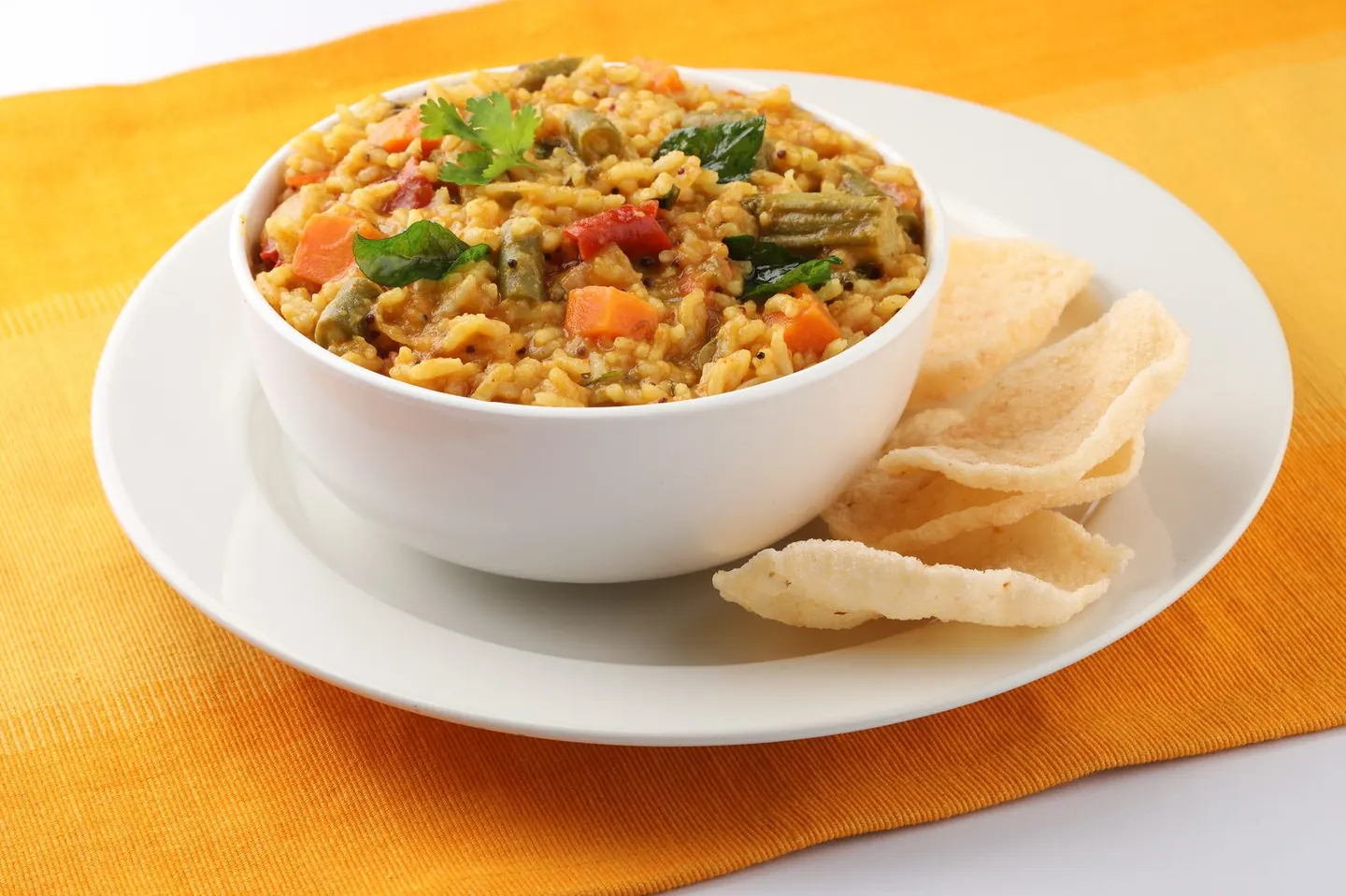
Photograph: Adobe Stock · representative of the dish
Neychoru — literally ghee rice — is Malabar's wedding rice, the plate that comes under the chicken at every Thalassery feast, and the traditional version is genuinely a ghee dish: a quarter of a cup of it, sometimes more, for four people. Most of that ghee is doing nothing but volume by the time the rice is on the plate. What the dish actually tastes of is browned shallot, whole spice bloomed in fat, and the specific milky nuttiness of ghee at the top of the nose. Fifteen grams gets you all of the third, and slow shallots get you the first two.
Before you start: Slice the shallots and measure the ghee before you light the flame. Cashews go from pale to burnt in about 40 seconds in hot ghee, and there is no time to be looking for the scale.
Allergens: Milk, tree nuts (cashew).
Equipment: Heavy 3-litre pan with a tight lid. Substitute: a pressure cooker, at 2 whistles then 4 minutes on the lowest flame — but the shallots must be browned in the open pan first, whatever you finish it in.
| Energy | 268 kcal |
| Protein | 5.9 g |
| Fibre | 2.7 g |
| Net carbohydrate | 45.1 g |
| Total carbohydrate | 47.8 g |
| Sugars | 2.9 g |
| Fat | 6.7 g |
| Saturated fat | 2.9 g |
| Sodium | 210 mg |
From ICMR-NIN IFCT 2017 and USDA FoodData Central. Per-serving figures stay the same when you scale.
Jeerakasala — sold as kaima — is a short, thin, intensely aromatic Wayanad rice and it needs no soaking, which is exactly why Malabar cooks use it. Look for it in Kerala grocers and online as "Kaima rice", "Jeerakasala" or "Jeeraka shala"; Wayanad Jeerakasala is a registered geographical indication and the bags that say so are usually the better grain. Basmati is the honest substitute and behaves differently: soak it 20 minutes, cut the water to 340 ml, and expect longer, drier grains and a less perfumed pot. Ghee is available everywhere Indian food is sold; use unsalted butter at the same weight if you must, and accept a slightly less nutty result.
Blood sugar: this is polished aromatic rice and it is the highest-glycaemic grain in the chapter. The portion is 190 g of finished dish, of which about 130 g is cooked rice — the same quarter-plate as everywhere else. Put a pulse and a vegetable beside it, and treat it as a feast dish rather than a Tuesday.
Blood pressure: 210 mg per portion, most of it from the M07. Leave the salt out of the cooking water and finish with a pinch at the table and you will be near 60 mg.
Cholesterol: 2.9 g of saturated fat per portion, which is what 15 g of ghee across four people costs. The traditional 60 g version would be nearer 10 g each. If you are watching lipids closely, swap the ghee for sesame oil and lose the aroma honestly rather than pretending the ghee is free.
Ghee → 15 g gingelly (sesame) oil. Saturated fat per portion drops from 2.9 g to about 1.0 g. You lose the specific milky top note, and the dish becomes good rather than memorable. Say it plainly. (Allergen: this swap introduces sesame.)
Jeerakasala → matta. It works, it is a better grain metabolically, and it is a different dish: earthier, chewier, less perfumed. Increase the water to 500 ml and the cooking time to 20–25 minutes.
Cashews → 24 g roasted peanuts. Cheaper, more assertive, less traditional, and about the same fat. (Allergen: this swap introduces peanuts.)
No star anise → leave it out. Nothing collapses; the pot is slightly less sweet at the back.
Ghee scales sub-linearly on purpose: a larger pot needs proportionally less to coat the same surface area of grain. Brown 240 g of shallots in two batches or they steam.
The shallots and cashews can be browned a day ahead and kept in a covered jar at room temperature. Fridge 24 hours for the finished rice, chilled within 1 hour as in R016. Freeze 1 month in 190 g portions. Reheat once, covered, with a tablespoon of water, until steaming hot throughout.
Fry cold ghee rice with a beaten egg and a handful of chopped spinach for breakfast, or fold it through R087 for a soft, savoury kanji-adjacent bowl.
Sticky, clumped rice: too much water, or the rice was stirred during the covered cooking. Jeerakasala at 1.9 parts water by weight is right; basmati wants 1.7.
Shallots bitter: browned too fast on too high a flame. The line between brown and burnt for sliced shallots is about 45 seconds; a medium-low flame widens it.
No aroma at the table: the whole spices went in too early, or the ghee went in at the start and cooked for 25 minutes. Volatiles leave. That is why the reserved shallots and cashews go on at the end.
Serve with
R018 Thalassery Chicken Biryani principles do not apply here — this is the rice you serve with a curry. R081 Moru Curry · R088 Thakkali Curry · M04 Nadan Chicken Masala for a fast chicken to sit beside it
Tap a star to rate this recipe
The Kindle edition is on its way. Until it lands, the complete book — all 25 chapters and 137 recipes — is free to read here, and it stays free after.