 R015
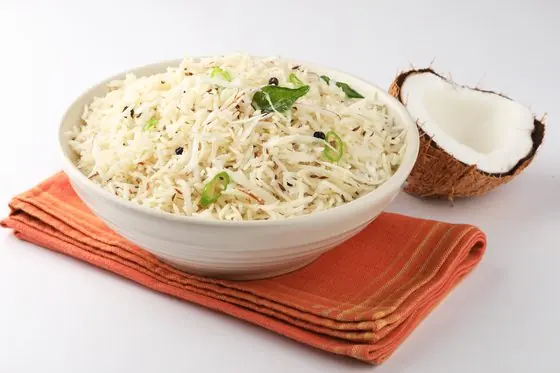
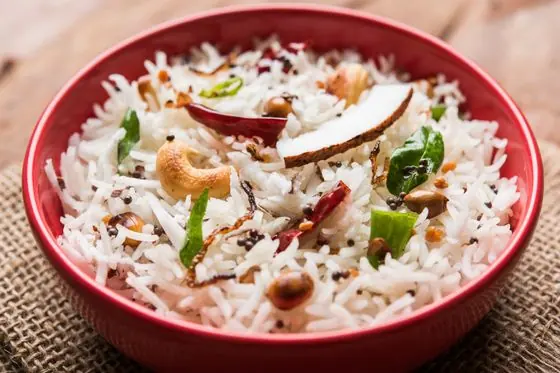
R015Matta Rice, Properly Cooked
Kerala's parboiled red rice, by absorption and by draining
Recipes › Rice, Grains and the Grain Question in Practice
R021
Finger millet porridge, with the enthusiasm removed
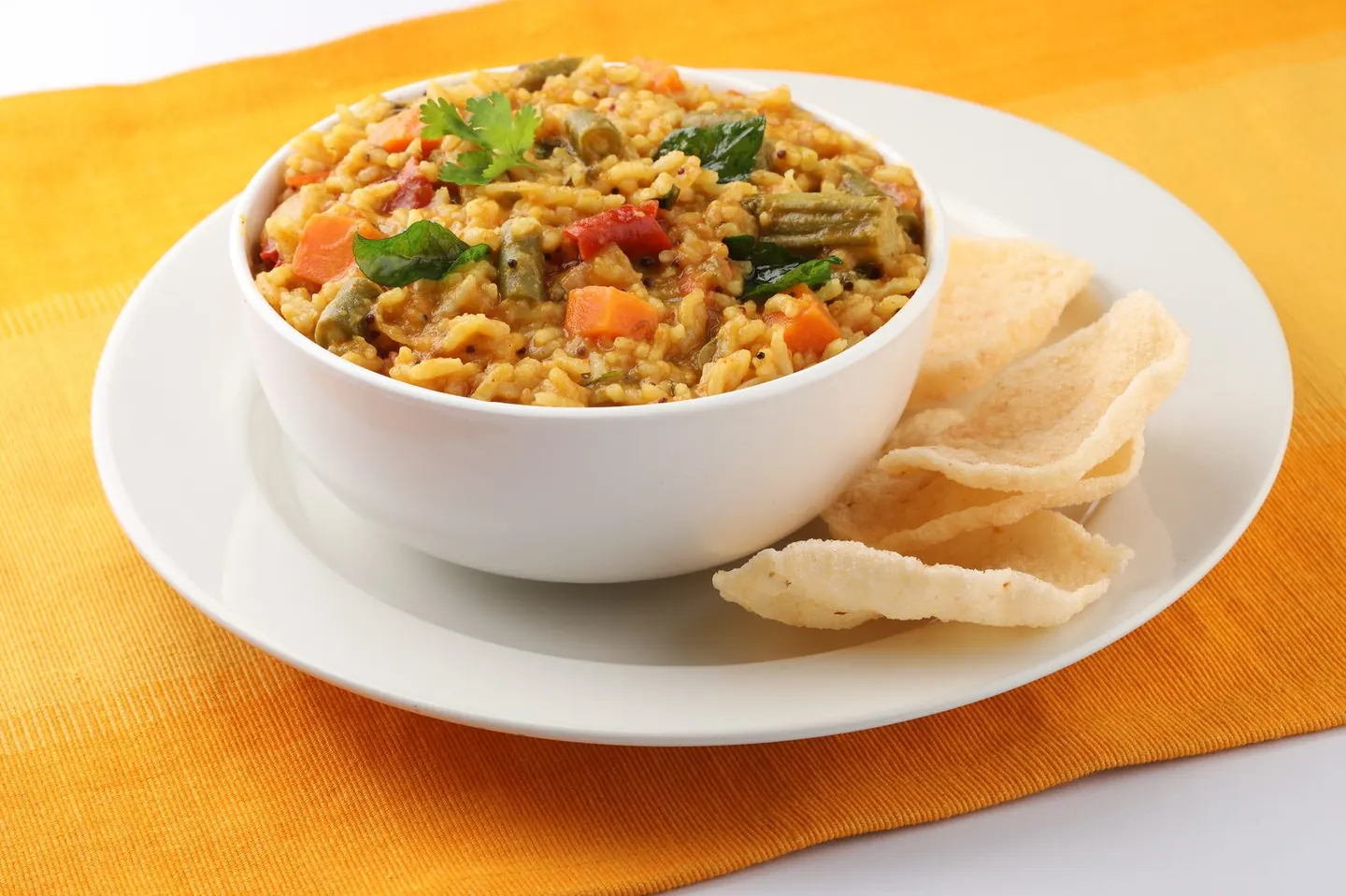
Photograph: Adobe Stock · representative of the dish
Ragi deserves a place in this book and it does not deserve the claims made for it. Its real advantages are quantified and modest: 11.18 g of total fibre per 100 g against 2.81 g in raw milled rice, and a substantial calcium content. Its protein, at 7.16 g, is lower than rice's 7.94 g, and its energy, at 321 kcal per 100 g, is not much below rice's 356. The dish below is worth cooking because it is good, filling and quick. It is not medicine.
Before you start: Ragi flour must be slaked in cold water before it meets heat. Tip dry flour into hot liquid and you get permanent lumps within four seconds. Mix it cold, then heat it.
Allergens: None of the major allergens as the recipe is written. Milk — only if you use dairy milk rather than coconut milk. Tree nuts (cashew) — the ingredient is optional. Sesame — the ingredient is optional.
Equipment: Heavy 2-litre pan; a whisk or a fork. Substitute: nothing needed, but a whisk is the difference between a smooth porridge and one with lumps you cannot break up later.
| Energy | 170 kcal |
| Protein | 4.6 g |
| Fibre | 3.4 g |
| Net carbohydrate | 28.6 g |
| Total carbohydrate | 32.0 g |
| Sugars | 8.4 g |
| Fat | 3.9 g |
| Saturated fat | 2.2 g |
| Sodium | 110 mg |
From ICMR-NIN IFCT 2017 and USDA FoodData Central. Per-serving figures stay the same when you scale.
Buy ragi flour in small bags and keep it in the fridge — it is high enough in fat to go rancid within about three months at room temperature, and stale ragi tastes distinctly of cardboard. Whole ragi grain, sprouted and milled at home, makes a noticeably better and coarser porridge; where you can buy sprouted ragi flour (sold as ragi malt or ragi sprouted flour), buy that. Health-food shops in the UK and US sell finger millet flour as "ragi" or "finger millet"; African grocers sell it as bulo or wimbi and it is the same grain.
Blood sugar: be honest with yourself about this one. The pooled millet data give a mean glycaemic index of 52.7 against 71.7 for milled rice (Anitha et al., 2021) — a real difference, from a review funded by a millet-promotion endowment and built from before-and-after studies rather than randomised comparisons. Set against it, one careful measurement of a fine-milled finger millet porridge came out at 93.4. The resolution is processing: coarse and thick is where the benefit lives, fine and thin is where it dies. Cook this thick, add the sesame, and eat it with a spoon.
Blood pressure: 110 mg per portion, nearly all of it from the milk and the pinch of salt. This is one of the lowest-sodium dishes in the book.
Cholesterol: 2.2 g of saturated fat from 150 ml of whole milk between two. Semi-skimmed takes it to about 1.2 g; second coconut milk raises it to about 5.5 g, which is worth knowing before you assume the plant version is the leaner one.
Jaggery → nothing, and 15 g of chopped dates instead. Sugars fall by about 2 g a portion and you gain fibre; the sweetness arrives in pockets rather than throughout, which most people find more satisfying.
Ragi flour → 60 g coarse ragi rava or sprouted ragi flour. Better texture, slower eating, and a plausibly lower glycaemic response for exactly the reason above.
Milk → 150 ml second coconut milk. Dairy-free, richer, and saturated fat rises from 2.2 g to about 5.5 g a portion.
Sweet → savoury. Leave out the jaggery and cardamom, use 1 g more salt, and finish with a mustard-and-shallot tempering as in R020 version three. This is the version to eat as a meal rather than a breakfast. (Allergen: this swap introduces mustard.)
Above four servings, whisk in two additions rather than one; a large volume of slurry hitting boiling water at once will lump however hard you stir.
Best within 20 minutes of cooking. Fridge 2 days in a covered container; it sets firm and needs 60–80 ml of water per portion to come back. Freeze 1 month without the milk, which separates. Reheat over a low flame with added water, whisking, 3–4 minutes, and add the milk off the heat.
Cold set ragi kanji can be cut into squares and pan-fried in a teaspoon of oil until crisp at the edges — a Kerala answer to polenta, and better than it sounds. Or thin it with buttermilk and drink it cold, which is what Karnataka does with ragi ambali.
Lumps: the flour met hot water. There is no fix once they have formed; pass it through a sieve and start the slaking properly next time.
Chalky, raw-cereal taste: under six minutes of cooking. Give it three or four more and watch for the colour to deepen.
Bitter: the flour is rancid. Smell the bag; ragi flour older than about three months at room temperature is usually gone.
Sets to a solid block in the bowl before you eat it: normal, and the reason to serve it warm rather than hot and to eat it promptly. Thin with a little hot water.
Serve with
R087 Moru Kachiyathu for the savoury version · M12 Ragi-Matta Dosa Batter if you want to use the rest of the bag · a chammanthi from Chapter 23
Tap a star to rate this recipe
The Kindle edition is on its way. Until it lands, the complete book — all 25 chapters and 137 recipes — is free to read here, and it stays free after.