 R015
R015Matta Rice, Properly Cooked
Kerala's parboiled red rice, by absorption and by draining
Recipes › Rice, Grains and the Grain Question in Practice
R022
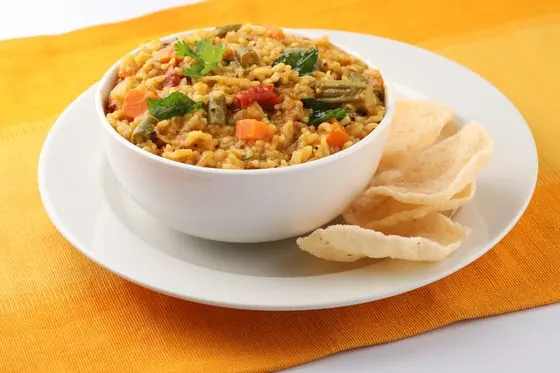
Little millet, dry-roasted, with 280 g of vegetables
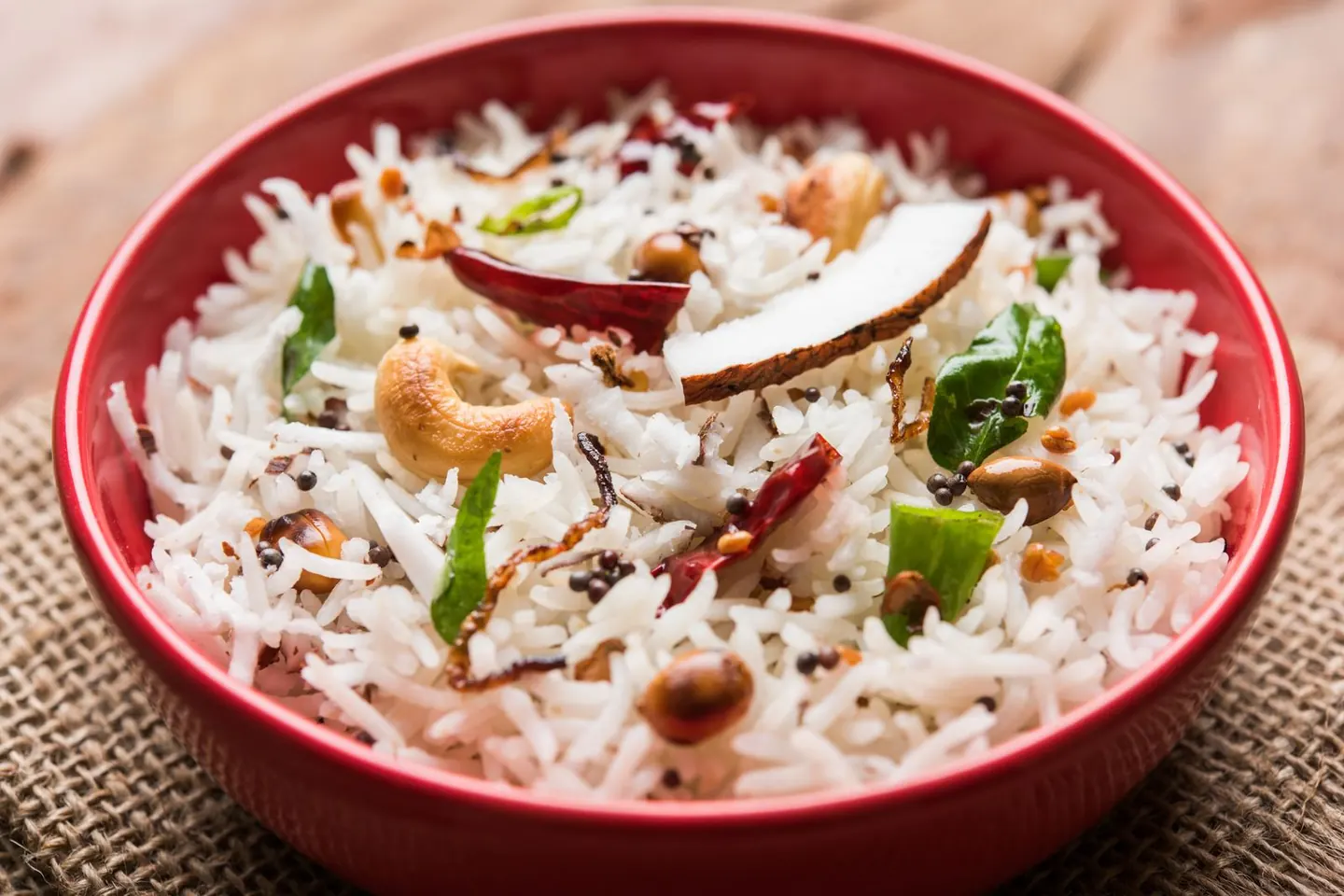
Photograph: Adobe Stock · representative of the dish
Upma is usually a way of eating refined semolina quickly, and swapping in a whole millet changes its character for the better — nuttier, chewier, and slower to eat. Little millet, samai, is the best of the small millets for this because its grains stay separate, and it carries 10.13 g of protein per 100 g, more than either ragi or rice. Dry-roasting it before the water goes in is not optional: it is what keeps the grains distinct instead of collapsing into porridge.
Before you start: Everything after the mustard seeds happens in sequence with no pauses. Have the millet roasted and in a bowl, the vegetables cut, the aromatics chopped, the coconut grated and 480 ml of water at a boil in a kettle before you light the flame under the oil.
Allergens: Mustard.
Equipment: Heavy 26 cm pan or cheena chatti with a lid; a dry pan for roasting. Substitute: roast the millet in the same pan you cook in, then tip it out and wipe the pan — you lose two minutes and a bowl.
| Energy | 264 kcal |
| Protein | 7.7 g |
| Fibre | 7.8 g |
| Net carbohydrate | 36.4 g |
| Total carbohydrate | 44.2 g |
| Sugars | 5.6 g |
| Fat | 8.3 g |
| Saturated fat | 5.6 g |
| Sodium | 230 mg |
From ICMR-NIN IFCT 2017 and USDA FoodData Central. Per-serving figures stay the same when you scale.
Little millet is samai in Tamil, saame in Kannada, kutki in Hindi, and is sold in Indian shops and health-food shops as "little millet". If you cannot find it, kodo millet (varagu) behaves almost identically at the same weight and water. Note the caution in the reference tables: IFCT 2017 labels its A017 "Varagu" entry inconsistently between kodo and foxtail millet, so a foxtail-millet figure from that table is not trustworthy — buy foxtail if you like it, but the panel below is computed for little millet. Frozen peas are fine, added in the last five minutes.
Blood sugar: 7.8 g of fibre per portion is the highest figure in this chapter, and 36.4 g of net carbohydrate is moderate for a full breakfast. The honest caveat from R021 applies here too and rather less severely: this millet is whole and coarse, cooked thick, which is the state in which millets keep their advantage. It is still a starch. Weigh it.
Blood pressure: 230 mg per portion. Leave the M07 out and finish with lime and a pinch of plain salt at the table for about 160 mg.
Cholesterol: 5.6 g of saturated fat, and almost all of it is the 30 g of grated coconut plus 12 g of coconut oil. Halve the coconut for about 3.8 g, or swap to gingelly oil and keep the coconut for about 4.5 g. The coconut is bringing 3 g of fibre with it, which the oil is not.
Little millet → kodo millet (varagu) at the same weight and water. Slightly softer, slightly earthier. Or 160 g broken matta, which makes a rice rava upma and is what most Kerala households cook.
Little millet → 160 g coarse semolina (rava), for the conventional dish. Fibre drops from 7.8 g to about 3.5 g a portion; it cooks in 6 minutes rather than 12. (Allergen: this swap introduces gluten (wheat).)
Coconut oil → gingelly oil. Saturated fat drops by about 1.1 g a portion, and the nuttiness suits millet better than it suits rice. (Allergen: this swap introduces sesame.)
Add 60 g cooked kadala or sprouted green gram at step 9 → protein up about 2.5 g and fibre up about 2 g a portion, and the plate now carries its pulse without a second dish.
The 3:1 water ratio drops slightly at eight servings because less evaporates from a deeper pan.
The millet can be dry-roasted a week ahead and kept in a jar; the vegetables can be cut the night before. Fridge 2 days covered. Freeze 1 month; millet freezes better than rice and comes back with less textural loss. Reheat covered with 2 tablespoons of water per portion until steaming hot throughout, 3–4 minutes.
Press cold upma into a flat cake, cut it into wedges and pan-fry in a teaspoon of oil until crisp on both sides — a genuinely good second dinner. Or crumble it into R087 with extra buttermilk.
Sticky, porridge-like mass: the millet was not roasted, or cold water was used. Both matter; do both.
Grains still hard after 12 minutes: not enough water, or the flame was too low to hold a simmer under the lid. Sprinkle 60 ml of boiling water over the surface, cover, and give it 5 minutes more.
Bitter aftertaste: the chana dal or the curry leaves burnt. Chana dal turns from gold to brown in about 20 seconds at that heat.
Vegetables mushy: they were diced too small or went in too early. Carrots in 6–8 mm dice, beans in 1 cm lengths, and the peas last.
Serve with
R087 Moru Kachiyathu · R086 Rasam · a coconut chammanthi from Chapter 23 · M06 the Low-Sodium All-Purpose Podi
Tap a star to rate this recipe
The Kindle edition is on its way. Until it lands, the complete book — all 25 chapters and 137 recipes — is free to read here, and it stays free after.