 R024
R024Meen Vevichathu
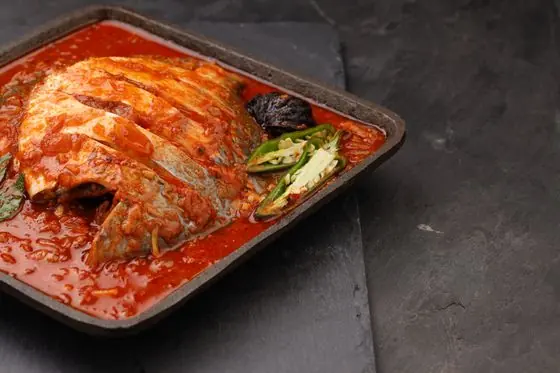
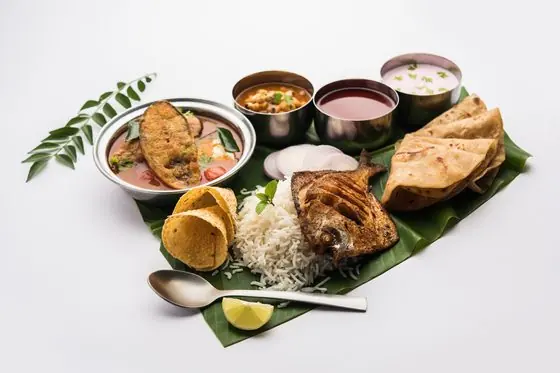
Kudampuli fish curry, the Kottayam Syrian Christian way
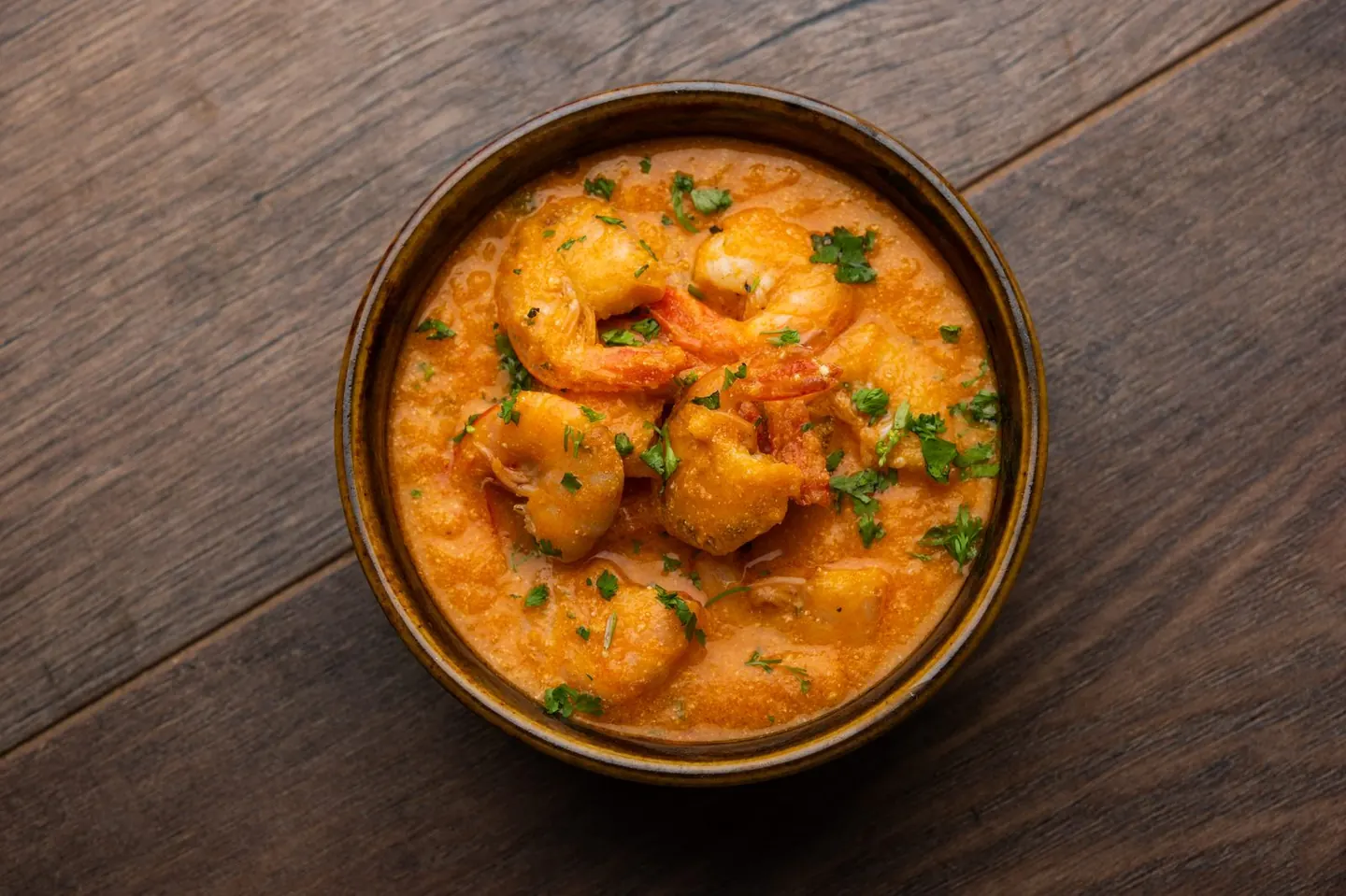
Photograph: Adobe Stock · representative of the dish
Plan ahead: assuming M09 is in the freezer.
Theeyal means burnt, and it is the third coconut grammar: neither ground raw nor added as milk, but dry-roasted to deep brown before grinding. A theeyal is dark, slightly bitter, faintly smoky and completely unlike anything else in India, and it is the most stable coconut curry there is — it reheats without splitting, because the coconut thickens it as a suspension of solids rather than as an emulsion. Prawns are the version toddy shops make.
Before you start: Take the M09 out of the freezer 20 minutes ahead, or thaw the cubes in 60 ml of warm water. Soak the tamarind in 100 ml of hot water for 10 minutes and squeeze it out through your fingers, discarding the fibres.
Allergens: Fish, crustaceans, sesame, mustard.
Equipment: Heavy pan or clay pot, 24 cm. Substitute: anything non-reactive — tamarind will pick up metal.
| Energy | 188 kcal |
| Protein | 17 g |
| Fibre | 4 g |
| Net carbohydrate | 9 g |
| Total carbohydrate | 13 g |
| Sugars | 7 g |
| Fat | 9 g |
| Saturated fat | 5 g |
| Sodium | 270 mg |
From ICMR-NIN IFCT 2017 and USDA FoodData Central. Per-serving figures stay the same when you scale.
Frozen prawns are usually better than the "fresh" ones next to them, which were frozen at sea and thawed for display. In the US: raw shell-on white or brown shrimp, 31/40 count. In the UK: raw king prawns, and note that most "prawns" sold cooked are useless here — buy raw and grey. In the Gulf: local robian is excellent and often still twitching. In Australia: raw banana or tiger prawns. Keep the heads and shells for M13; a stock made from prawn shells, dry-roasted 3–4 minutes first, is the single best liquid for this curry. Tamarind block is everywhere; if you can only get concentrate, use 8 g and taste before adding more.
Blood sugar: 10 g of net carbohydrate, of which about 7 g is sugars from the shallots and tamarind. Still a low-load dish, and 4 g of fibre alongside.
Blood pressure: 270 mg, which earns the low-sodium tag. Prawns carry about 120 mg of sodium per 100 g of their own, so most of what is here is the prawn rather than the cellar; you cannot cut much further.
Cholesterol: 5 g of saturated fat against roughly 16 g if the same curry were built on 250 ml of thick coconut milk. That is the theeyal argument in one number.
No M09 → 60 g grated coconut dry-roasted in the pan until deep brown, 10–14 minutes, then ground with 3 g coriander seed and 1 dried chilli. Same result, twenty-five more minutes.
Prawns → 400 g diced firm white fish, added at step 5 for 5–7 minutes. Or 500 g mussel meat, 3–4 minutes. Or, without any seafood, 300 g cubed chena and 100 g cooked vanpayar for a vegetarian theeyal. (Allergen: this swap introduces molluscs.)
Tamarind → 3 pieces kudampuli. Deeper and smokier, and closer to a Kottayam palate; theeyal is traditionally a tamarind dish.
Sesame oil → coconut oil. More authentic to the tradition, about 2 g more saturated fat per serving.
Make the gravy through step 4 and hold it. Fridge 3 days, gravy or finished dish. Freeze 2 months — this is the one coconut curry in the chapter that freezes properly, because there is no emulsion to break; freeze the gravy alone and add fresh prawns on reheating. Reheat freely, even at a simmer.
Reduce the gravy hard and use it as a thick relish with kappa, which is a toddy-shop combination. Or thin it with stock and poach eggs in it.
Prawns tough and rubbery: more than 4 minutes at step 5. Prawns go from raw to overdone in about 90 seconds; watch the curl.
Gravy gritty: the M09 was not ground fine enough, or a home mixie left it coarse. Grind longer next time with a splash of water; it is unfixable now.
Too bitter: the coconut over-roasted when M09 was made. A teaspoon of jaggery rescues it, at about 4 kcal a serving.
Thin and pale: not enough reduction at step 4, or only one portion of M09. Simmer 4 minutes more.
Serve with
R015 Matta Rice · R016 Chilled-and-Reheated Rice · R063 Cabbage Thoran · R055 Kadala Ularthiyathu
Tap a star to rate this recipe
The Kindle edition is on its way. Until it lands, the complete book — all 25 chapters and 137 recipes — is free to read here, and it stays free after.