 R040
R040Nadan Kozhi Curry
The everyday country chicken curry
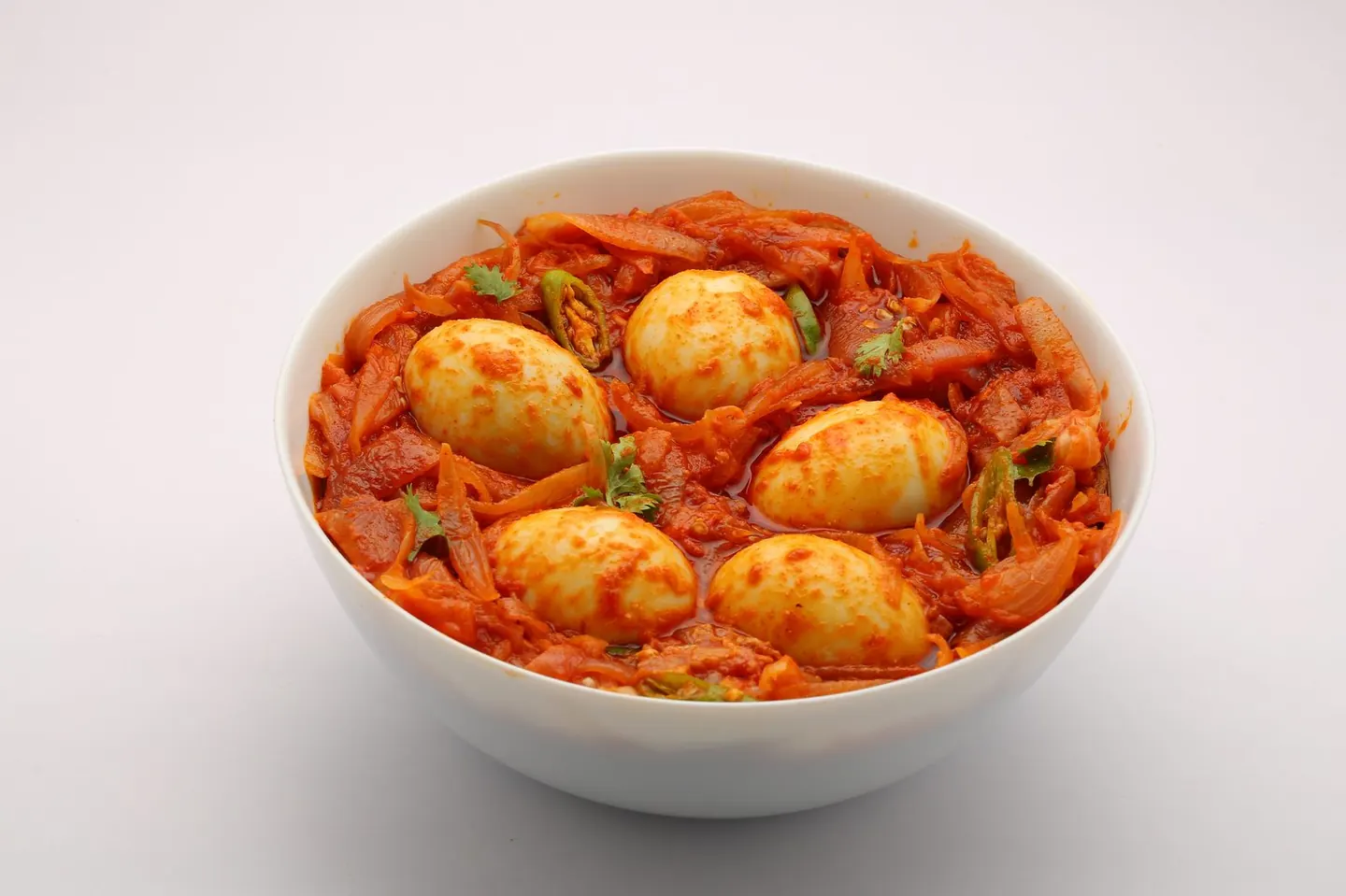
Photograph: Adobe Stock · representative of the dish
Egg is the most underrated protein in the Kerala kitchen: 13 g per 100 g at 135 kcal, available everywhere, and the one animal food that needs no cold chain to be bought fresh. Mutta curry is what a household makes when the fish did not arrive. This version keeps the gravy generous, because the gravy is what carries it over rice or idiyappam, and it takes the fat out of the two places where nobody misses it — the frying of the eggs and the last ladle of thick milk.
Before you start: Boil and peel the eggs before you start the gravy. Peeling hot eggs while a masala catches is how this dish goes wrong.
Allergens: Egg. Sesame or peanuts — whichever of the two oils you use (it reaches the dish through M16).
Equipment: 24 cm pan with a lid; small pan for the eggs. Substitute: boil the eggs in the same pan first, lift them out, and build the curry in it — one less thing to wash.
| Energy | 292 kcal |
| Protein | 16 g |
| Fibre | 4 g |
| Net carbohydrate | 9 g |
| Total carbohydrate | 13 g |
| Sugars | 5 g |
| Fat | 21 g |
| Saturated fat | 13 g |
| Sodium | 360 mg |
From ICMR-NIN IFCT 2017 and USDA FoodData Central. Per-serving figures stay the same when you scale.
Nine minutes at a bare simmer from refrigerator-cold gives a yolk that is fully set but still bright — beyond eleven minutes it goes chalky and grey at the edge, and no gravy hides that. Eggs one week old peel far more easily than eggs one day old, which is the one argument in favour of the older box.
Blood sugar: 9 g of net carbohydrate. Egg's near-zero carbohydrate load is why this dish is such a useful partner for idiyappam or appam, both of which bring plenty of their own.
Blood pressure: 360 mg per serving, and about 140 mg of that is the eggs themselves, which carry sodium naturally. The added salt is only 3 g across four servings.
Cholesterol: 13 g of saturated fat, roughly 9 g from the coconut and 3 g from the eggs. The dietary-cholesterol content of egg is not the lever here; the coconut milk is. Drop the first extraction to 30 ml if you are working to a saturated-fat target.
Six eggs instead of eight → 12 g of protein and about 16 g of fat per serving, and the dish stretches better if there is a pulse alongside.
Two whole eggs plus four whites per two servings → protein holds at about 14 g while fat falls to 13 g. Egg white boiled is 12.37 g of protein at 53 kcal per 100 g, against 148 kcal for the whole boiled egg.
Coconut milk → 200 ml of thin buttermilk added off the heat, for a moru-inflected version. Lighter by 8 g of fat, sharper, and it must not boil either. (Allergen: this swap introduces milk.)
Add 200 g of cooked vanpayar at step 6 → protein to about 21 g and fibre to 9 g per serving, and this becomes a complete plate on its own.
Make the gravy to step 6 up to two days ahead; boil the eggs on the day. Fridge 2 days complete — the whites toughen after that. Freeze: no. Boiled egg white goes rubbery and weeps on thawing, and this is one of the few dishes in the book that genuinely should not go in the freezer. Reheat gently, adding the eggs only in the last minute.
Chop the eggs into the gravy, reduce it hard, and it becomes a pathiri filling or an excellent topping for R020 kanji.
Grey ring around the yolk: boiled too long. Nine minutes, then cold water.
Whites rubbery: the eggs simmered in the gravy for more than 2–3 minutes.
Gravy split: the thick milk boiled, or the tomato's acid met the thick milk over heat. Off the heat, always.
Serve with
R007 Thattu Dosa · R001 Appam · R004 Puttu · R055 Kadala Ularthiyathu
Tap a star to rate this recipe
The Kindle edition is on its way. Until it lands, the complete book — all 25 chapters and 137 recipes — is free to read here, and it stays free after.