 R040
R040Nadan Kozhi Curry
The everyday country chicken curry
Recipes › Chicken, Egg and Meat
R050
Attirachi ishtu — goat, white pepper and coconut milk
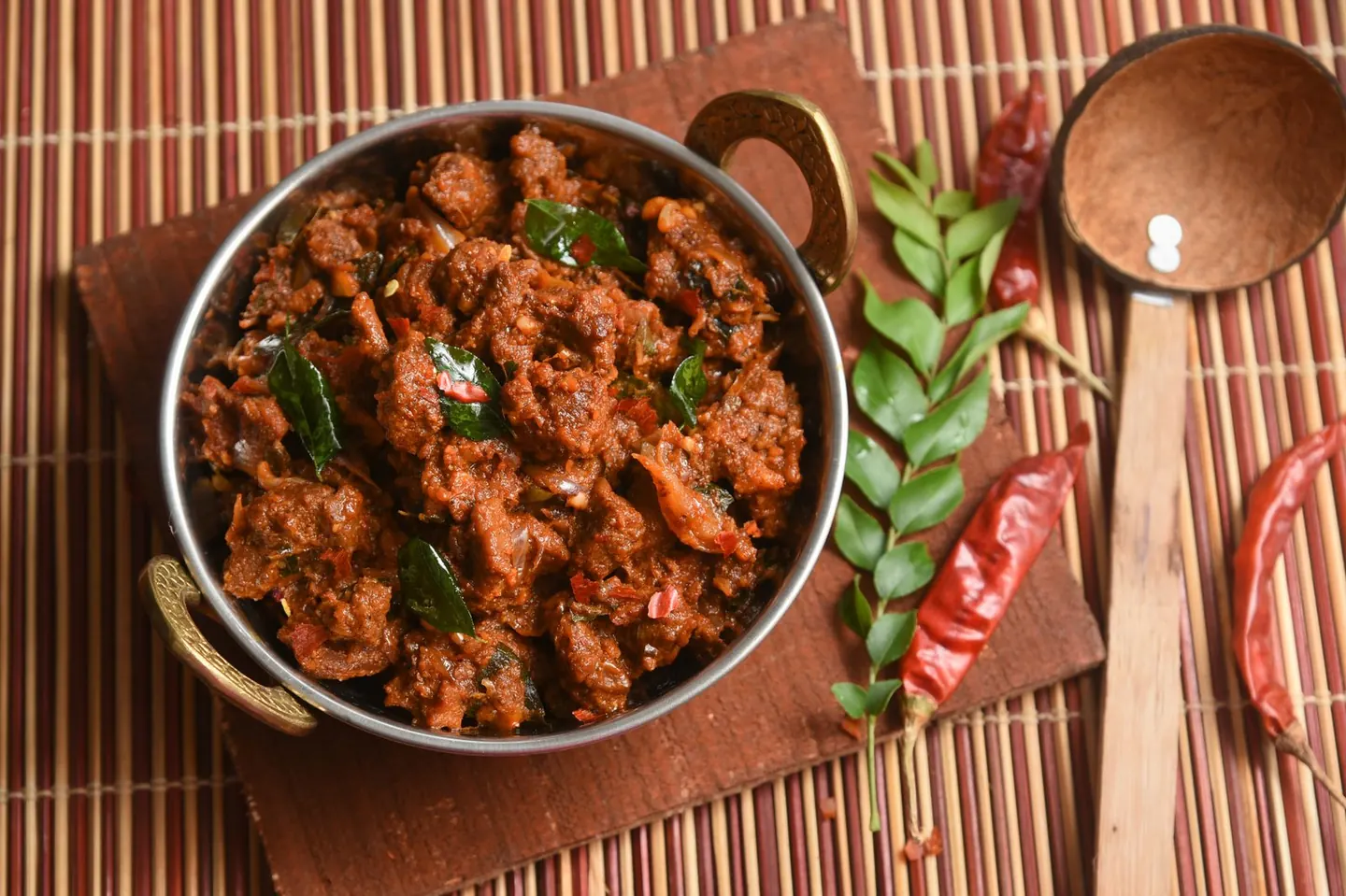
Photograph: Adobe Stock · representative of the dish
In central Kerala the Syrian Christian stew was made with beef or lamb before it was ever made with chicken, and mutton stew is the version that still turns up at Easter breakfast in Kottayam households. Kerala "mutton" is goat, not sheep, and that matters nutritionally: goat is leaner than lamb, leaner than beef and leaner than chicken thigh. If you have been avoiding red meat on a lipid panel and you miss it, this is the recipe to read twice.
Before you start: Have the thick milk measured and standing away from the hob, and the finishing pepper ground. The last ninety seconds of a stew are the whole dish.
Allergens: None of the major allergens.
Equipment: Pressure cooker or heavy lidded pot, 4 litre. Substitute: a pot works and takes an extra half hour; goat is tougher than lamb and rewards the time either way.
| Energy | 364 kcal |
| Protein | 26 g |
| Fibre | 5 g |
| Net carbohydrate | 21 g |
| Total carbohydrate | 26 g |
| Sugars | 6 g |
| Fat | 19 g |
| Saturated fat | 15 g |
| Sodium | 400 mg |
From ICMR-NIN IFCT 2017 and USDA FoodData Central. Per-serving figures stay the same when you scale.
Ask for shoulder and neck on the bone, which give the best stew, rather than leg, which is leaner but drier. Outside India, goat is sold at halal butchers, Caribbean and West African grocers and most South Asian shops; lamb shoulder is the nearest substitute and carries roughly three times the fat, so if you use it, trim hard and drop the coconut oil to 5 g.
Blood sugar: 21 g of net carbohydrate, nearly all of it potato. This is a stew with a starch already in it, so treat it as such: appam or rice in a smaller quantity than usual, or swap half the potato for ash gourd, which is 2.84 g of available carbohydrate per 100 g against potato's 15.4 g.
Blood pressure: 400 mg, the highest of the coconut-milk dishes here, partly because goat itself carries about 82 mg of sodium per 100 g. Three grams of M07 brings it to about 345 mg.
Cholesterol: 15 g of saturated fat, and about 13 g of that is coconut milk. The meat contributes roughly 0.7 g per serving. If you take one thing from this chapter, take this: in Kerala's coconut-milk dishes, the meat is rarely the saturated fat.
Lamb shoulder → trim hard, drop the oil to 5 g, and expect about 6 g more fat per serving.
Beef → 600 g of chuck, pressure-cooked 25–30 minutes at step 4. About 5 g more fat per serving.
Half the potato replaced with ash gourd or green plantain → net carbohydrate to about 14 g. Ash gourd is the bigger drop; plantain keeps more of the stew's body.
No first-extraction milk at all → 300 kcal and 11 g of saturated fat per serving, and a thinner, cleaner stew that is still worth eating. This is the version to make if a lipid panel is the concern.
Cook to step 5 up to a day ahead and finish with the thick milk on the day; this is how a Kottayam kitchen gets stew onto the table at seven in the morning. Fridge 2 days. Freeze 1 month at step 4, before the potato and before the thick milk. Reheat below a simmer.
Pull the meat off the bones, mash the potato into the gravy, and it becomes a thick ishtu to eat with pathiri. Or thin it with second milk into a soup with more vegetables.
Grey, cloudy gravy: the shallots browned, or the potato went in too early and broke up.
Meat still tough after the full time: older goat needs longer. Another 10 minutes under pressure, and check again.
Split gravy: the thick milk boiled, or the cooker was still under residual pressure when the milk went in. Release fully, stand a minute, then add.
Serve with
R001 Appam · R007 Thattu Dosa · R062 Sprouted Moong Salad · R107 Sambharam
Tap a star to rate this recipe
The Kindle edition is on its way. Until it lands, the complete book — all 25 chapters and 137 recipes — is free to read here, and it stays free after.