 R053
R053Vanpayar Thoran
Brown cowpea with grated coconut
R056
Horse gram with coconut — the highest-protein pulse in the pantry
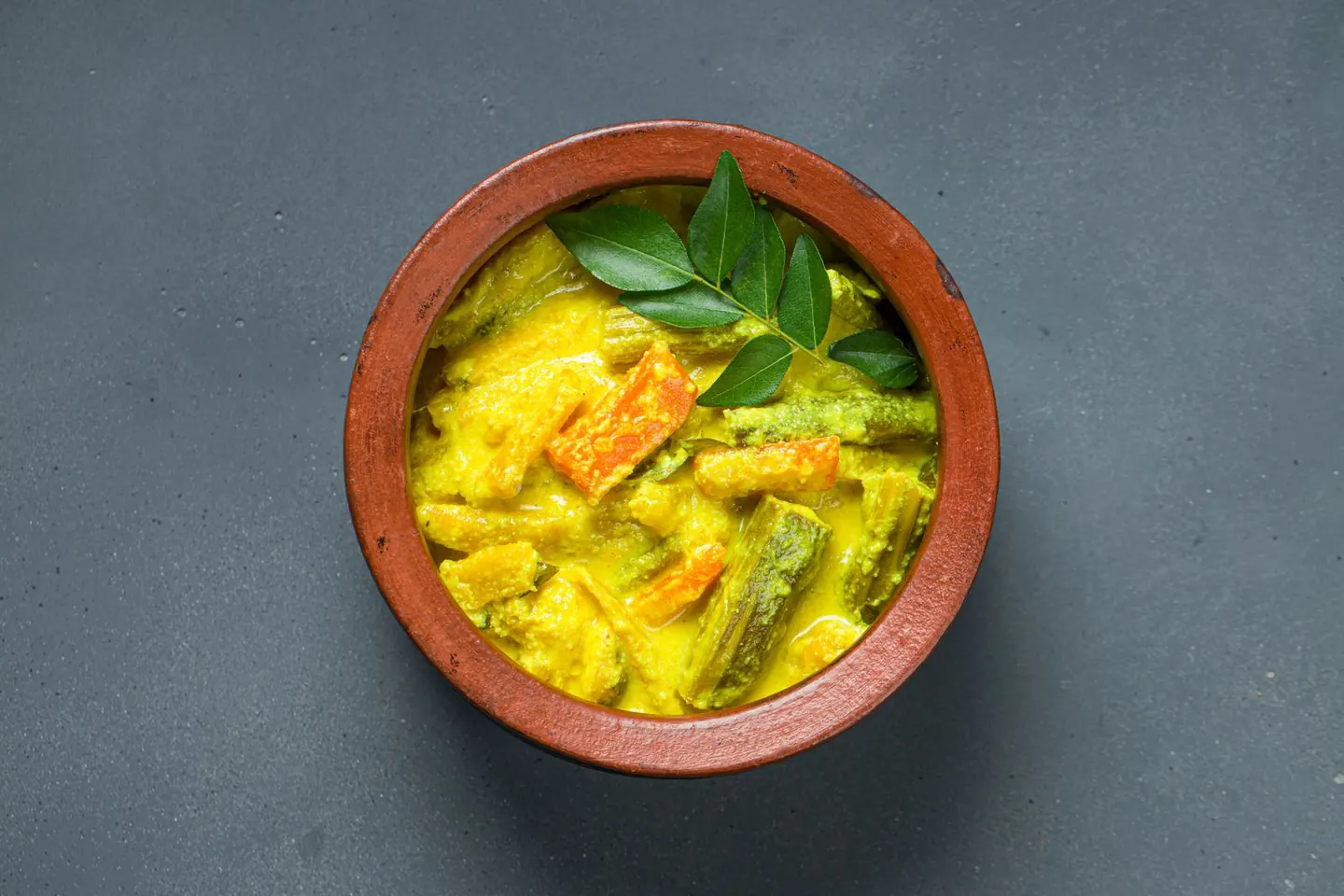
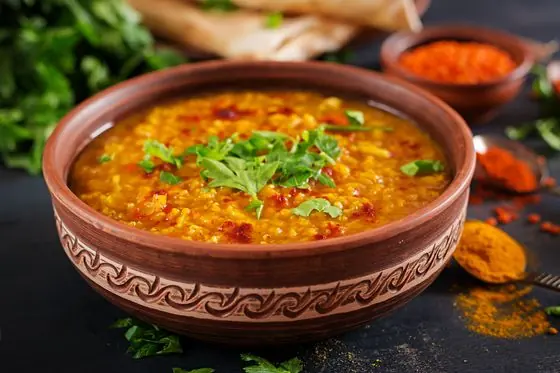
Photograph: Adobe Stock · representative of the dish
Plan ahead: plus 10–12 hours soaking and 25 minutes pressure-cooking — required.
Muthira — horse gram, Macrotyloma uniflorum — carries 21.7 g of protein and only 0.62 g of fat per 100 g dry, which makes it the leanest and one of the most protein-dense pulses in the Kerala pantry. It is also the hardest bean here, needing an overnight soak and twenty-five minutes under pressure, and it has a distinctly earthy, faintly bitter flavour that coconut and green chilli are exactly the right partners for. It was fed to animals and to people who had no choice, and it is now sold in Kerala at a premium. That inversion is worth noticing.
Before you start: Start the soak the night before. Twelve hours is not optional for muthira, and a four-hour soak will leave you with a bean that never softens.
Allergens: Mustard.
Equipment: Pressure cooker — genuinely necessary here; 26 cm pan; flat wooden turner. Substitute: an open pot takes 1½–2 hours and needs topping up with hot water. This is the one recipe in the chapter where a pressure cooker changes what is practical.
| Energy | 261 kcal |
| Protein | 11 g |
| Fibre | 6 g |
| Net carbohydrate | 30 g |
| Total carbohydrate | 36 g |
| Sugars | 4 g |
| Fat | 11 g |
| Saturated fat | 9 g |
| Sodium | 220 mg |
From ICMR-NIN IFCT 2017 and USDA FoodData Central. Per-serving figures stay the same when you scale.
Horse gram is sold as muthira, kollu, kulthi, hurali or horse gram by every South Indian grocer and increasingly by health-food shops at three times the price. Buy from the grocer. Check the date if you can: horse gram that has been in a warehouse for two years will not soften in any amount of time, and this is the pulse where that failure is most common. There is no acceptable tinned version.
Blood sugar: 30 g of net carbohydrate at a category glycaemic index near 34 gives an estimated glycaemic load around 10. Note honestly that no Kerala-specific glycaemic index measurement for muthira exists in this book's sources; the category figure is what is available.
Blood pressure: 220 mg per serving from 2.5 g of salt.
Cholesterol: 9 g of saturated fat, all coconut. Cut to 50 g of coconut for about 6 g. A systematic review of horse gram's traditional uses and composition exists (Oli et al., 2024), and it should not be read as evidence of any therapeutic effect; this book makes no such claim.
Vanpayar → see R053. Faster, softer, sweeter, 4 g more fibre per serving and 1 g less protein.
Sprouted muthira → soak 12 hours, then sprout 24 hours before cooking; the cooking time falls to 12–15 minutes under pressure and the flavour sweetens noticeably. Follow the food-safety method in R062.
Add 200 g of grated carrot or shredded cabbage at step 5 → six servings, more volume.
Add 100 g of green mango, diced, at step 6 → the sharp Malabar version, and very good.
Given the soak and the cook, this pulse should only ever be made in quantity. Fridge 4 days cooked and drained. Freeze 3 months in 100 g portions — the single highest-value thing in this chapter to have in a freezer. Reheat the finished thoran in a dry pan, 2–3 minutes.
The cooking water — muthira vellam — is drunk warm in parts of Kerala and Tamil Nadu, and it is a pleasant, faintly nutty broth; treat it as a cultural practice rather than a health measure, because there is no clinical evidence about it. Cold thoran folds into R062, into an omelette, or into leftover rice.
Never softens: old pulses, or a soak under 10 hours. Both are common with horse gram and neither is fixable once cooking has started.
Bitter or harsh: the soaking water was not discarded. Always change it.
Dish tastes flat: under-chillied. Muthira needs more heat than the other pulses to lift its earthiness.
Serve with
R015 Matta Rice · R020 Kanji · R026 Mathi Curry · R107 Sambharam
Tap a star to rate this recipe
The Kindle edition is on its way. Until it lands, the complete book — all 25 chapters and 137 recipes — is free to read here, and it stays free after.