 R063
R063Cabbage Thoran
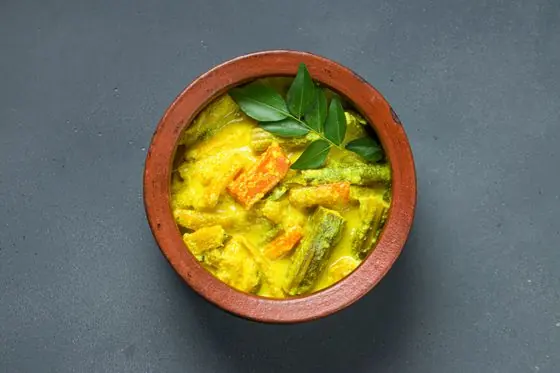
The master thoran: shredded cabbage, crushed coconut, turmeric
Recipes › Vegetables: The Half of the Plate
R065
Amaranth greens with coconut and crushed garlic
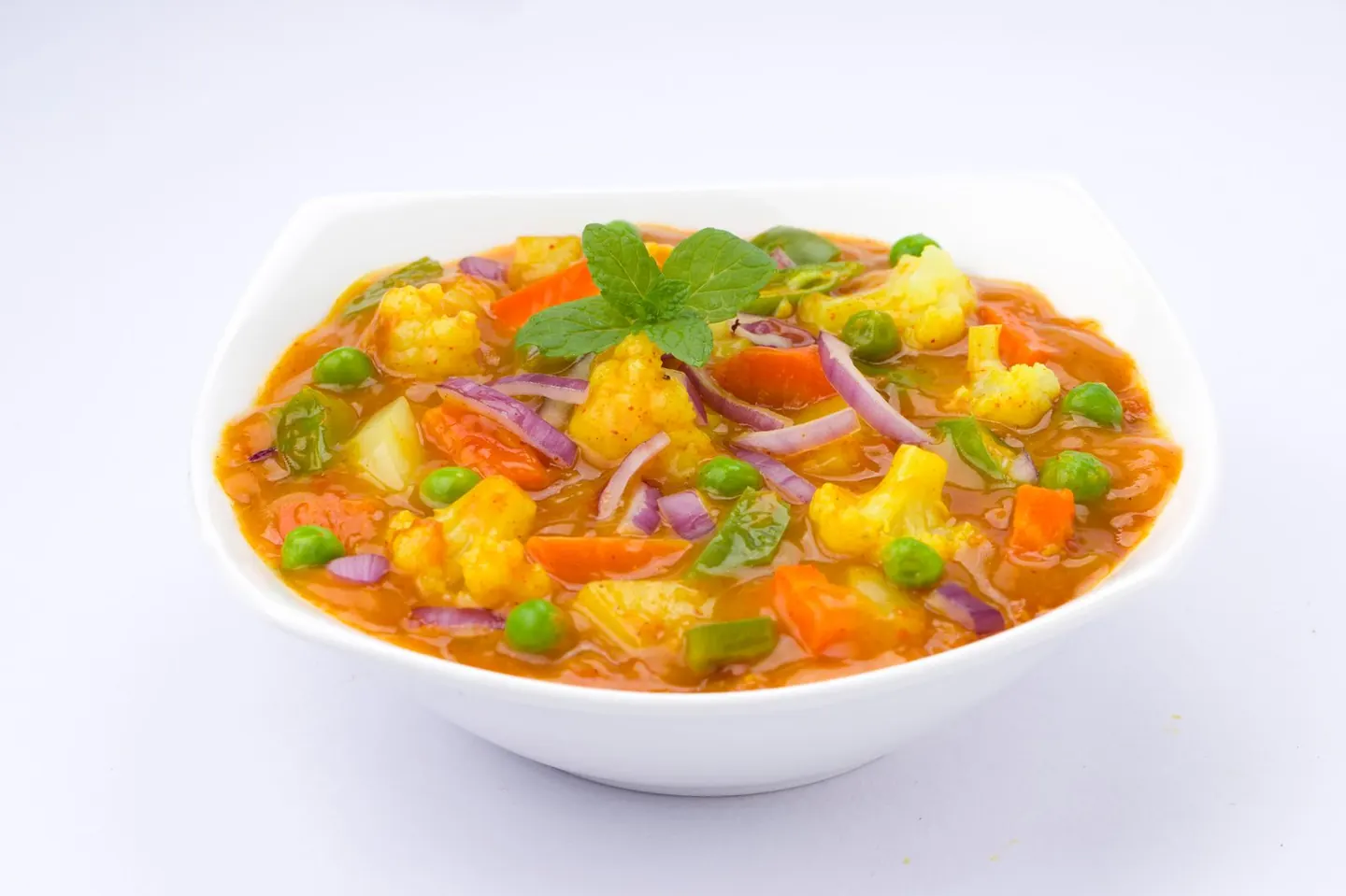
Photograph: Adobe Stock · representative of the dish
Cheera is the everyday green of Kerala backyards, and it behaves like no other vegetable in this chapter: 600 g of it becomes about 400 g in four minutes and gives up an alarming amount of water. That water is the whole difficulty. Cook it uncovered, over a flame higher than feels right, and stop while the stems still have some resistance. Garlic goes into this crush where it does not into the others, because amaranth's mineral, slightly metallic note wants it.
Before you start: Wash and dry the greens well ahead — at least 20 minutes in a colander, or spun in a salad spinner. Wet leaves add water the dish cannot afford, and this is the single biggest cause of a soggy cheera thoran.
Allergens: Mustard.
Equipment: The widest pan you own, 28 cm if possible, no lid needed; chattuvam. Substitute: a wok, which is better than a narrow saucepan. The dish fails in a small pan.
| Energy | 125 kcal |
| Protein | 6.0 g |
| Fibre | 8.5 g |
| Net carbohydrate | 6.4 g |
| Total carbohydrate | 14.9 g |
| Sugars | 2.5 g |
| Fat | 8.4 g |
| Saturated fat | 6.5 g |
| Sodium | 230 mg |
From ICMR-NIN IFCT 2017 and USDA FoodData Central. Per-serving figures stay the same when you scale.
Amaranth greens are sold as cheera, thotakura, callaloo, Chinese spinach or simply amaranth in Indian, Caribbean, Chinese and African groceries, and they are one of the easiest Kerala greens to find abroad. Red amaranth works and stains everything pink. Where there is none: 600 g of spinach is the closest common substitute in texture and cooking time, though it is blander and gives even more water, so cook it 2 minutes less; 500 g of chard leaves with the stems chopped separately and started 2 minutes earlier is closer in flavour. Frozen chopped spinach works at 400 g, thawed and squeezed hard.
Blood sugar: 6.4 g net carbohydrate and 8.5 g fibre per serving, which is the best fibre-to-carbohydrate ratio of any thoran here.
Blood pressure: 230 mg sodium, or about 175 mg with M07. Amaranth is naturally potassium-rich, though this book does not publish a figure for it:.
Cholesterol: 6.5 g saturated fat, essentially all of it coconut. At 25 g of coconut instead of 50 g the dish is still good — greens carry coconut better than any other vegetable — and saturated fat halves.
Amaranth → spinach, chard, colocasia leaves or moringa leaves. See the sourcing note for timings. Colocasia leaves must be cooked through, never briefly, and are not a beginner's green.
Garlic → 20 g extra shallot. Milder and more sadya-appropriate, since temple and formal cooking excludes garlic; household cooking often does not.
Add 100 g cooked cherupayar at step 5 → the classic cheera payar thoran. Protein rises about 2.5 g per serving and it becomes a meal rather than a side.
Add 40 g grated carrot with the greens → colour and sweetness, sugars up about 1 g.
Above four servings, cook in two batches without exception. Greens cannot be cooked dry in a crowded pan.
Eat the day it is made. Fridge 2 days, and it darkens visibly by the second. Do not freeze — thawed amaranth is a wet grey purée. Reheat in a dry pan 2–3 minutes.
Cold cheera thoran folded into dosa batter makes an excellent green dosa. Or blend a cupful into a dal (R060) as body and colour.
Dark, wet and sour: a lid was used, or the pan was too small. Neither is recoverable; the flavour has already gone.
Bitter or astringent: the stems were too thick and woody. Use the top third of the stem only, and compost the rest.
Gritty: amaranth grows low and holds soil in the leaf axils. Wash in three changes of water, lifting the leaves out rather than pouring the water off.
Serve with
R015 Matta Rice · R055 Kadala Ularthiyathu · R081 Moru Curry · R024 Meen Vevichathu
Tap a star to rate this recipe
The Kindle edition is on its way. Until it lands, the complete book — all 25 chapters and 137 recipes — is free to read here, and it stays free after.