 R063
R063Cabbage Thoran
The master thoran: shredded cabbage, crushed coconut, turmeric
Recipes › Vegetables: The Half of the Plate
R076
Green papaya, grated, with coconut and cumin
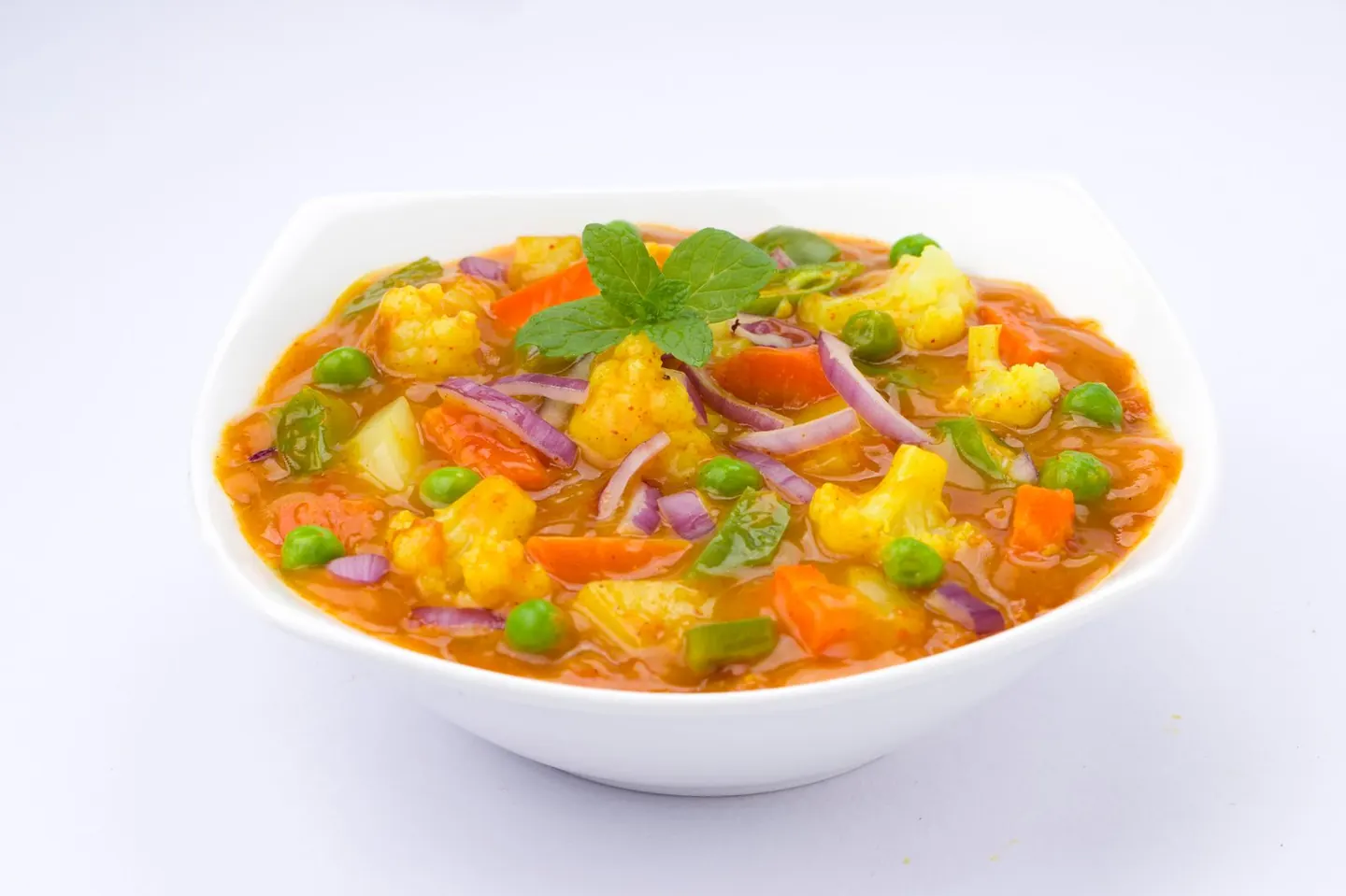
Photograph: Adobe Stock · representative of the dish
Papaya came to Kerala with the Portuguese in the 16th century and stayed in the backyard rather than the orchard, which is why the unripe fruit is treated as a vegetable here and the ripe one as fruit. Green papaya is 24 kcal and 4.4 g of available carbohydrate per 100 g, and it has a quality no other vegetable in this chapter has: a mild, faintly milky sweetness that takes coconut better than cabbage does. If there is one thoran in this chapter to make for someone who thinks they do not like vegetables, this is it.
Before you start: Green papaya leaks a sticky white latex when cut. Peel it under running water, or rinse the grated flesh once and drain it well; the latex is harmless but it makes everything tacky.
Allergens: Mustard.
Equipment: Wide pan, 26 cm, with a lid; coarse grater. Substitute: the grating disc of a food processor, which is quicker and slightly wetter.
| Energy | 114 kcal |
| Protein | 1.6 g |
| Fibre | 4.7 g |
| Net carbohydrate | 8.2 g |
| Total carbohydrate | 12.9 g |
| Sugars | 4.2 g |
| Fat | 8.3 g |
| Saturated fat | 6.7 g |
| Sodium | 260 mg |
From ICMR-NIN IFCT 2017 and USDA FoodData Central. Per-serving figures stay the same when you scale.
Green papaya is easier to buy abroad than almost anything else in this chapter: every Caribbean, Latin American, Filipino, Vietnamese and Indian grocer sells it, often already shredded in bags for green papaya salad, which is exactly right for this dish and saves fifteen minutes. Choose one that is uniformly hard and dark green, with no yellow blush; a papaya that has begun to ripen turns sweet and slumps in the pan. Where there is genuinely none: 500 g of grated chayote, kohlrabi or white radish all work, kohlrabi being the closest in sweetness and radish being the sharpest.
Blood sugar: 8.2 g net carbohydrate per serving. Green papaya carries about a third of the available carbohydrate of ripe papaya's Kerala cousins on the fruit plate, and it is worth knowing which one you have bought.
Blood pressure: 260 mg sodium, or about 195 mg with M07.
Cholesterol: 6.7 g saturated fat per serving, from the coconut. At 25 g of coconut it falls to about 3.6 g, and papaya carries a reduced quantity of coconut better than beetroot does.
Green papaya → grated kohlrabi, chayote or white radish. Kohlrabi closest, radish sharpest, and radish needs an extra 2 minutes uncovered because it holds more water.
Cumin → 1 g fenugreek seed, crushed. Bitter and aromatic and very good here. Note that fenugreek has real glycaemic effects at 10–25 g a day and can compound insulin and sulfonylureas; a gram in a dish for four does not approach that, and Chapter 9 sets out the detail.
Add 100 g cooked cherupayar at step 6 → the pulse goes on the plate and protein rises about 2.5 g.
Add 30 g grated carrot → colour, and about 0.5 g more sugar per serving.
Grate up to 1 day ahead, rinsed and kept in water in the fridge, then drained and squeezed. Fridge 3 days. Freeze 1 month, watery on thawing. Reheat dry, 2–3 minutes.
Very good cold, dressed with lime and a pinch of M06, as something between a thoran and a salad. It also goes into a dosa well.
Mushy: the papaya was beginning to ripen, or it cooked two minutes too long. Both are common; test early.
Sticky pan and sticky hands: latex. Rinse the grated flesh next time.
Bland: green papaya needs salt and chilli at the top of the range given, and it wants the cumin.
Serve with
R015 Matta Rice · R055 Kadala Ularthiyathu · R024 Meen Vevichathu · R081 Moru Curry
Tap a star to rate this recipe
The Kindle edition is on its way. Until it lands, the complete book — all 25 chapters and 137 recipes — is free to read here, and it stays free after.