 R063
R063Cabbage Thoran
The master thoran: shredded cabbage, crushed coconut, turmeric
Recipes › Vegetables: The Half of the Plate
R077
Chinese potato, scrubbed, boiled and glazed with pepper
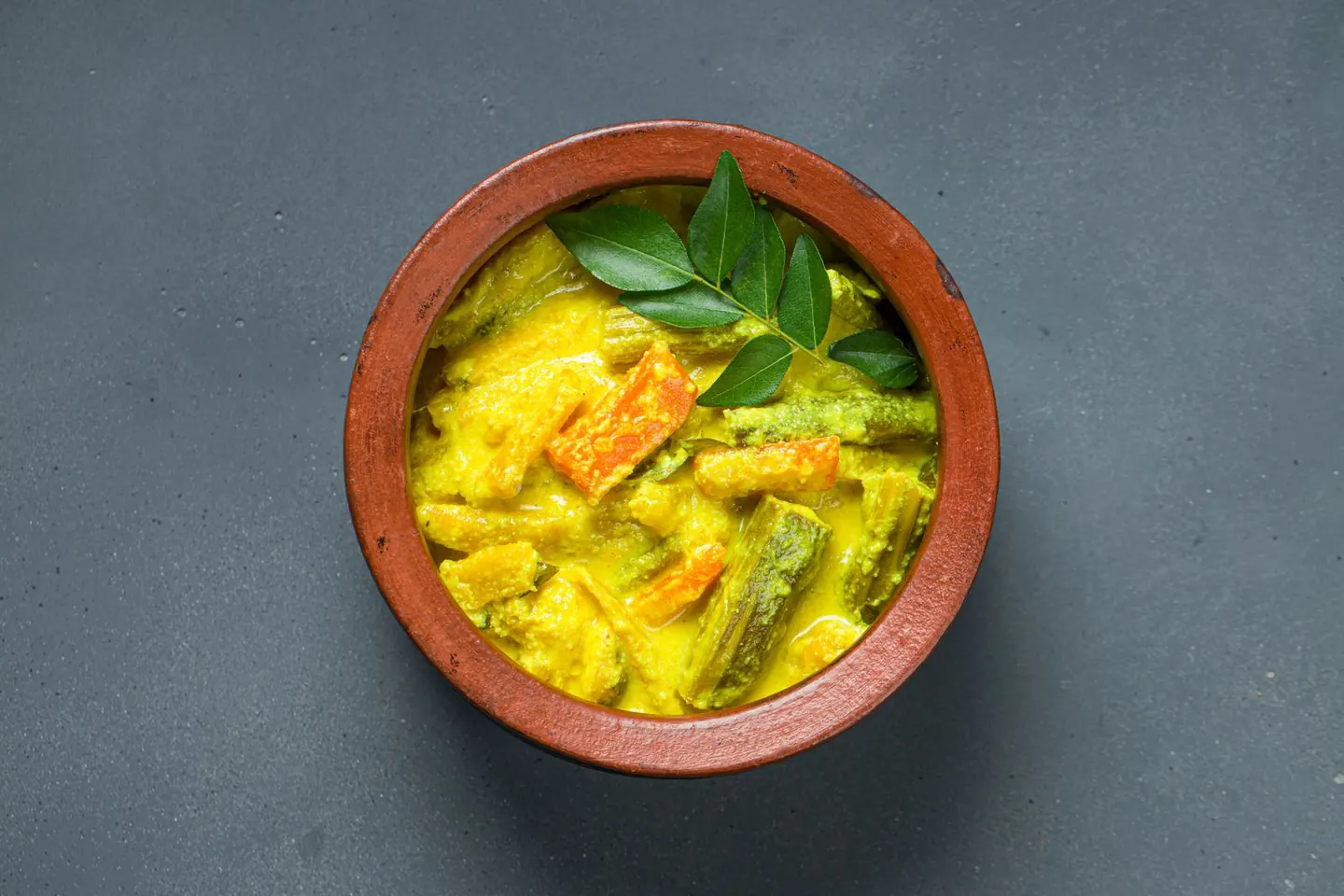
Photograph: Adobe Stock · representative of the dish
Koorka is the winter tuber of the Kerala backyard, and it belongs to the one day in the calendar when the tubers take the centre of the leaf: Thiruvathira, a rice-free women's festival whose main dish, puzhukku, is colocasia, yam, koorka, sweet potato and raw plantain bound in ground coconut. Koorka has a nutty, faintly earthy flavour that no other tuber has, and its reputation is entirely deserved. Its reputation for being maddening to peel is also deserved.
Before you start: Clean the koorka the night before if you can. It is twenty minutes of work and it is the reason people stop making this dish.
Allergens: None of the major allergens.
Equipment: Saucepan; wide heavy pan, 28 cm; a rough cloth or a clean coir scrubber for the tubers. Substitute for the traditional method of shaking koorka in a sack with coarse sand: put the tubers in a lidded container with 2 tablespoons of coarse salt and shake hard for 2 minutes, then rinse. It removes most of the skin and is the single most useful trick in this recipe.
| Energy | 147 kcal |
| Protein | 3.3 g |
| Fibre | 6.0 g |
| Net carbohydrate | 24.3 g |
| Total carbohydrate | 30.3 g |
| Sugars | 1.7 g |
| Fat | 4.1 g |
| Saturated fat | 3.2 g |
| Sodium | 260 mg |
From ICMR-NIN IFCT 2017 and USDA FoodData Central. Per-serving figures stay the same when you scale.
This is the hardest ingredient in the chapter to buy outside Kerala. Koorka (Plectranthus rotundifolius, Chinese potato, Hausa potato, coleus) turns up frozen in Kerala-focused Indian groceries in the Gulf, the UK and North America, usually already cleaned, which removes the only real obstacle to making it — buy it whenever you see it. Fresh, it appears in Indian shops from December to February. Where there is none: small new potatoes are the honest substitute and are not the same thing, since koorka is nuttier and drier; Jerusalem artichokes are closer in flavour and much less waxy; and arbi (taro corms) are closer in texture. Say which you used and adjust the boil by two or three minutes either way.
Blood sugar: 24.3 g net carbohydrate per serving, computed as yam. Like chena mezhukkupuratti, this is a starch dish and belongs in the grain quarter of the plate. On Thiruvathira, when there is no rice at all, that is exactly the point of it.
Blood pressure: 260 mg sodium, or about 195 mg with M07. Note that the boiling water is salted and discarded, and only the 2.5 g that seasons the finished dish is counted.
Cholesterol: 3.2 g saturated fat per serving, and about 0.9 g made with groundnut or sesame oil.
Koorka → small new potatoes, Jerusalem artichokes or taro corms. See the sourcing note. Potatoes are waxier and blander; Jerusalem artichokes are closer in flavour and will not hold their shape as well.
Coconut oil → groundnut, sesame or rice bran oil. Saturated fat falls to about 0.9 g per serving, and this dish loses little by it. (Allergen: this swap introduces peanuts, sesame.)
Add 40 g grated coconut in the last minute → a hybrid koorka thoran, which many households make and which is very good.
Deep-fried version → this exists, it is delicious, and it uses 250 ml of oil. Chapter 14's table is honest about which reductions are real; this is one of the two or three in the book that cannot be made honestly. Have it occasionally, as itself.
Clean and boil up to 1 day ahead; drier tubers glaze better, so this improves the dish. Fridge 3 days. Freeze 2 months cleaned and boiled but not glazed. Reheat in a dry pan 3–4 minutes.
Crush cold koorka roughly and fold into a puzhukku with ground coconut, or mash with green chilli and shallot and fry as small cakes in 5 g of oil.
Half the vegetable went in the bin: peeled with a knife. Use the salt-shake method.
Falling apart in the pan: boiled too long. Ten minutes, then test every two.
Gritty: koorka grows in sandy soil and holds it in the folds. Wash in three changes of water after scrubbing.
Serve with
R015 Matta Rice · R024 Meen Vevichathu · R065 Cheera Thoran · R081 Moru Curry
Tap a star to rate this recipe
The Kindle edition is on its way. Until it lands, the complete book — all 25 chapters and 137 recipes — is free to read here, and it stays free after.