 R063
R063Cabbage Thoran
The master thoran: shredded cabbage, crushed coconut, turmeric
Recipes › Vegetables: The Half of the Plate
R079
The everyday household upperi, with a little coconut and a urad dal tempering
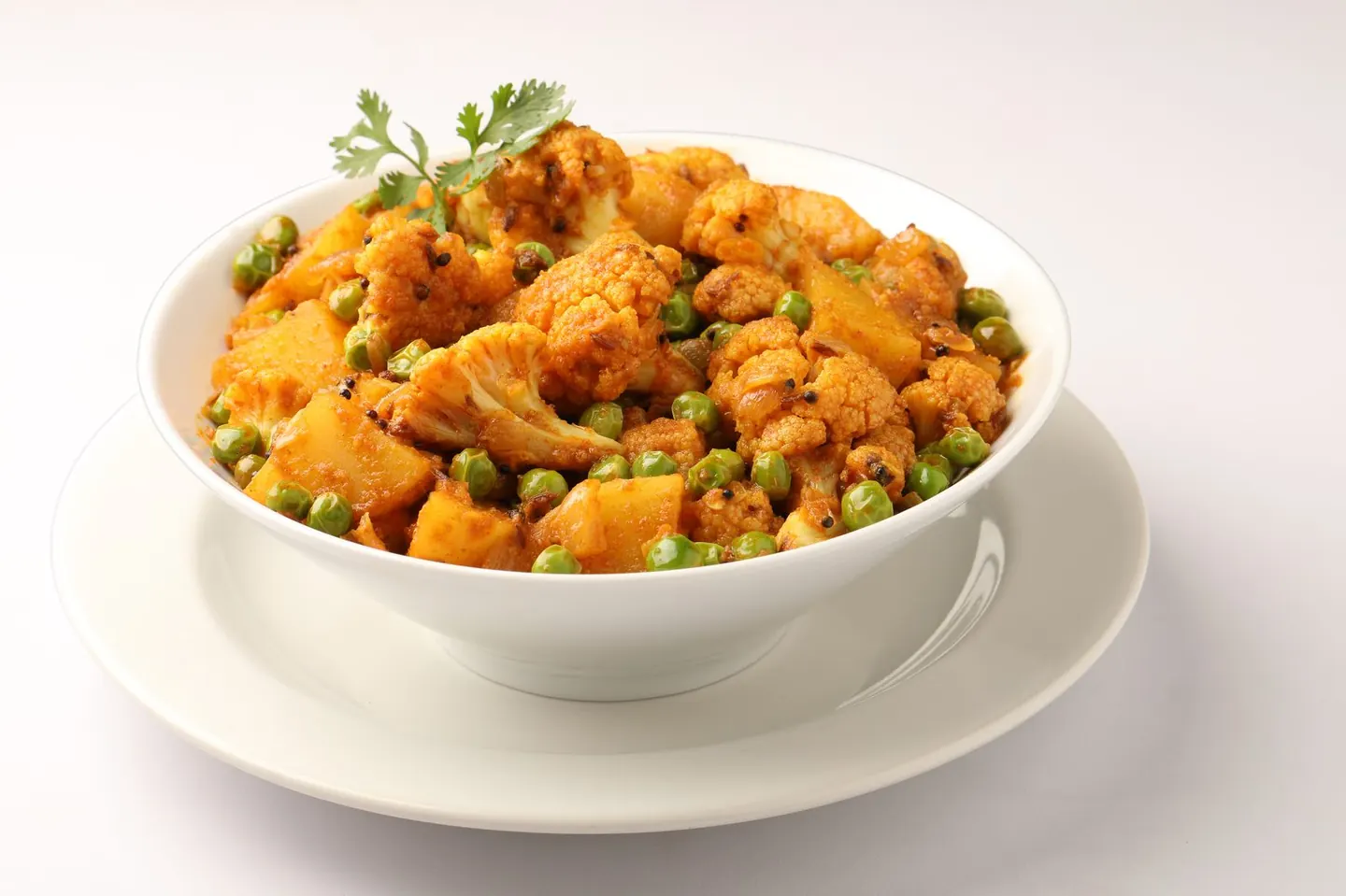
Photograph: Adobe Stock · representative of the dish
A word about the name, because it confuses everybody. On a sadya leaf, upperi means the deep-fried salted banana chip. In everyday household speech it means a dry-cooked vegetable side, close to a mezhukkupuratti and sometimes close to a thoran. Both are correct, and this is the second sense: cabbage and carrot cut fine, a small quantity of coconut, and a tempering with urad dal in it, which gives the dish a nuttiness and a faint crunch that a plain thoran does not have. It is the most-cooked vegetable dish in Kerala kitchens after the cabbage thoran, and it deserves to be.
Before you start: Cut the carrot finer than the cabbage — 3 mm matchsticks or coarse grating — because carrot takes about three minutes longer than shredded cabbage and the two need to finish together.
Allergens: Mustard.
Equipment: Wide pan, 26 cm, with a lid; chattuvam. Substitute: any wide pan and a wooden spatula.
| Energy | 111 kcal |
| Protein | 2.6 g |
| Fibre | 5.2 g |
| Net carbohydrate | 9.1 g |
| Total carbohydrate | 14.3 g |
| Sugars | 6.7 g |
| Fat | 7.1 g |
| Saturated fat | 5.8 g |
| Sodium | 250 mg |
From ICMR-NIN IFCT 2017 and USDA FoodData Central. Per-serving figures stay the same when you scale.
Both vegetables are in every supermarket in the world, which makes this the recipe to give a reader who has just moved abroad and cannot find anything else. Bagged coleslaw mix — shredded cabbage and carrot, no dressing — is a legitimate shortcut at 550 g and saves fifteen minutes, and no one will know. Avoid anything with mayonnaise or vinegar in the bag.
Blood sugar: 9.1 g net carbohydrate per serving, of which 6.7 g is sugar, most of it the carrot's. Still low in absolute terms; a 130 g serving costs 111 kcal.
Blood pressure: 250 mg sodium, or about 190 mg with M07. About 35 mg of it is the carrot's own sodium, which is unusually high for a vegetable.
Cholesterol: 5.8 g saturated fat, the lowest of any coconut dish in this chapter, because there is only 40 g of coconut in it.
Carrot → 200 g French beans or 200 g finely diced capsicum. Sugars fall about 2 g per serving with beans.
Urad dal → 5 g roasted peanuts, crushed, added at the end. Similar textural job, more fat, and it stops being a Kerala tempering. (Allergen: this swap introduces peanuts.)
Cabbage → 350 g shredded Brussels sprouts. Unexpected, entirely successful, and slightly more bitter.
Add 100 g cooked kadala at step 6 → protein up about 3 g and 6 g more fibre per serving, since black chickpea is the highest-fibre pulse in the Kerala repertoire at 25.2 g per 100 g.
Cut both vegetables up to 2 days ahead. Fridge 3 days cooked. Freeze 1 month, watery on thawing. Reheat dry, 3–4 minutes.
The best sandwich and wrap filling in this book, cold, with a spoon of curd. It also goes into an omelette or a dosa well, and it is the standard lunchbox vegetable in a great many Kerala households for good reason.
Carrot still hard, cabbage collapsed: the carrot was cut too thick or added at the same time. Three millimetres, three minutes' head start.
Bitter tempering: the urad dal burnt. It takes forty seconds, not two minutes.
Wet: the lid stayed on too long. Uncover and cook it dry over a higher flame.
Serve with
R015 Matta Rice · R058 Parippu Curry · R070 Kalan · R107 Sambharam
Tap a star to rate this recipe
The Kindle edition is on its way. Until it lands, the complete book — all 25 chapters and 137 recipes — is free to read here, and it stays free after.