 R082
R082Pineapple Pulissery
Sweet-sour curd curry with pineapple
Recipes › Curries, Pulissery and the Sour Family
R081
Tempered buttermilk curry with ground coconut
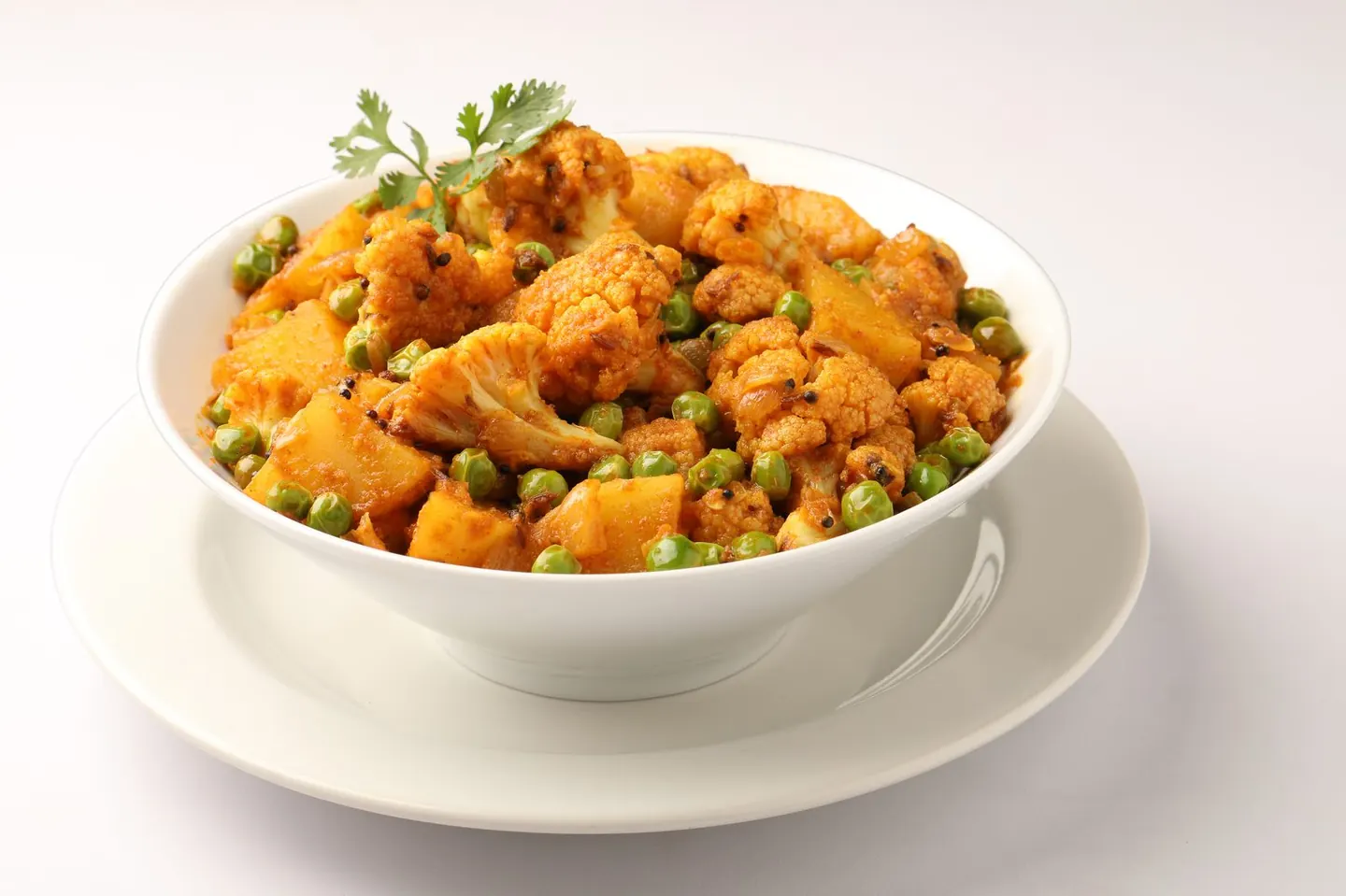
Photograph: Adobe Stock · representative of the dish
Moru curry is the lightest thing in Kerala cooking and one of the lowest-energy-density dishes in this book: 126 kcal in 220 g, which is 0.57 kcal a gram. It closes a sadya, and in the Namboothiri tradition buttermilk at the end of a feast is described as essential rather than optional — cooling, acidic against the sugar of the payasam, and understood to settle what came before. On an ordinary Tuesday it turns 130 g of rice into a meal for the cost of fifteen minutes.
Before you start: This dish moves fast and it cannot be left. Grind the paste, whisk the buttermilk, and set the tempering ingredients out in one small bowl before you light anything. From the moment the pan goes on there are about four minutes of continuous attention and no window to fetch something.
Allergens: Milk, mustard.
Equipment: Heavy 2-litre pan; mixie or small blender; small pan or steel ladle for the tempering. Substitute: an ammikkallu or mortar gives a coarser, better-textured paste; a stick blender in a jug works at some cost in smoothness.
| Energy | 126 kcal |
| Protein | 4.4 g |
| Fibre | 1.7 g |
| Net carbohydrate | 7.0 g |
| Total carbohydrate | 8.7 g |
| Sugars | 5.8 g |
| Fat | 9.0 g |
| Saturated fat | 6.8 g |
| Sodium | 190 mg |
From ICMR-NIN IFCT 2017 and USDA FoodData Central. Per-serving figures stay the same when you scale.
Moru is not a product you buy; it is curd let down with water, and the ratio is roughly 1:1 for a curry and 1:2 for a drink. Use full-fat set curd or plain whole-milk yoghurt — Greek-style yoghurt is too thick and too mild, so if that is all you have, use 300 g of it with 500 ml of water and add a squeeze of lime. Slightly sour curd, two or three days old, makes a better moru curry than fresh; this is one of the few dishes improved by a curd that has gone a little sharp. Frozen grated coconut works throughout this chapter and should be thawed but not squeezed.
Blood sugar: 7.0 g of net carbohydrate a portion, most of it lactose, and 4.4 g of protein. This is close to a free dish on a rice plate, and its acid is doing measurable work: pooled vinegar trials found glucose area under the curve down by a standardised mean difference of −0.60 (Shishehbor et al., 2017), and lactic acid is a plausible parallel. Serve it with the rice, not after it.
Blood pressure: 190 mg a portion. Note that cultured buttermilk itself carries about 148 mg of sodium per 100 g before anyone adds salt, so if you buy buttermilk rather than diluting curd, leave the M07 out entirely. Fermented dairy is also the food group with the most consistent inverse associations across weight, type 2 diabetes and hypertension in cohort studies — 13% lower risk of overweight or obesity per 50 g a day of yoghurt (Feng et al., 2022) — and those are observational associations, not proof of cause.
Cholesterol: 6.8 g of saturated fat a portion, and it is worth knowing where it comes from: about 3.7 g from the 40 g of grated coconut, about 2.1 g from the curd, about 1.0 g from the teaspoon of coconut oil. Halve the coconut for about 4.9 g total, at some cost in body. Using low-fat curd takes another 1.5 g off.
Full-fat curd → low-fat curd or buttermilk. Saturated fat drops by about 1.5 g a portion; the curry is thinner and splits more easily, not less, because there is less fat cushioning the protein.
Ground coconut → 20 g cashews ground with the cumin. Body is comparable, saturated fat drops to about 3.5 g a portion, and the flavour turns sweeter and less like Kerala. (Allergen: this swap introduces tree nuts (cashew).)
Coconut oil → gingelly oil for the tempering. Saturated fat down about 0.9 g; the aroma turns darker and nuttier, which suits this dish less well than most. (Allergen: this swap introduces sesame.)
Add 200 g diced ash gourd, cooked soft in 150 ml water before step 3 → the dish becomes a kumbalanga moru curry, gains about 1.5 g of fibre a portion and drops to about 0.45 kcal a gram.
At eight servings warm the curry in a wide pan rather than a deep one; a deep pot heats unevenly and the base will pass 80°C (176°F) before the top is warm.
The paste can be ground and refrigerated a day ahead. Fridge 2 days in a covered non-metal container. Do not freeze — the emulsion splits on thawing and there is no recovery. Reheat over the lowest possible flame, stirring, to barely warm only; better still, serve it at room temperature, which is how it is eaten on a sadya leaf anyway.
Thin it with an equal volume of water, add crushed ginger and a curry leaf, and drink it cold as sambharam. Or use it as the cooking liquid for a kalan-style yam curry.
Split into grains and watery liquid: it boiled, or the flame was too high at step 4. There is no repair. Next time, low flame, constant stirring, and off the heat at the first shudder.
Gritty on the tongue: the coconut paste was not ground fine enough. Two to three minutes in bursts with 60 ml water, and test on a fingertip.
Tastes thin and sharp with no body: not enough coconut paste, or the curd was very sour and very thin. Add 15 g more ground coconut, or a tablespoon of rice flour slaked in cold water.
Raw, chalky taste: the paste went in and came straight off the heat. It needs the full 4–6 minutes below boiling to lose its rawness.
Serve with
R015 Matta Rice, Properly Cooked · R084 Ulli Theeyal · R023 Kerala Khichdi · M08 Coconut Milk, Three Extractions
Tap a star to rate this recipe
The Kindle edition is on its way. Until it lands, the complete book — all 25 chapters and 137 recipes — is free to read here, and it stays free after.