 R089
R089Kerala Kitchen Salad
Raw vegetables the way a Kerala kitchen cuts them
Recipes › Salads, Pachadis, Chutneys, Podis and Pickles
R093
The daily chammanthi, with the fat halved and the flavour kept
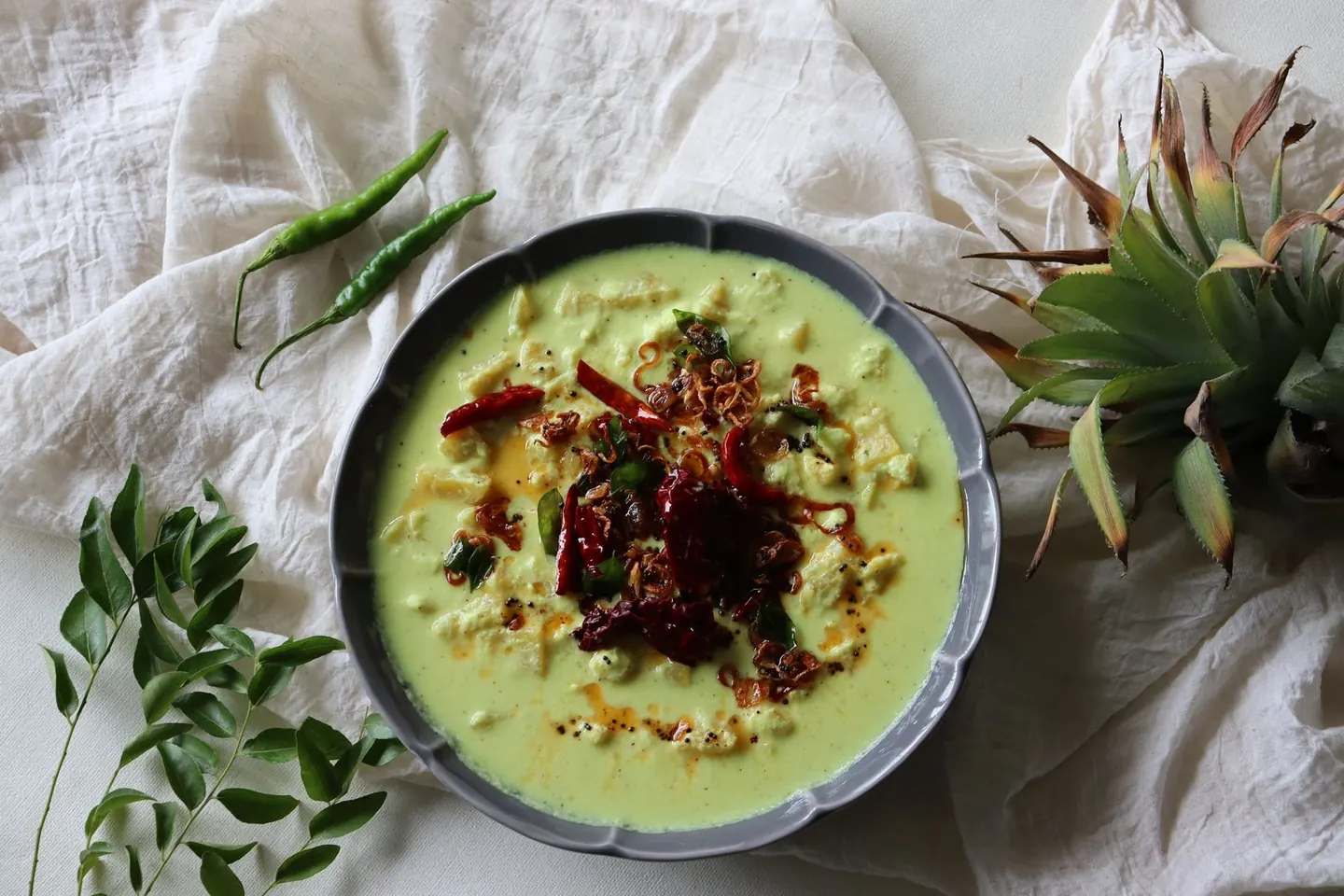
Photograph: Adobe Stock · representative of the dish
Start with the honest numbers, because they are the argument. A conventional coconut chutney — 150 g of fresh grated coconut and 10 g of coconut oil, serving four — delivers 182 kcal, 18 g of fat and 16 g of saturated fat per 60 g serving. Eaten twice a day with breakfast and an evening dosa, that is more saturated fat than everything else on the plate combined. Roasted gram dal fixes it, because dal grinds to the same silk as coconut and carries the chilli and tamarind just as well.
Before you start: Have the tamarind soaking and the tempering ingredients beside the hob. The tempering takes 60 seconds from cold and it will burn while you look for the curry leaves.
Allergens: Mustard.
Equipment: Mixie or small high-speed blender; small tempering pan. Substitute: an ammikkallu, which gives a better texture and takes 10 minutes; a food processor will not get roasted dal smooth and gives a gritty chutney.
| Energy | 119 kcal |
| Protein | 4 g |
| Fibre | 4 g |
| Net carbohydrate | 8 g |
| Total carbohydrate | 12 g |
| Sugars | 2 g |
| Fat | 8 g |
| Saturated fat | 6 g |
| Sodium | 200 mg |
From ICMR-NIN IFCT 2017 and USDA FoodData Central. Per-serving figures stay the same when you scale.
Roasted gram dal is sold as pottukadala, dalia or "roasted split chickpea" in every South Asian grocery and keeps six months in a jar. Do not substitute raw chana dal — it will not grind smooth and tastes of flour. Where you cannot find it, roast ordinary chana dal in a dry pan until it smells of biscuit and one grain snaps rather than bends, 6–8 minutes, and cool it fully before grinding. Frozen grated coconut works and should be thawed and drained.
Cholesterol: this is the chapter's headline. Two chutney servings a day, rebuilt rather than traditional, removes about 20 g of saturated fat a day. Coconut oil and coconut flesh are not the same thing and this recipe keeps the flesh, but 150 g of coconut in a condiment is still 62 g of fat, and pooled trial evidence puts coconut oil's LDL-cholesterol effect at about +10.5 mg/dL against non-tropical vegetable oils.
Blood sugar: 8 g of net carbohydrate and 4 g of protein per serving, and the roasted dal is a pulse — the habit with the strongest evidence in this book.
Blood pressure: 200 mg per serving. Cut the salt to 1 g and add a further 5 g of tamarind and it falls to about 100 mg without tasting under-seasoned.
Roasted peanuts for the gram dal → Consequence: richer and rounder, more monounsaturated fat, and about 30 kcal more per serving. A good chutney, a different one. (Allergen: this swap introduces peanuts.)
Moong dal, dry-roasted, for the gram dal → Consequence: lighter and sweeter, less body, and it needs 20 ml more water.
Coconut back up to 100 g with the dal at 20 g → Consequence: closer to the traditional flavour, with saturated fat back up to about 10 g a serving. Stated so you can choose knowingly.
No tamarind → 15 ml lime juice added off the grinder at the end. Consequence: brighter and more volatile, and the chutney will not keep past a day.
Water does not scale linearly — a fuller grinder jar needs proportionally less. Add the last third by eye.
Fridge 3 days in a covered non-metal container, with the tempering added fresh on the day if you want it at its best. Freeze 2 months in 60 g portions, untempered; texture holds well and the flavour dulls slightly. Do not leave it at room temperature above 25°C (77°F) for more than 4 hours — a wet, low-salt, low-acid paste of ground pulse and coconut is a good growth medium.
Loosen day-three chutney with 100 ml of water into a chutney-based gravy for boiled tubers, or spread it thinly inside a dosa before folding. Two tablespoons stirred into a vegetable stew thickens it and adds a pulse.
Gritty: the dal was ground wet. Grind it dry to a flour first.
Bitter: the mustard seed burned, or the shallot was ground for too long and oxidised.
Loose and watery: too much grinding water. Add 10 g more roasted dal, which absorbs it without changing the flavour.
Grey by the next day: normal oxidation of the ground shallot and coconut. It affects colour more than flavour, but tempering on the day of serving hides it.
Serve with
R004 Puttu · R008 Ragi Dosa · R009 Oats and Matta Dosa · R012 Kanji with a Pulse · R001 Appam
Tap a star to rate this recipe
The Kindle edition is on its way. Until it lands, the complete book — all 25 chapters and 137 recipes — is free to read here, and it stays free after.