 R001
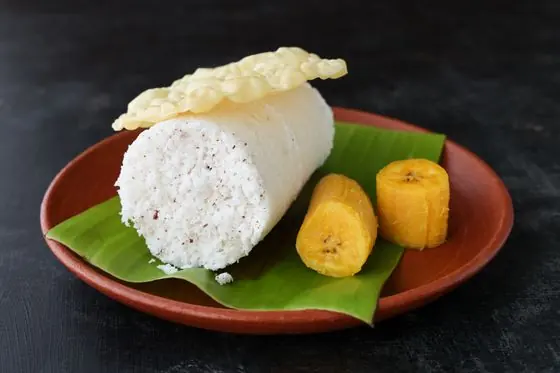
R001Palappam
The lace-edged fermented appam, the Syrian Christian breakfast bread
Photograph: Adobe Stock · representative of the dish
Plan ahead: plus 14 hours soaking and fermenting the M12 batter — required.
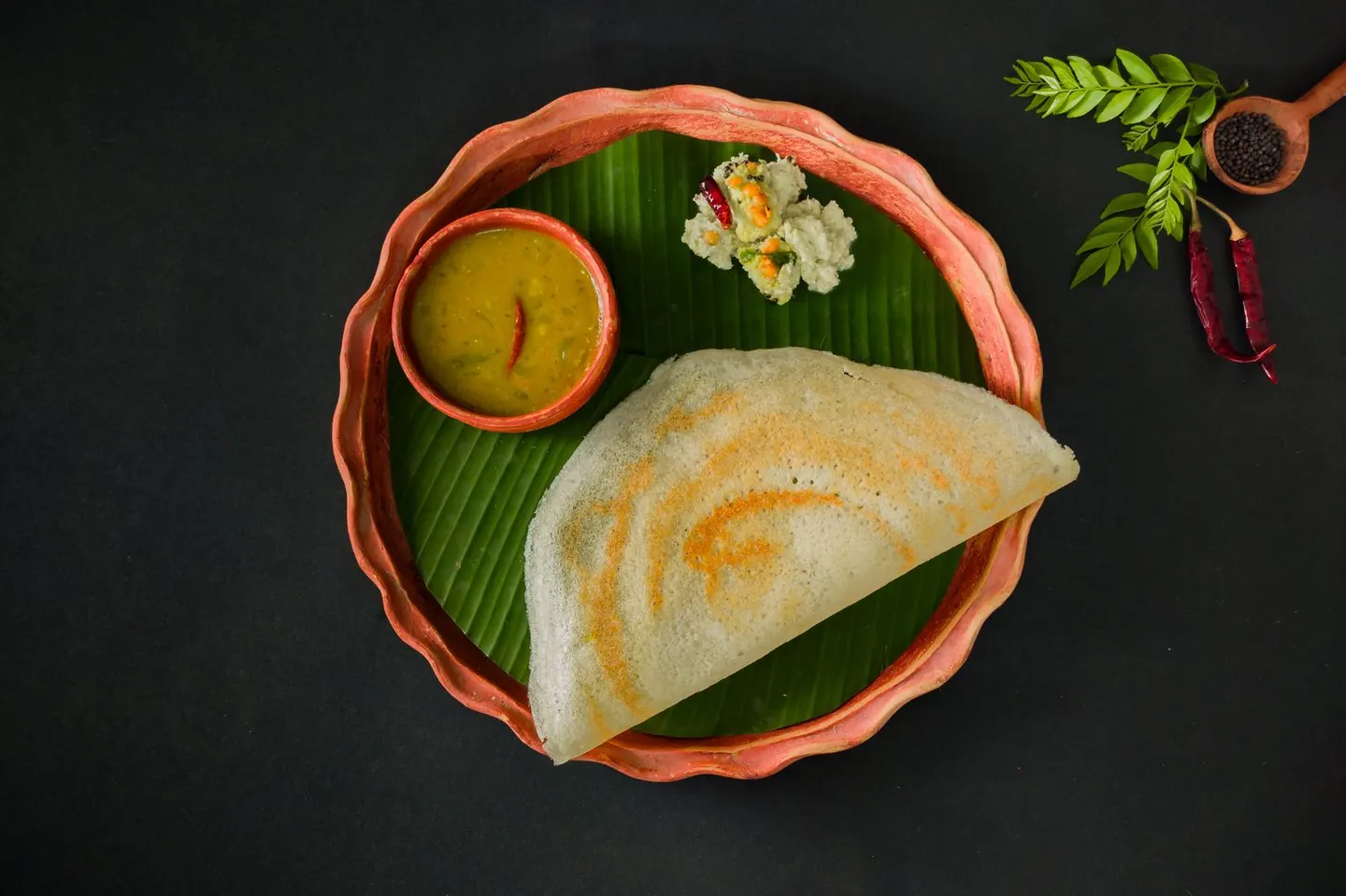
Ragi dosa is a different animal from a rice dosa and has to be handled as one. It is darker, earthier, faintly cocoa-like, soft rather than crisp, and it browns sooner. The millet enthusiasm currently in circulation runs well ahead of the evidence — pooled data put millets at a mean GI of 52.7 against milled rice at 71.7, which is a real advantage, while a fine-milled finger millet porridge measured GI 93 in another trial. What that tells you is that the grain state matters more than the grain name. A dosa is ground and fermented, which is a long way from intact.
Before you start: Ragi batter sets faster than rice batter and tears if you go back over it, so the spiral has to be finished in one pass. Read step 4 before you pour the first one.
Allergens: Sesame.
Equipment: Well-seasoned heavy iron griddle, 26 cm or wider — a seasoned iron surface matters more here than for R007, because ragi batter sticks to anything less. Substitute: a good non-stick pan, which is the honest fallback; you lose some of the browning and gain a dosa that always releases.
| Energy | 231 kcal |
| Protein | 7 g |
| Fibre | 5 g |
| Net carbohydrate | 44 g |
| Total carbohydrate | 49 g |
| Sugars | 1 g |
| Fat | 3 g |
| Saturated fat | 1 g |
| Sodium | 400 mg |
From ICMR-NIN IFCT 2017 and USDA FoodData Central. Per-serving figures stay the same when you scale.
Buy ragi flour in small bags as finger millet or nachni flour, from any Indian grocer or health-food shop. It is high in fat for a flour and turns rancid within about three months, and rancid ragi tastes of old paint. Whole ragi grain, soaked 8–10 hours and ground with the rice, gives better flavour and a coarser dosa, and it is the version worth working towards.
Blood sugar: a fair account is that this dosa is somewhat better than a white-rice dosa and that the difference is small — 5 g of fibre against 4 g, and no measured glycaemic index for either. The larger lever is what sits beside it, which is why the pulse line below is not decorative.
Blood pressure: 400 mg a serving with M07, about 580 mg with plain salt, all from the batter.
Iron and calcium: ragi is a useful source of both, and the fermentation improves access to them. That is a statement about composition and not about any condition.
Whole soaked ragi grain for the flour in M12 → better flavour, coarser texture, and the grain state the evidence favours. Costs 8–10 hours of soaking.
Jowar or bajra for the ragi → both work; bajra is stronger and faintly bitter, jowar milder and paler.
Drop the ragi to 60 g in M12 and add 20 g rice flour → a crisper dosa, and you have made something much closer to R007. If you want crispness, this is the honest route to it; ragi will not give you crisp.
Batter keeps in the fridge 3 days — a day less than M11, because ragi sours faster and turns claggy. Cooked dosas are best within 10 minutes. Freeze the cooked dosas 1 month, interleaved with paper; reheat on a dry griddle 1–2 minutes a side.
Ragi dosa reheats better than rice dosa because it is softer to begin with. Roll cold ones around a spoonful of leftover vegetable thoran and warm them in a covered pan 2–3 minutes.
Gritty flecks through the dosa: the ragi flour went into M12 dry. Whisk it into water separately next time.
Sticks and tears: griddle not hot enough, or under-seasoned. Ragi is unforgiving here.
Burnt underside, wet top: flame too high. Ragi browns before rice does.
Bitter, paint-like taste: the ragi flour is rancid. Nothing will fix it.
Serve with
R010 Kadala Curry · R011 Cherupayar Curry · R089 Kerala Kitchen Salad · M06
Tap a star to rate this recipe
The Kindle edition is on its way. Until it lands, the complete book — all 25 chapters and 137 recipes — is free to read here, and it stays free after.