 R089
R089Kerala Kitchen Salad
Raw vegetables the way a Kerala kitchen cuts them
Recipes › Salads, Pachadis, Chutneys, Podis and Pickles
R095
The dry podi that makes rice gruel a meal
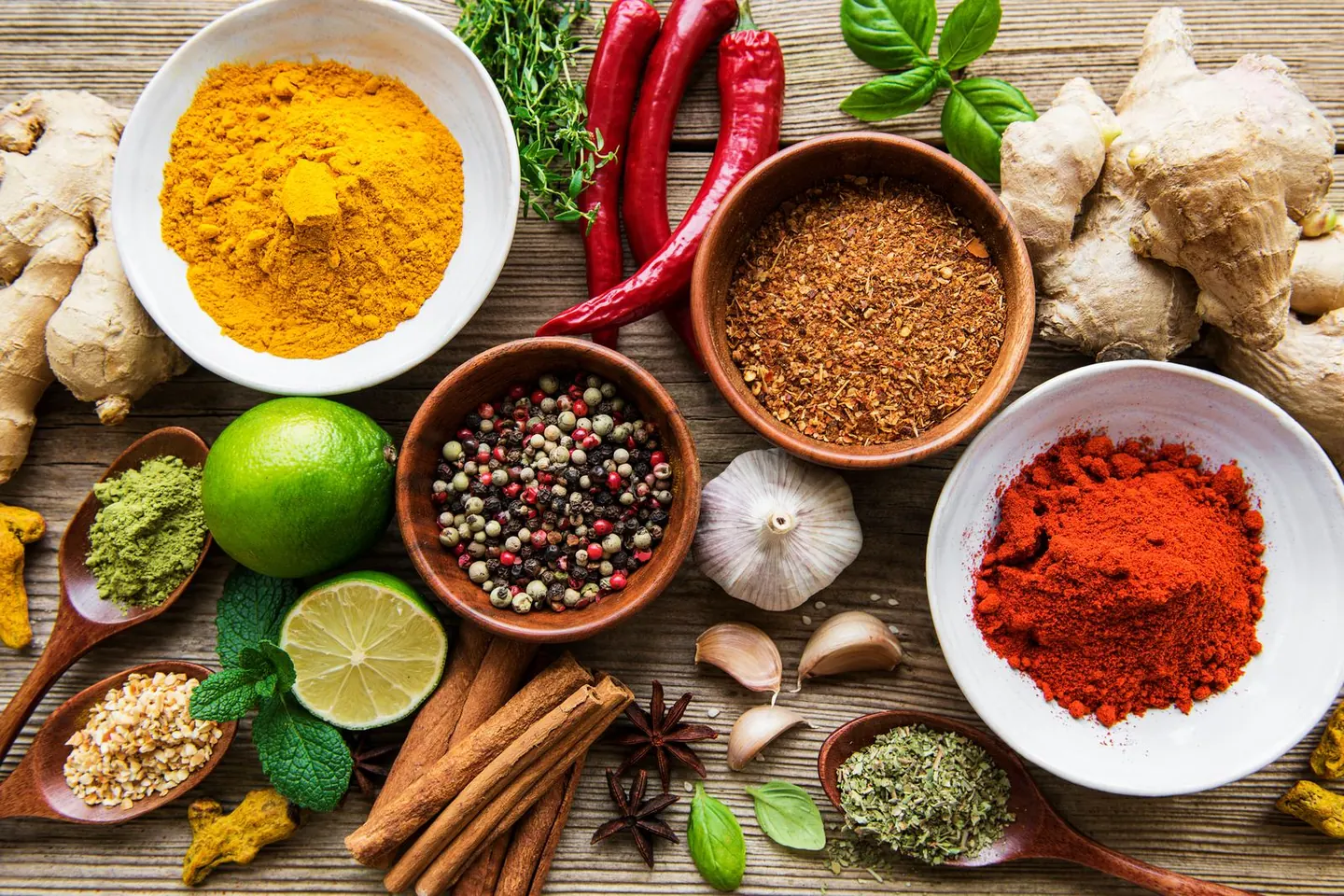
Photograph: Adobe Stock · representative of the dish
Plan ahead: plus 20 minutes cooling — required.
Kanji — rice cooked loose in its own water — is Kerala's convalescent food, monsoon food and late-night food, and it is almost always eaten with something salty on the side: pickle, pappadam, dried fish. That side dish is where the sodium is. A dry podi does the same job by a different route, and unlike pickle it keeps for months and costs nothing per spoonful. This is a close cousin of M06 and can be used interchangeably with it; this version is sweeter and coarser, because coconut belongs in a kanji bowl.
Before you start: Strip the curry leaves and check them for moisture. Damp leaves will not crisp, and a podi made with damp leaves cakes solid within a fortnight.
Allergens: None of the major allergens as the recipe is written. Gluten (wheat) — only if your asafoetida is compounded with wheat flour, as most brands are.
Equipment: Heavy dry pan, 24 cm; spice grinder or mixie with a small jar. Substitute: a mortar gives a coarser podi, which suits kanji better than a fine one.
Use dried coconut (copra, sold as "coconut copra" or "dried coconut" in South Asian shops), not desiccated coconut, which has been defatted and shredded and burns before it toasts. Where only desiccated is available, use 25 g and add it in the last 90 seconds of roasting. Asafoetida sold in India is usually compounded with wheat flour; the resin lump is stronger and 2 g will do.
Blood pressure: under 10 mg of sodium a tablespoon, replacing a spoon of pickle at roughly 200 mg or a pappadam at rather more. Used twice a day instead of a salted condiment, this jar is worth a few hundred milligrams a day against a 2,000 mg target.
Blood sugar: a pulse-based podi over kanji is a small version of the best-evidenced habit in this book — adding legumes to a rice meal lowered glycaemic response more than changing the rice did.
Cholesterol: 0.7 g of saturated fat a tablespoon, from the copra. Leave the coconut out and it falls to about 0.2 g.
Fresh coconut, dry-roasted, for copra → Consequence: better flavour, shorter life. Roast it until completely dry or the podi will keep two weeks rather than two months.
Add 8 g of powdered dried prawn or dried fish → a large jump in savoury depth. Consequence stated plainly: dried fish is heavily salted, the podi is no longer low-sodium, and no further salt should go anywhere near the dish. (Allergen: this swap introduces fish, crustaceans.)
No moong dal → all chana. Consequence: slightly less sweet, no other loss.
Add 5 g of roasted fenugreek seed → Consequence: a pleasant bitterness that suits kanji. Note that this is a flavouring quantity, roughly 0.2 g a tablespoon, and about fifty times below the 10–25 g daily doses at which fenugreek trials found glycaemic effects. No claim is made for it here.
At 330 g, roast in two batches. A crowded pan steams the dal instead of toasting it.
Cupboard 6 weeks — shorter than a spice podi, because the roasted dal and copra carry fat that oxidises and curry-leaf aroma goes first. Fridge 4 months. Freeze 9 months in a small jar, decanting a fortnight at a time so the main jar is never warmed and cooled.
A podi does not generate leftovers, but an old jar that has lost its aroma is not waste: stir 3 tablespoons into a thoran off the heat, or into a dal, where the flatness disappears into the dish.
Tastes of nothing: the curry leaves were damp or the dals under-roasted. Neither fault shows until you taste.
Caked solid: moisture. Dry it on a tray at 60°C (140°F) for 15–20 minutes, cool completely, and re-grind.
Bitter: the copra or the moong dal burned. Both go from right to wrong inside two minutes.
Rancid after a month: the copra. Keep the jar in the fridge in a warm kitchen.
Serve with
R012 Kanji with a Pulse · R020 Kanji Three Ways · R008 Ragi Dosa · boiled tubers · R073 Chena Mezhukkupuratti
Tap a star to rate this recipe
The Kindle edition is on its way. Until it lands, the complete book — all 25 chapters and 137 recipes — is free to read here, and it stays free after.