 R100
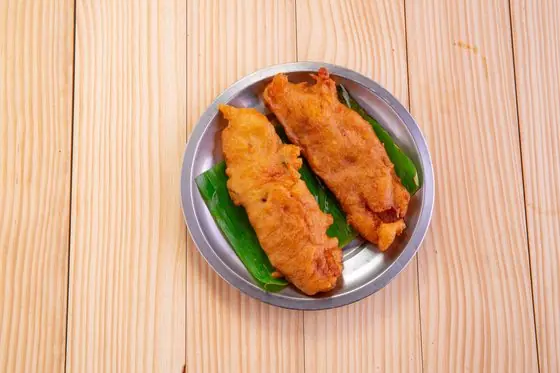
R100Baked Ethakka Appam
Pazham pori out of the oven, and what that costs
R104
Steamed rice dumplings with a moong dal filling
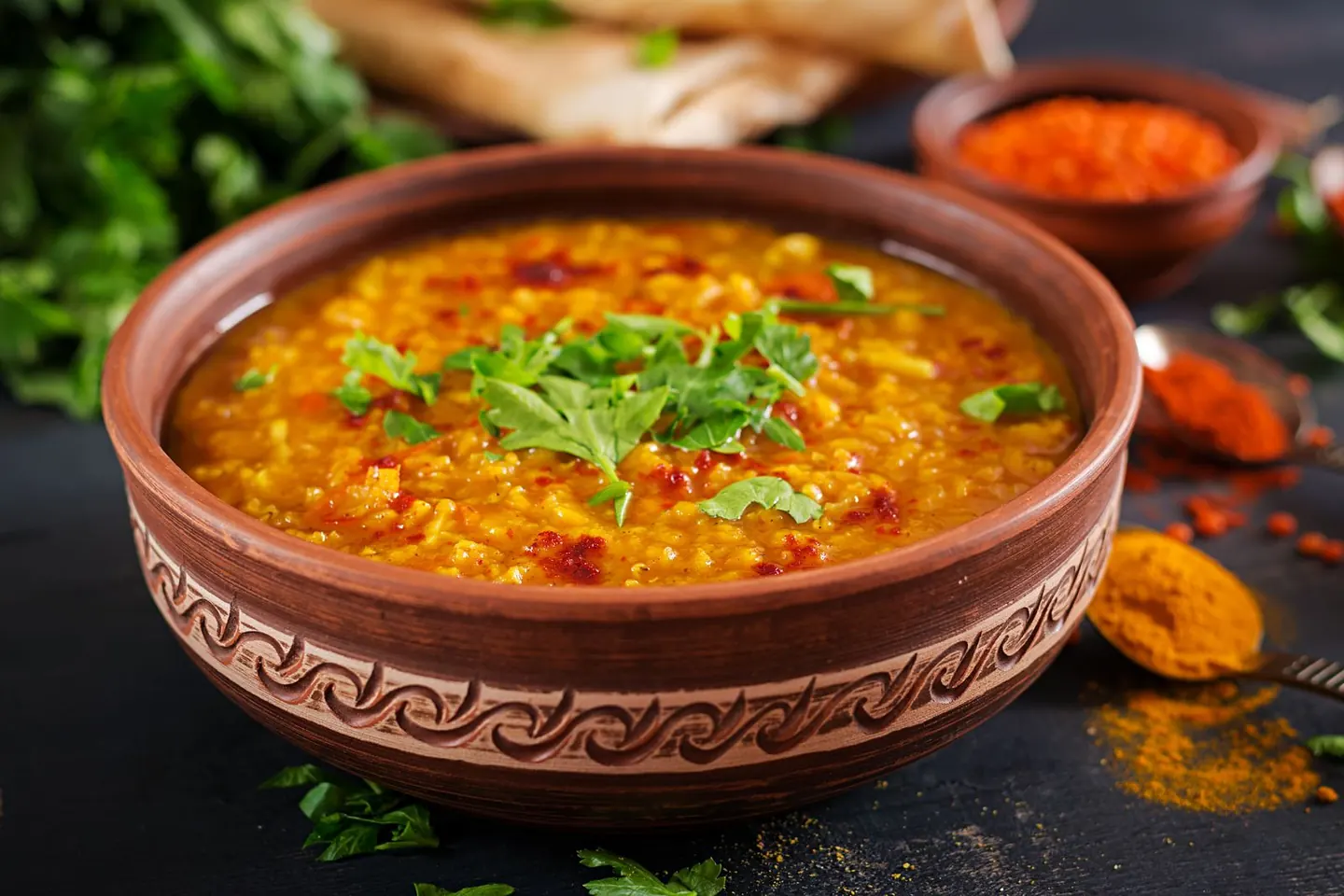
Photograph: Adobe Stock · representative of the dish
Plan ahead: plus 4 hours soaking the dal — required.
Steaming is Kerala's great technique and the one that most obviously belongs in a tea-time chapter: puttu, idiyappam, ada, vattayappam and kozhukkatta are all cooked in steam, and none of them absorbs a gram of fat. What a tea-time snack almost never has is protein, and that is why most people are hungry again at six. A dumpling filled with seasoned dal is the highest-protein snack in this chapter, and at 246 kcal for three of them it is also the most filling.
Before you start: The dough is made with boiling water and must be kneaded while it is almost too hot to touch. Have the filling completely finished and cooled before you start it, because the dough stiffens as it cools and cannot be re-softened.
Allergens: Sesame, mustard.
Equipment: Steamer or idli stand; heavy pan for the dough; small pan for the filling. Substitute: a colander over a pan with a tight lid steams perfectly well. An idli stand gives flatter dumplings and needs 2 minutes less.
| Energy | 246 kcal |
| Protein | 10 g |
| Fibre | 5 g |
| Net carbohydrate | 37 g |
| Total carbohydrate | 42 g |
| Sugars | 2 g |
| Fat | 6 g |
| Saturated fat | 4 g |
| Sodium | 200 mg |
From ICMR-NIN IFCT 2017 and USDA FoodData Central. Per-serving figures stay the same when you scale.
Use the fine rice flour sold for puttu or kozhukkatta — coarse rice flour will not make a dough that holds. If yours is unroasted, dry-roast it in a pan over a low flame until it smells faintly toasted and feels loose rather than sticky between the fingers, 4–5 minutes, and cool it before use; roasted flour absorbs water more predictably. Moong dal is in every supermarket. Do not use split-and-skinned moong that has been pre-cooked or "instant" — it goes to purée in the steamer.
Blood sugar: 37 g of net carbohydrate, but with 10 g of protein and 5 g of fibre in the same package, which is a very different proposition from 37 g of net carbohydrate in a fried banana. This is the dish in the chapter to eat if you are choosing on glycaemic grounds.
Blood pressure: 200 mg a serving, all from 2 g of added salt across 12 dumplings. It tastes properly seasoned at 1.5 g, which brings it to 150 mg.
Cholesterol: 4 g of saturated fat, almost entirely from the 35 g of fresh coconut. Sesame oil rather than coconut oil is specified throughout, at 16% saturated against coconut oil's 91%.
Cooked vanpayar (red cowpea) for the moong dal → Consequence: earthier and firmer, fibre up from 5 g to about 6 g a serving, and 10 minutes longer to cook. Arguably the better dumpling.
Cooked kadala (black chickpeas), coarsely crushed → Consequence: the highest-fibre version of all, at about 8 g a serving, and a coarser filling that needs a thicker dough.
Ragi flour for a third of the rice flour → Consequence: darker, nuttier and more fragile to shape, with fibre up by about 2 g a serving.
Traditional sweet filling — 60 g coconut with 30 g jaggery → Consequence: the kozhukkatta everyone knows, at about 235 kcal and 3 g of protein a serving, with sugars up from 2 g to about 10 g. A sweet, not a savoury.
Salt replaced with the 70:30 potassium blend (M07) → sodium falls from 200 mg to about 140 mg a serving. Consequence: it works well here, because the salt is inside a fatty coconut filling where potassium chloride's metallic edge is masked. Potassium-enriched salt is not for readers with chronic kidney disease, or on a RAAS inhibitor (an ACE inhibitor or an ARB) or a potassium-sparing diuretic, without a doctor's approval.
Water does not scale exactly — flours differ in absorption. Hold back 20 ml and add it during the knead if the dough cracks.
Make the filling up to 2 days ahead and keep it in the fridge; make the dough on the day, because it stiffens irreversibly overnight. Shaped raw dumplings: fridge 6 hours under a damp cloth. Cooked: fridge 3 days, re-steamed 5–6 minutes. Freeze 2 months shaped and raw, frozen on a tray then bagged, steamed from frozen for 16–18 minutes. Reheat by steaming; a microwave makes the shell tough.
Cracked dough: not enough water, or it was kneaded cold. Add a tablespoon of boiling water and knead again while hot.
Burst in the steamer: the filling was wet, or overfilled. A teaspoon per 23 g of dough is the limit.
Tastes of raw flour: under-steamed. Give them 3 minutes more; there is no other fix.
Tough and rubbery: over-steamed, or reheated in a microwave.
Sticky to shape: wet your palms rather than flouring them. Flour on the outside bakes into a chalky skin.
Serve with
R094 Tomato Chutney · R093 Coconut Chutney, Rebuilt · R106 Chai · R107 Sambharam
Tap a star to rate this recipe
The Kindle edition is on its way. Until it lands, the complete book — all 25 chapters and 137 recipes — is free to read here, and it stays free after.