 R024
R024Meen Vevichathu
Kudampuli fish curry, the Kottayam Syrian Christian way
R027
Mackerel with a chilli-masala rub, in a very hot oven
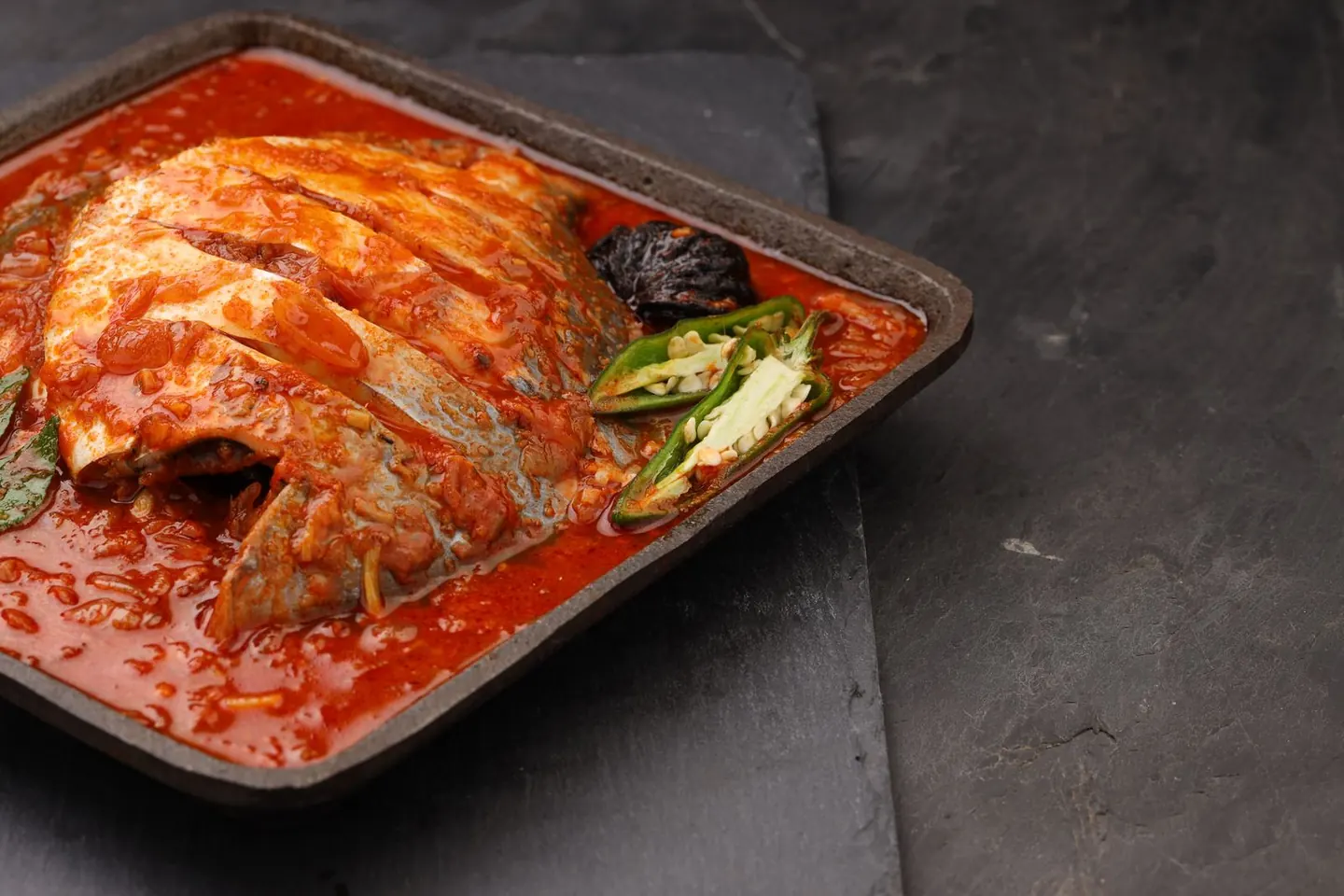
Photograph: Adobe Stock · representative of the dish
Plan ahead: including 20 minutes marinating — required.
Read R028 immediately after this one. The two recipes are the same fish and the same rub, cooked two ways and measured both times, and they are printed side by side because a health cookbook that quietly deletes the fried version has told you a lie by omission. This one is genuinely good: the rub sets into a dark crust, the skin blisters and pulls back, and mackerel is oily enough that a hot oven treats it kindly. It is not a fried fish, and this recipe will not pretend it is.
Before you start: Get the oven fully to 220°C (425°F) with the tray and rack inside. A cold rack is how the skin sticks and tears.
Allergens: Fish. Gluten (wheat) — only if your asafoetida is compounded with wheat flour, as most brands are (it arrives with M05).
Equipment: Oven; wire rack set over a lined baking tray; silicone brush. Substitute: an air fryer at 200°C (390°F) for 10–12 minutes a side, which works very well and browns harder. A grill or broiler works too, 8–10 cm from the element, but watch it — the rub burns before the fish is done. No rack: score the tray with a bed of thin onion rings and sit the fish on that.
| Energy | 173 kcal |
| Protein | 30 g |
| Fibre | 1 g |
| Net carbohydrate | 2 g |
| Total carbohydrate | 3 g |
| Sugars | 0 g |
| Fat | 5 g |
| Saturated fat | 3 g |
| Sodium | 330 mg |
From ICMR-NIN IFCT 2017 and USDA FoodData Central. Per-serving figures stay the same when you scale.
Indian mackerel (Rastrelliger kanagurta) is a smaller, leaner fish than Atlantic mackerel and is the species behind the numbers in this chapter. In the US: Indian mackerel frozen whole in Asian groceries; Boston or Atlantic mackerel fresh, which is fattier and needs 2–3 minutes less. In the UK: Atlantic mackerel is on every fishmonger's slab and is one of the best-value fish in the country; Indian mackerel frozen in Sri Lankan and Kerala shops. In the Gulf: bathi is Indian mackerel and chanad is the larger seer. In Australia: blue mackerel or slimy mackerel, both cheap and both correct. Frozen mackerel is a real compromise here, because thawed flesh sheds water onto the tray and steams rather than roasts — if you must, thaw in the fridge, then pat dry hard and marinate for only 10 minutes.
Blood sugar: 2 g of net carbohydrate. Nothing here moves glucose; 30 g of protein moves satiety a great deal.
Blood pressure: 330 mg, most of it the added salt. Two grams instead of three lands at about 260 mg — do it, because the rub is intense enough to carry the loss.
Cholesterol: 3 g of saturated fat per serving, of which about 2 g is the brushed coconut oil. Brush with sesame or groundnut instead and it falls below 2 g.
No mackerel → sardine, which is oilier and needs 4–5 minutes less; or pomfret, which is leaner and wants an extra 2 g of brushed oil.
Fillets instead of whole fish → 130 g per person, skin side up, 9–12 minutes total, no turning. Faster and easier and considerably less good, because the bone and the belly fat are half of why this works.
M05 → 8 g Kashmiri chilli powder, 3 g pepper, 2 g turmeric and a pinch of fenugreek. See the fenugreek note at R024 SWAP IT if you take insulin or a sulfonylurea.
Coconut oil → sesame or groundnut. Saturated fat drops by about 1.5 g per serving; the aroma changes noticeably and it is still a good fish. (Allergen: this swap introduces peanuts, sesame.)
Eight fish need two trays and two racks, or two batches; a crowded oven steams rather than roasts.
Rub the fish and hold it. Fridge 24 hours rubbed and uncooked, which improves it. Cooked: fridge 2 days. Freeze 1 month rubbed and raw, thawed overnight in the fridge; do not freeze it cooked, because reheating a baked oily fish is a poor experience. Reheat in a 200°C (390°F) oven for 5–6 minutes, never a microwave.
Rub slid off in the oven: the paste was too wet, or the fish was not patted dry before rubbing. Thicker paste, drier fish.
Skin stuck to the rack and tore: the rack was cold, or unoiled, or the fish was moved too early. Hot rack, brushed rack, and let it release itself.
Dry and cottony: overcooked, which happens in the last three minutes. Pull it when the thickest part has just gone opaque.
Pale and steamed rather than roasted: the oven was not fully up to temperature, the fish were touching, or they were still wet from thawing.
Serve with
R015 Matta Rice · R081 Moru Curry · R063 Cabbage Thoran · R053 Vanpayar Thoran
Tap a star to rate this recipe
The Kindle edition is on its way. Until it lands, the complete book — all 25 chapters and 137 recipes — is free to read here, and it stays free after.