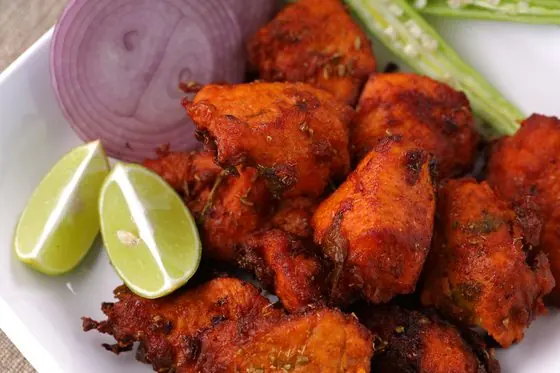
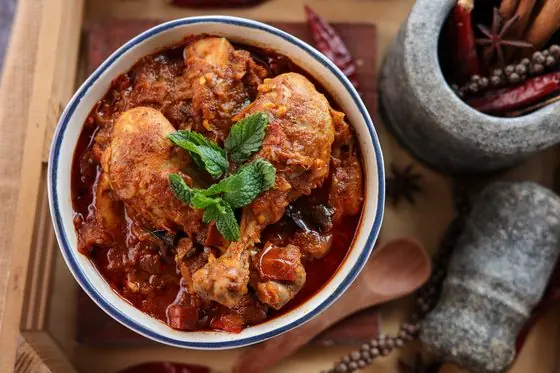
 R040
R040Nadan Kozhi Curry
The everyday country chicken curry
Recipes › Chicken, Egg and Meat
R049
Nadan beef curry — the wet cousin of the roast
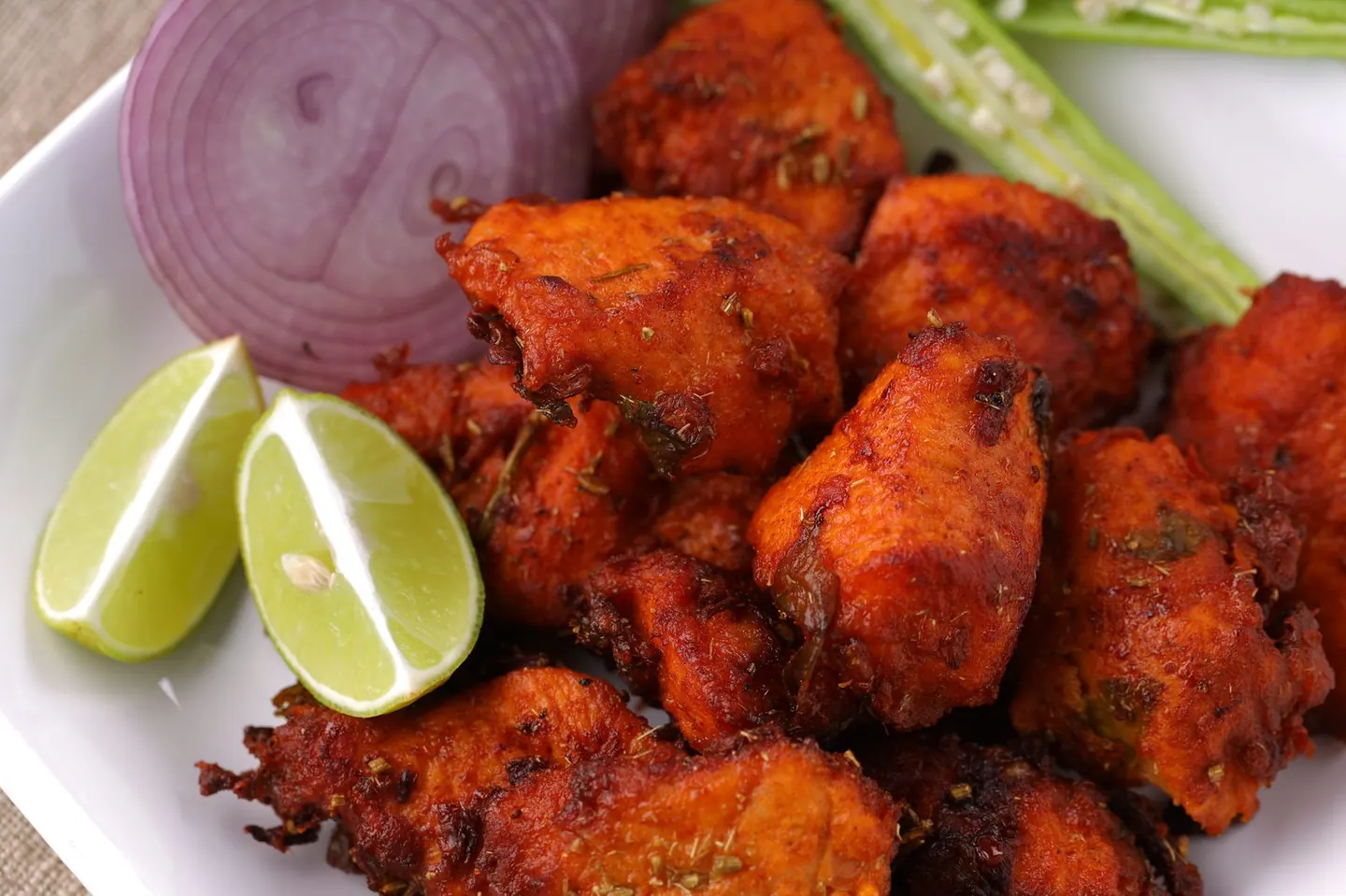
Photograph: Adobe Stock · representative of the dish
Where R048 drives all the liquid off, this keeps it. It is the everyday Kottayam beef curry: dark, loose enough to spoon over rice, with coconut slivers softened in the gravy rather than toasted crisp. It is also the demonstration of the chapter's second principle in its plainest form. One hundred grams of beef per person, in a generous gravy with a pulse and a thoran beside it, does not read as a small portion. It reads as dinner.
Before you start: Have the coconut slivered and the shallots sliced before the braise begins, because the two go in at different times and the pot will be ready before you are.
Allergens: None of the major allergens as the recipe is written. Sesame or peanuts — whichever of the two oils you use (it reaches the dish through M16).
Equipment: Pressure cooker or heavy lidded pot, 4 litre. Substitute: a slow cooker on high for 4–5 hours; you lose the browning at step 3, so brown the meat in the pan first.
| Energy | 343 kcal |
| Protein | 22 g |
| Fibre | 6 g |
| Net carbohydrate | 9 g |
| Total carbohydrate | 15 g |
| Sugars | 5 g |
| Fat | 24 g |
| Saturated fat | 14 g |
| Sodium | 280 mg |
From ICMR-NIN IFCT 2017 and USDA FoodData Central. Per-serving figures stay the same when you scale.
This is the recipe for the cheap cut. Chuck, shoulder, blade, shin, brisket point — anything with visible connective tissue — will be better here than an expensive steak cut, which has nothing to convert to gelatine and will simply toughen. Shin, if your butcher has it, gives the best gravy of all.
Blood sugar: 9 g of net carbohydrate. Pair it with 150 g of cooked matta rice and 100 g of cooked vanpayar and the whole plate lands at a moderate glycaemic load with 30 g of protein.
Blood pressure: 280 mg, and this is a dish that carries almost no added salt — 4.5 g of M07 across six servings. The coriander, pepper and fennel are doing the work.
Cholesterol: 14 g of saturated fat, split roughly 10 g from the beef and 4 g from the coconut. Using trimmed lean beef instead takes it to about 9 g and costs the gravy some richness; the coconut slivers are what make the dish, so take it out of the meat.
Lean trimmed beef → about 9 g of saturated fat and 250 kcal per serving. Braise 5 minutes less.
Mutton or goat → 600 g, pressure-cooked 20–25 minutes. Leaner again, at about 6 g of saturated fat per serving.
Add 300 g of cooked kadala at step 5 → eight servings, 8 g of fibre each, and it is a better plate than the original.
No coconut milk → 40 g of roasted coconut paste (M09) at step 5. Darker, thicker, smokier, and about the same saturated fat.
Genuinely better on day two, in the way the fish curries are. Fridge 4 days. Freeze 3 months — it freezes better than any coconut-milk dish in the book, because the milk is second extraction. Reheat at a bare simmer, 6–8 minutes, adding a splash of water if it has tightened.
Shred the meat, reduce the gravy hard, and you have the filling for kappa biryani or a pathiri. Or thin it with second milk and vegetables for a second night's stew.
Meat tough: undercooked, not overcooked. Give it another 10 minutes under pressure.
Gravy thin and pale: step 5 was skipped. Reduce before the milk goes in.
Sweet and flat: not enough pepper, or the coriander was not toasted at step 2. A nadan beef curry should have a pepper finish.
Serve with
R015 Matta Rice · R004 Puttu · R053 Vanpayar Thoran · R069 Avial
Tap a star to rate this recipe
The Kindle edition is on its way. Until it lands, the complete book — all 25 chapters and 137 recipes — is free to read here, and it stays free after.