RecipesPulses and Legumes

R058

Parippu Curry

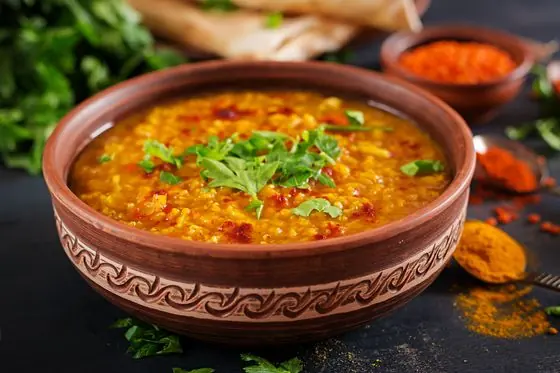
The sadya dal, with its spoon of ghee

Low SodiumVegetarianUnder 250 Kcal
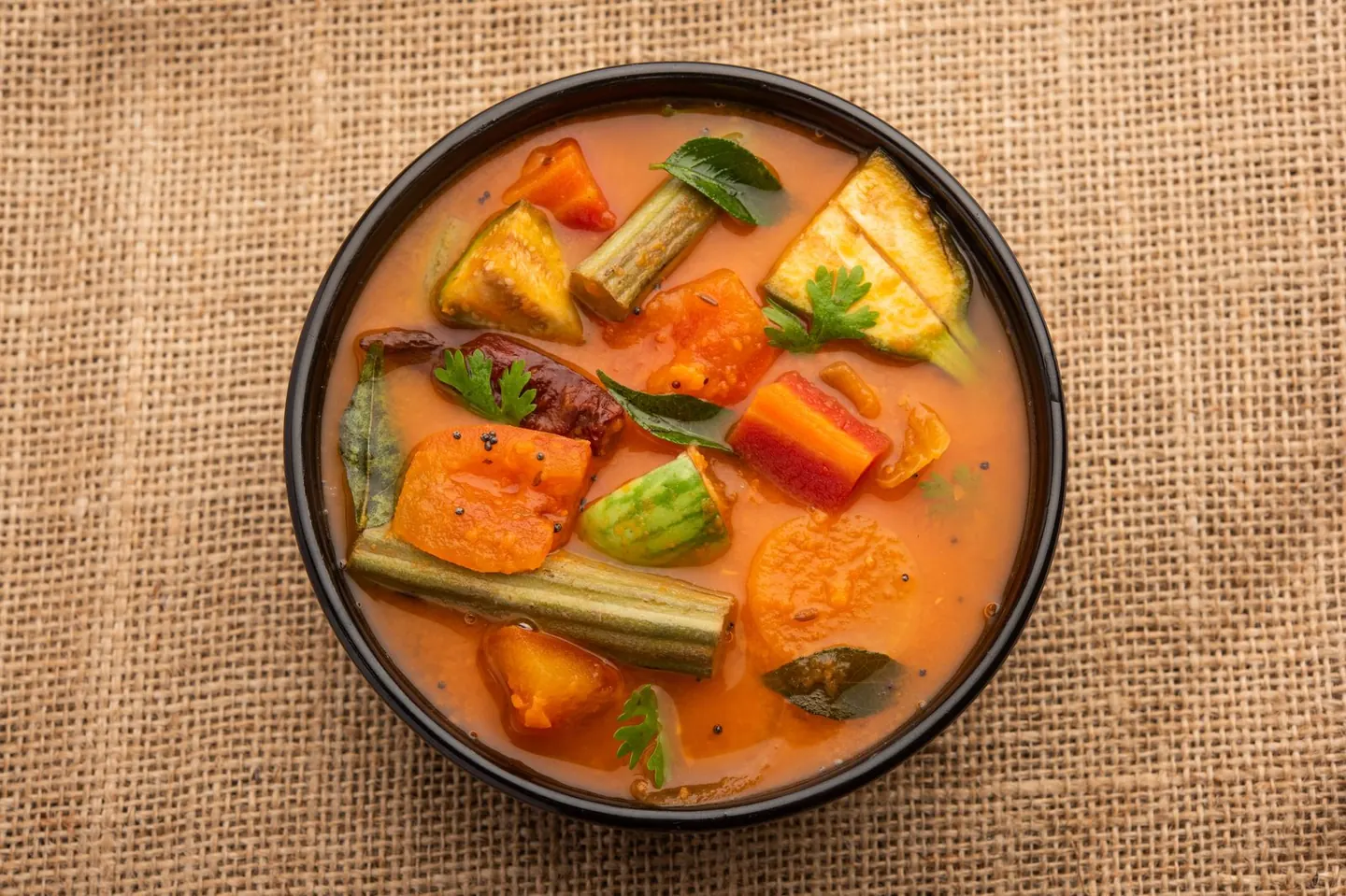
South Indian sambar

Photograph: Adobe Stock · representative of the dish

YieldServes 6
Active20 minutes
Total35 minutes
DifficultyEasy
The re-engineeringThe ghee stays. It is 12 g for six people — 2 g each, about 18 kcal — and it is the whole point of the dish, the upastharanam poured over the first course of rice. What changed is that the coconut paste is 80 g rather than 150 g, and the dal has gone up, so the curry is dal thickened with coconut rather than coconut thickened with dal.

Parippu with a spoon of ghee is the first rice course of every sadya, served when agni — the digestive fire, in the tradition's own terms — is held to be at its strongest. It is also, read as nutrition, an unusually sensible way to open a feast: 24 g of protein per 100 g dry moong dal, arriving before any of the rich curries, at a low glycaemic load. This is a temple-register recipe, so there is no onion and no garlic in it. Do not add them; there are nine other recipes in this chapter where they belong.

Before you start: Dry-roast the moong dal before you cook it — 3–4 minutes in a dry pan, until it smells of biscuit. This is the step that separates a sadya parippu from a plain dal, and it takes almost no time.

Parippu Curry

Active 20 minutes Total 35 minutes
Scale 6 servings

Ingredients — tap to tick off

  • 200 g (1 cup) moong dal (split skinned green gram)
  • 2 g (⅓ tsp) ground turmeric
  • 700 ml water
  • For the paste: 80 g (¾ cup) fresh grated coconut · 3 g (½ tsp) cumin seed · 15 g (about 3) green chillies
  • 3 g (½ tsp) 70:30 salt (M07)
  • 12 g (1 tbsp) ghee
  • For the tempering: 6 g (1¼ tsp) coconut oil · 3 g (½ tsp) mustard seed · 2 dried red chillies, broken · 20 fresh curry leaves

Allergens: Milk, mustard.

Equipment: Pressure cooker or heavy pot; mixie or ammikkallu; small pan for the tempering. Substitute: a pot takes 20–25 minutes for moong dal against 4–5 minutes under pressure, and needs skimming.

Per serving (estimated)

Energy194 kcal
Protein9 g
Fibre5 g
Net carbohydrate19 g
Total carbohydrate24 g
Sugars3 g
Fat9 g
Saturated fat7 g
Sodium150 mg

From ICMR-NIN IFCT 2017 and USDA FoodData Central. Per-serving figures stay the same when you scale.

Method — tap a step to mark it done, tap a time to start a timer

  1. Roast the dry moong dal in a dry pan over medium-low heat, stirring, until it darkens by a shade and smells of biscuit rather than of flour, . Do not let it colour past pale gold.
  2. Rinse the roasted dal twice, then pressure-cook with the turmeric and 700 ml of water for at full pressure; release naturally. In a pot, , skimming the froth. The dal should be completely soft and just holding its shape, not a purée.
  3. Grind the coconut with the cumin and green chilli and 60 ml of water into a smooth-ish paste; a little texture is correct.
  4. Mash the cooked dal lightly against the side of the pot with the back of a ladle — four or five strokes, not twenty. You want some whole grains left.
  5. Stir in the coconut paste and the salt and bring to a bare simmer. Cook , until the raw coconut smell has gone and the curry has thickened to a loose, pourable consistency that will run over rice. Add water if it has gone past that.
  6. Temper in the small pan: heat the coconut oil, add the mustard seed and wait for it to pop, then the dried chilli and curry leaves for 10 seconds. Pour the lot over the curry and do not stir it in — a sadya parippu comes to the leaf with its tempering sitting on top.
  7. Add the ghee last, in a single spoon, at the table or just before serving. Ghee added off the heat smells of ghee; ghee stirred in and simmered does not.
Why this worksDry-roasting the dal before cooking does two things: it drives off surface moisture so the grains hold their shape rather than dissolving, and it starts the Maillard reaction on the pulse's own surface proteins, which is where the nutty note in a good parippu comes from. The ghee goes in last because its aroma compounds are volatile and lipid-soluble — they reach you from the surface of the dish, not from within it, which is why 2 g per person is enough.
Sourcing note

Moong dal — cherupayar parippu — is the correct pulse here and gives the pale gold, faintly sweet parippu of a Kerala feast; toor dal makes a heavier, more Tamil-inflected dal and is a different dish. Buy the dal that looks bright yellow rather than dull and grey, which indicates age. Ghee is not optional in this recipe, and a tablespoon between six people is not the thing to economise on.

If you are watching…

Blood sugar: 19 g of net carbohydrate at a pulse glycaemic index, giving an estimated load near 7. Eaten as the first course of a rice meal, this is precisely the practice Mohan's finding supports — and it is what a sadya has always done.

Blood pressure: 150 mg per serving, the lowest figure in this chapter. There is 3 g of salt in the whole pot.

Cholesterol: 7 g of saturated fat, of which about 5.5 g is the coconut and 1.2 g the ghee. If you want the number lower, take it from the coconut paste — 50 g gives about 5 g — and keep the ghee.

Swap it

Toor dal → 180 g, pressure-cooked 6–8 minutes. Heavier, earthier, and no longer a Kerala sadya parippu.

No ghee, for a vegan version → 8 g of coconut oil added off the heat instead. It works, and the dish is genuinely different; ghee's aroma is not reproducible.

Add 150 g of chopped amaranth or spinach at step 5 → see R060, which is that dish done properly.

Onion and garlic → for an everyday, non-temple version, cook 80 g of sliced shallots and 8 g of garlic into the tempering at step 6. Better on a weekday, wrong on a leaf.

Make ahead · store · freeze

Cook the dal up to two days ahead and finish with the paste and tempering on the day. Fridge 3 days. Freeze 2 months without the tempering or the ghee; both are added fresh on reheating. Reheat with a splash of water at a bare simmer — it thickens considerably in the fridge.

Leftovers

Thin it with water into a soup, or thicken it with a spoon of rice flour and use it as a filling. Cold parippu over hot rice with a squeeze of lime is a complete lunch.

Troubleshooting

Dal disintegrated to soup: cooked too long, or not roasted first. Both, next time.

Curry tastes of raw coconut: it needs the 5–6 minutes at step 5.

Ghee smells of nothing: it was stirred in and simmered. Last, off the heat, on top.

Serve with
R015 Matta Rice · R069 Avial · R063 Cabbage Thoran · R098 Inji Puli

Tap a star to rate this recipe

More from Pulses and Legumes

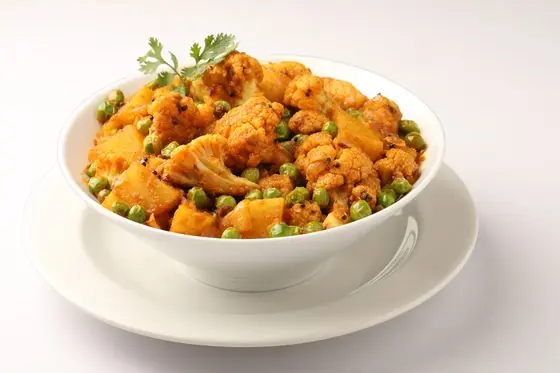
A bowl of Kerala dalR053
Low GlHigh FibreVegan

Vanpayar Thoran

Brown cowpea with grated coconut
256 kcal11 g protein30 minutes
Mixed vegetable curry in a copper bowlR054
Low SodiumVeganUnder 250 Kcal

Vanpayar Erissery

Cowpea and pumpkin, with roasted coconut on top

225 kcal7 g protein45 minutes
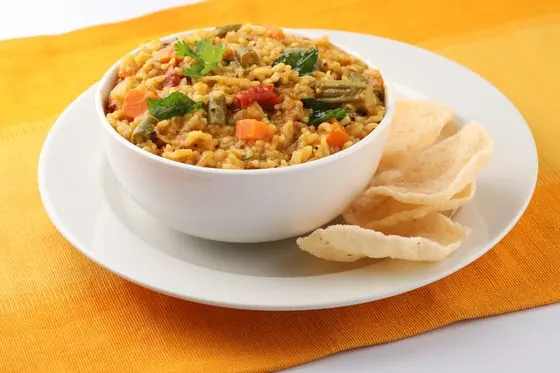
Sambar rice with papadR055
Low GlHigh FibreVegan

Kadala Ularthiyathu

Black chickpea, roasted dry with coconut slivers

260 kcal11 g protein40 minutes
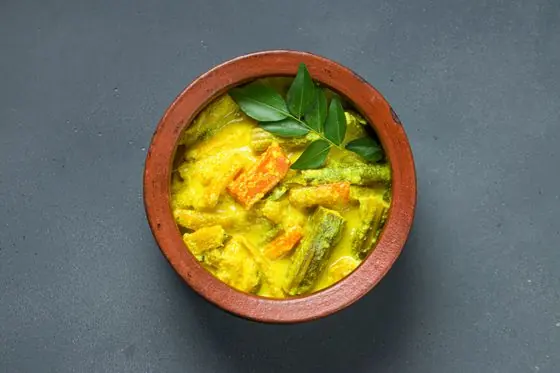
Avial, mixed vegetables in coconutR056
Low SodiumHigh FibreVegan

Muthira Thoran

Horse gram with coconut — the highest-protein pulse in the pantry

261 kcal11 g protein30 minutes

Get the 7-Day Reset, free

The full seven-day menu, the Sunday preparation block and the shopping list — the opening week of the programme in the book, sent as a PDF.

Connect this form to your email tool before launch. No spam; unsubscribe any time.
Screen stays awake