 R053
R053Vanpayar Thoran
Brown cowpea with grated coconut
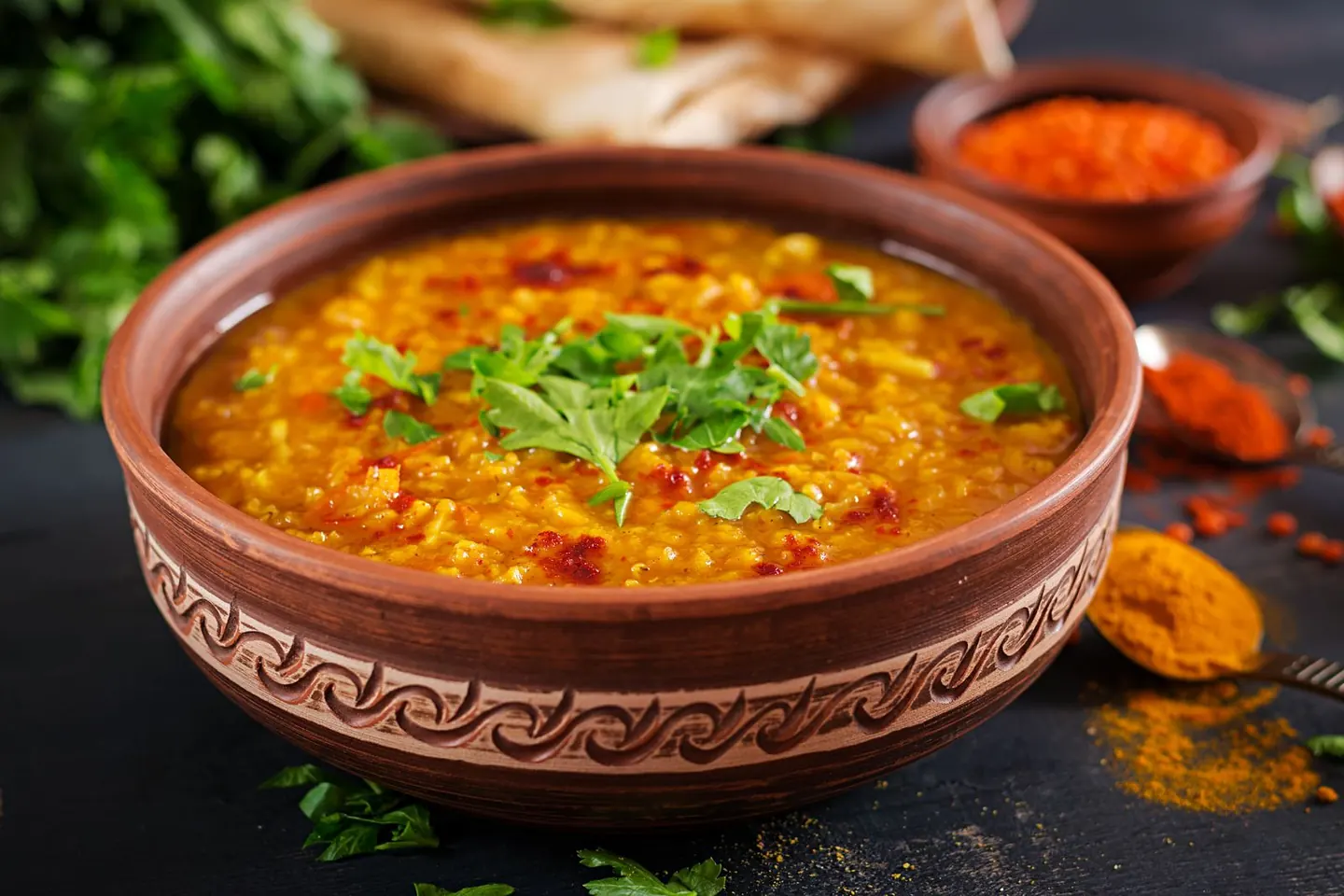
Photograph: Adobe Stock · representative of the dish
Sambar arrives in the Kerala sadya comparatively late, which is why the older four-curry scheme of erissery, kalan, olan and a sweet curry does not include it. Its origin story — the Thanjavur royal kitchen of Shahaji I in the late seventeenth century — is the popular attribution and rests on no primary source anyone has produced, and Tamil literature refers to comparable tamarind-and-dal preparations earlier. Tell it as a story. What is not in doubt is that sambar is now the most-cooked gravy in South India, and that at 147 kcal a serving with 8 g of fibre and 8 g of protein it is one of the most efficient things in this book.
Before you start: Soak the tamarind in 150 ml of warm water for 20 minutes and strain it before you begin. Tamarind added unstrained brings fibre and grit into the pot and tastes harsher.
Allergens: Mustard. Gluten (wheat) — only if your asafoetida is compounded with wheat flour, as most brands are.
Equipment: Pressure cooker or heavy pot, 4 litre; small pan for the tempering. Substitute: an open pot for the dal, 35–45 minutes, skimming the froth.
| Energy | 147 kcal |
| Protein | 8 g |
| Fibre | 8 g |
| Net carbohydrate | 22 g |
| Total carbohydrate | 30 g |
| Sugars | 4 g |
| Fat | 3 g |
| Saturated fat | 2 g |
| Sodium | 260 mg |
From ICMR-NIN IFCT 2017 and USDA FoodData Central. Per-serving figures stay the same when you scale.
Drumstick pods are the vegetable that makes a sambar taste of Kerala, and they are sold frozen in 300 g packs by most Indian grocers, which is entirely acceptable — add them 4 minutes later than fresh. Any five or six vegetables work: pumpkin, snake gourd, aubergine, cluster beans, chayote, radish, plantain. What matters is that they go in in order of cooking time. These quantities assume compounded asafoetida, the granular kind cut with rice flour; with pure resin use a third as much.
Blood sugar: 22 g of net carbohydrate, a pulse, five vegetables and an acid in one pot, at an estimated glycaemic load near 8. If you make one change to a rice meal, make it this dish rather than a different rice.
Blood pressure: 260 mg, and half of that is the sodium naturally present in the vegetables. Commercial sambar powder is salted and invisible to you, which is the entire argument for M02.
The fenugreek in the tempering: 3 g across six servings is a seasoning quantity, far below the 10–25 g a day at which fenugreek's glycaemic trial evidence sits, and this book makes no claim for it here. If you do take fenugreek in quantity — soaked seeds, methi leaves, batters — and you take insulin or a sulfonylurea, discuss it with your doctor first, because the combination can lower blood glucose further than expected. Chapter 9 sets out what that evidence does and does not support.
Cholesterol: 2 g of saturated fat per serving. This chapter's leanest recipe and one of the leanest in the book, and it gives up nothing to get there.
No M02 → 20 g ground coriander, 8 g chilli powder, 3 g fenugreek, 3 g pepper and 2 g turmeric, added at step 4. Close. A packet sambar powder also works and brings 200–400 mg of sodium you did not choose.
Moong dal for toor → 130 g, pressure-cooked 4–5 minutes. Sweeter, lighter, faster; not a classical sambar.
Add 30 g of grated coconut ground with the M02 → the Kerala varutharacha sambar register. Deeper, and about 4 g more fat per serving.
Fewer vegetables → possible, and it becomes a gravy rather than a dish. Keep at least three, one of them a gourd for body and one a drumstick for aroma.
Cook the dal up to three days ahead; that is 40 minutes of the total. Fridge 4 days — sambar keeps better than anything else in this chapter and improves for the first two. Freeze 3 months; the okra softens, nothing else suffers. Reheat at a full simmer with water to loosen; sambar is one of the few dishes here that wants a proper boil.
Reduce it hard and it becomes a thick koottu to eat with rice. Thin it with water and drink it as a broth. Or use it as the cooking liquid for R022 millet upma.
Raw, dusty taste: step 4 was cut short. Six minutes minimum, and eight is better.
Bitter: the fenugreek in the tempering went past reddish-brown. Start the tempering again; there is no fixing it.
Vegetables collapsed: they went in together instead of in order, or the tamarind went in after them rather than before.
Watery and thin: too much water at step 5, or the dal was not mashed. Mash more, reduce 5 minutes.
Serve with
R015 Matta Rice · R008 Ragi Dosa · R009 Oats and Matta Dosa · R063 Cabbage Thoran
Tap a star to rate this recipe
The Kindle edition is on its way. Until it lands, the complete book — all 25 chapters and 137 recipes — is free to read here, and it stays free after.