 M01
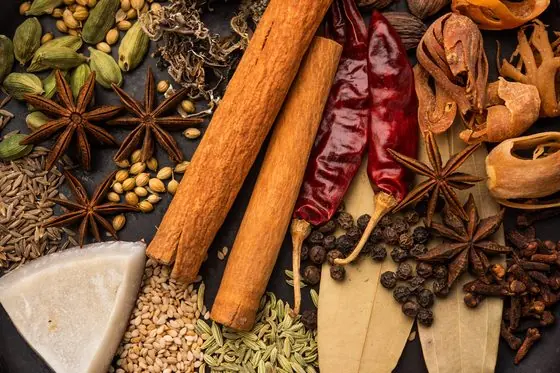
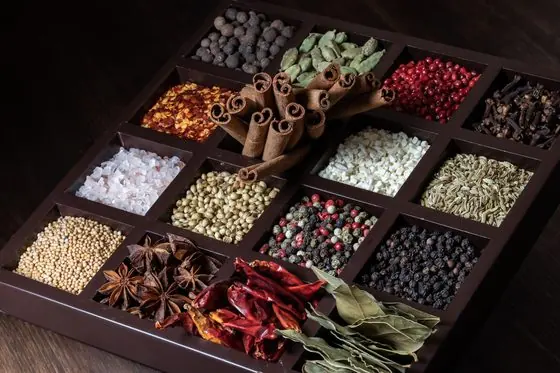
M01Kerala Garam Masala
The southern register — aromatic, not earthy
M17
Curd loosened with water and finished with a mustard tempering, ready in the fridge
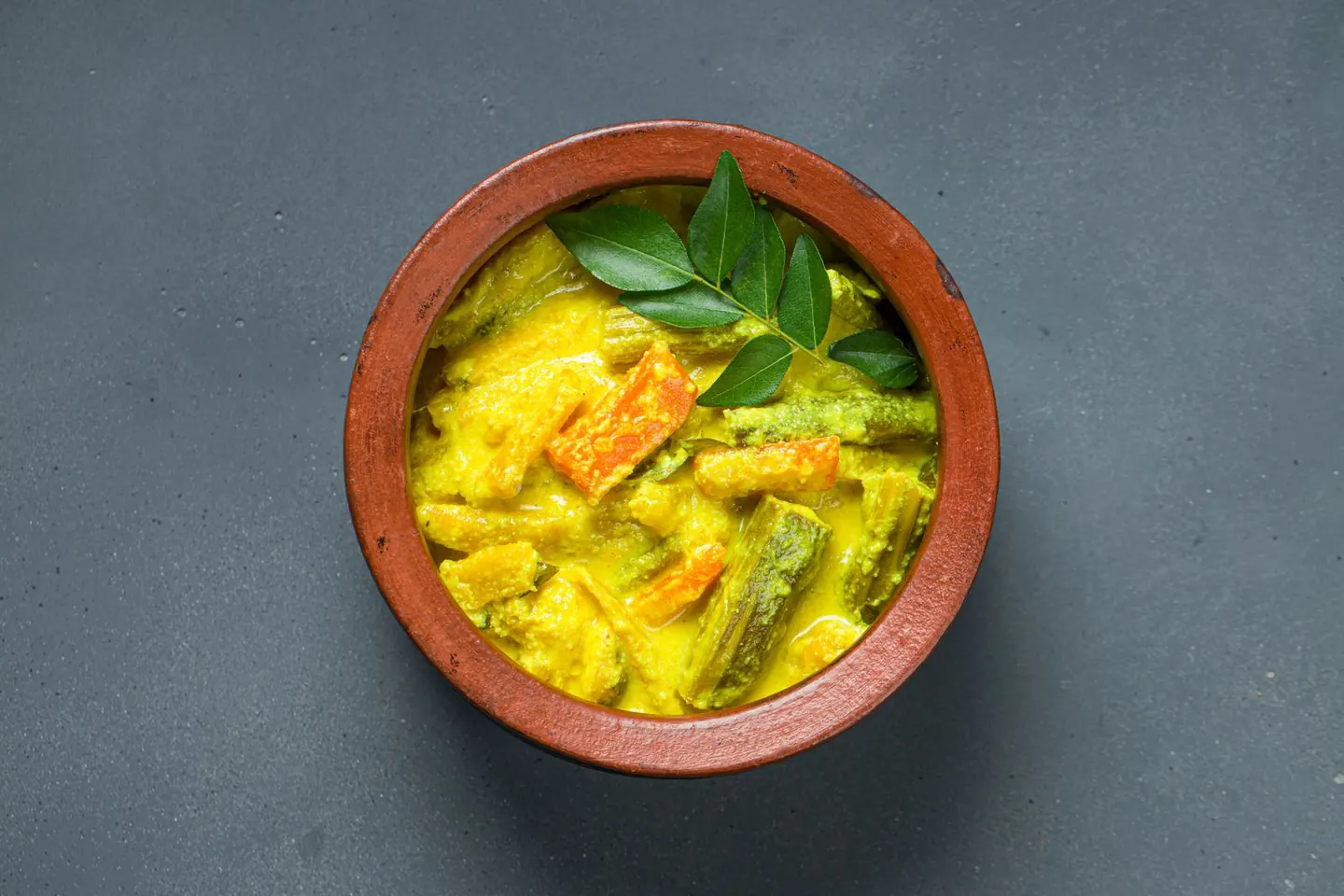
Photograph: Adobe Stock · representative of the dish
Plan ahead: plus 2 hours in the fridge — recommended, not required.
Curd loosened with water and finished with a mustard tempering, ready in the fridge [LOW GL] [VEGETARIAN] [UNDER 250 KCAL]
Every Kerala household has a jar of this and almost nobody writes it down. Curd is loosened with water to the consistency of thin cream, salted lightly, and a mustard tempering is poured over it and left to sit. It is not moru curry, which is cooked; it is not sambharam, which is a drink. It is the cold, tempered curd that goes over the last course of rice, into a pachadi as its base, or beside anything fried. Made in a batch it keeps four days and improves for the first two.
Before you start: Everything for the tempering must be beside the pan before the oil goes on. Mustard seed goes from unpopped to burnt in about eight seconds, and once the curry leaf is in you have no time to look for the asafoetida.
Allergens: Milk, mustard. Gluten (wheat) — only if your asafoetida is compounded with wheat flour, as most brands are.
Equipment: A whisk or a fork, a bowl, and a small tempering pan (cheena chatti or the smallest frying pan you own). Substitute: a ladle held over the flame will temper 8 g of oil perfectly well and saves washing a pan — it is how most Kerala kitchens actually do it.
Use a plain, unsweetened, full-fat set curd with live cultures and no starch or stabiliser; Indian and Middle Eastern shops sell it as dahi or simply curd, soured closer to the Kerala register than Western plain yoghurt. Greek yoghurt works if you thin it — start at 400 g yoghurt to 300 ml water. A slightly sour curd is better here than a fresh one, and a curd that has gone sharply sour is better still in R081 or R087, where heat rounds it off. Sweetened, flavoured and low-fat set yoghurts all split or taste wrong.
Blood sugar: 3.8 g of net carbohydrate per 100 g, all of it lactose, and no added sugar of any kind. As the last course over rice it is the cheapest way in this book to slow the end of a meal.
Blood pressure: 110 mg of sodium per 100 g on M07, about 140 mg on plain salt. Cultured dairy carries sodium before you add any — around 46 mg per 100 g in the curd itself — which is worth knowing before you reach for the shaker at the table.
Cholesterol: 2.3 g of saturated fat per 100 g, roughly two-thirds from the curd and one-third from the tempering oil. Made with a low-fat curd it falls to about 0.9 g, and the tempering is what you actually taste.
No curd → 400 g thick coconut yoghurt plus 300 ml water makes a dairy-free version that tempers identically and tastes markedly sweeter. (Allergen: this removes milk; check the yoghurt's own label for tree nut or soya bases.)
Coconut oil → gingelly (sesame) oil. Darker, nuttier, and a Tamil-inflected register rather than a Kerala one. (Allergen: this swap introduces sesame.)
No garlic → leave it out for temple-register and formal sadya cooking, where garlic is excluded. Add 5 g of finely chopped ginger instead and the jar keeps a day longer.
No shallot → 20 g of red onion, sliced as thinly as you can. Sweeter, wetter, and it browns faster, so drop the flame.
Temper in one pan at any of these scales; the oil does not need to scale linearly and 15 g is enough for a kilogram of curd.
Fridge 4 days in a covered non-metal container, souring a little each day, which is an improvement until about day three. Do not freeze — curd separates on thawing and no amount of whisking brings it back. Do not heat. If you want it warm, you want R087 Moru Kachiyathu, which is a different preparation with a different technique.
Lumpy: the curd was not whisked alone before the water went in. Pass it through a sieve; next time, whisk first.
Bitter: the garlic browned, or the mustard seed went past popping into scorching. Both are unrecoverable.
Watery and separated after a day: the curd was low-fat or stabilised, or the batch was over-thinned. Use full-fat set curd and start with less water.
Tastes of nothing: it was eaten straight away. Give it the two hours in the fridge.
Serve with
R015 Matta Rice — the last course of any rice meal · R073 Chena Mezhukkupuratti · R074 Vendakka Mezhukkupuratti · R028 Ayala Varuthathu, Fried and Measured · R105 Roasted Kadala Mix
Tap a star to rate this recipe
The Kindle edition is on its way. Until it lands, the complete book — all 25 chapters and 137 recipes — is free to read here, and it stays free after.