 R024
R024Meen Vevichathu
Kudampuli fish curry, the Kottayam Syrian Christian way
R035
The mild coconut-milk fish stew, with pepper instead of chilli
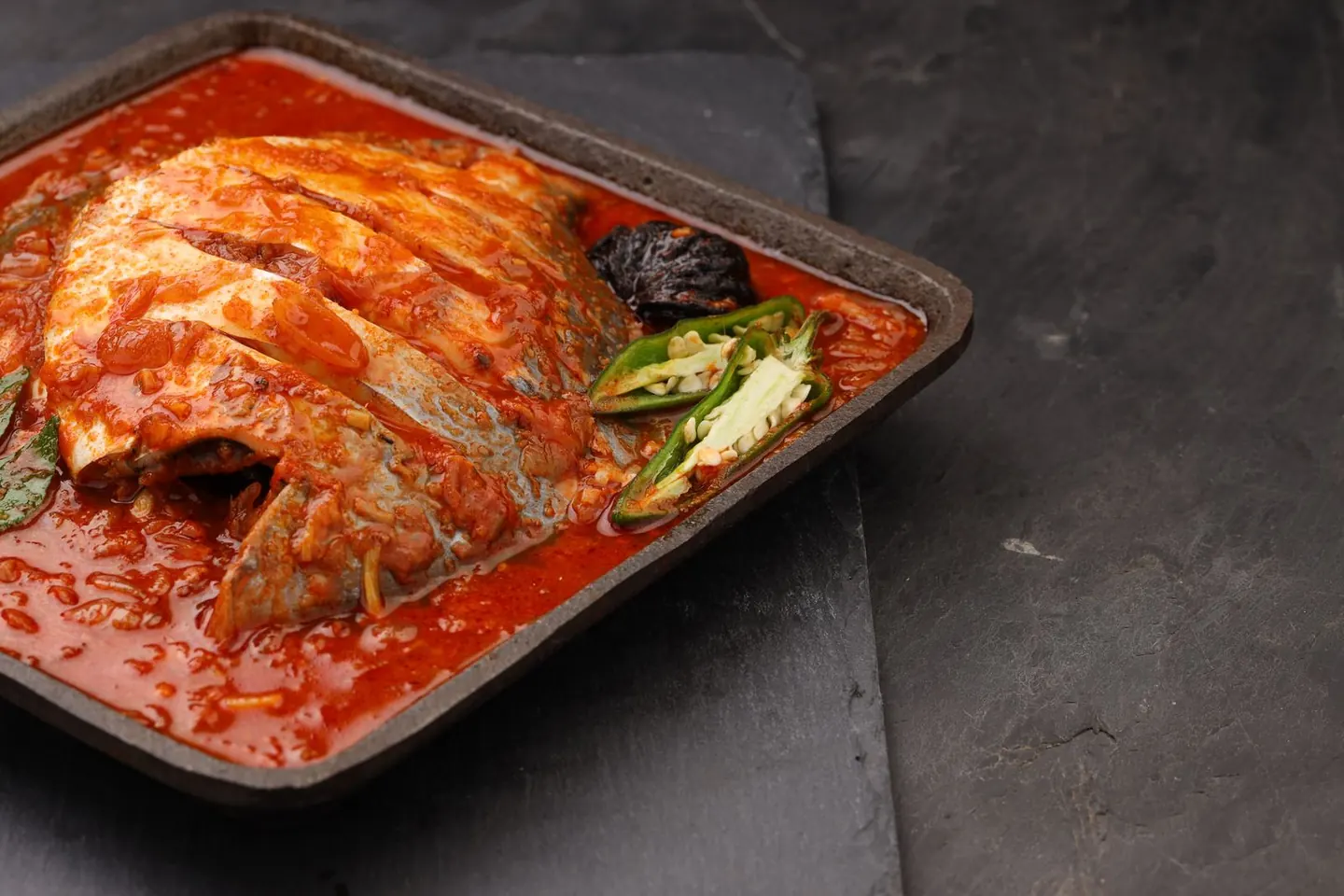
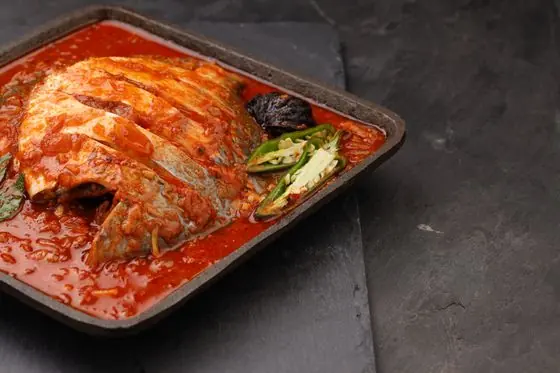
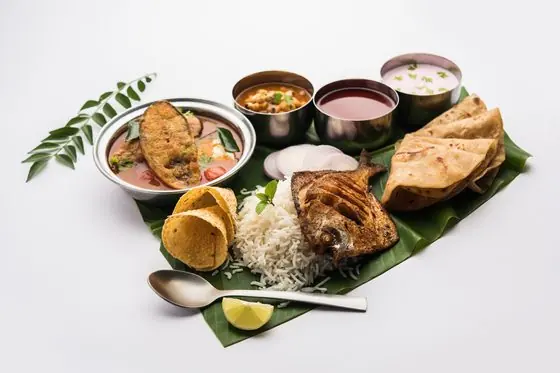
Photograph: Adobe Stock · representative of the dish
Mappas sits in the same grammar as ishtu and moilee — thenga chertha, coconut added as milk rather than ground — and it is the gentlest fish dish in the Kerala repertoire. Where meen vevichathu is chilli and acid, mappas is pepper, fennel and coconut, and its ancestry runs through Syrian Christian and Latin Catholic kitchens both. It is the fish curry to cook for someone who does not eat chilli, and the one to cook when the fish is good enough to taste.
Before you start: Measure the first milk and stand it away from the hob. Once the fish is in, this dish is four minutes from finished and you cannot leave it.
Allergens: Fish.
Equipment: Wide shallow non-reactive pan, 26–28 cm, or a clay pot. Substitute: as R025 — a wide pan lets you watch the surface for the moment the emulsion is at risk.
| Energy | 345 kcal |
| Protein | 31 g |
| Fibre | 3 g |
| Net carbohydrate | 9 g |
| Total carbohydrate | 12 g |
| Sugars | 5 g |
| Fat | 21 g |
| Saturated fat | 14 g |
| Sodium | 310 mg |
From ICMR-NIN IFCT 2017 and USDA FoodData Central. Per-serving figures stay the same when you scale.
Mappas wants a fish with enough character to be tasted through a mild gravy but firm enough to hold. In the US: kingfish, halibut, black cod or striped bass. In the UK: hake, monkfish, gurnard or coley. In the Gulf: hamour or chanad. In Australia: blue-eye trevalla, snapper or ling. Coconut vinegar is sold in Kerala and Sri Lankan shops and Filipino aisles and is the traditional acid here; cider vinegar at 8 ml is closer than lime if you have no coconut vinegar, because a vinegar's acid holds up in a coconut gravy where citrus can taste soapy.
Blood sugar: 9 g of net carbohydrate. The fat content slows the meal considerably, which is useful alongside rice and unhelpful if you are counting energy.
Blood pressure: 310 mg. Two grams of salt gives about 240 mg; pepper at this level carries the loss better than chilli would.
Cholesterol: 14 g of saturated fat is the highest in the chapter, and all of it is coconut. This is a dish to eat knowingly rather than weekly. Three levers, in order of effect: first milk to 60 ml with 40 ml more stock (about 11 g); coconut oil to sesame (about 12.5 g); and both together with 40 g of cashew paste replacing the first milk entirely (about 7 g). The last of these is no longer a mappas, and this book will say so rather than pretend.
Fish → 500 g prawns, added at step 4 for 3–4 minutes. Or 400 g mussel meat for 4–5 minutes. (Allergen: this swap introduces crustaceans, molluscs.)
Add 200 g potato, diced and parboiled → the common household version, at about 20 g more net carbohydrate per serving. Add at step 3.
Second and first milk → 40 g cashews blended with 300 ml water. Half the saturated fat, a rounder and slightly sweeter gravy, and not a mappas. (Allergen: this swap introduces tree nuts (cashew).)
Coconut vinegar → cider vinegar at 8 ml, or lime at 15 ml. Lime is brighter and less integrated.
Make the gravy through step 3 and hold it; that is the make-ahead. Fridge 2 days finished. Do not freeze — the emulsion breaks on thawing. Reheat over the lowest flame or over a pan of hot water, and accept that it will never be as good as it was at ten minutes old.
Split with oil on top: the first milk was heated. No repair.
Grey rather than white: the shallots browned at step 1, or the turmeric burnt at step 2.
Bland: under-peppered rather than under-salted, nine times out of ten. Crush 2 g more pepper and stir it in at step 5.
Fish tough: it cooked twice, once at step 4 and again while the milk went in. Pan off the heat first.
Serve with
R001 Appam · R005 Idiyappam · R015 Matta Rice · R063 Cabbage Thoran
Tap a star to rate this recipe
The Kindle edition is on its way. Until it lands, the complete book — all 25 chapters and 137 recipes — is free to read here, and it stays free after.