 R053
R053Vanpayar Thoran
Brown cowpea with grated coconut
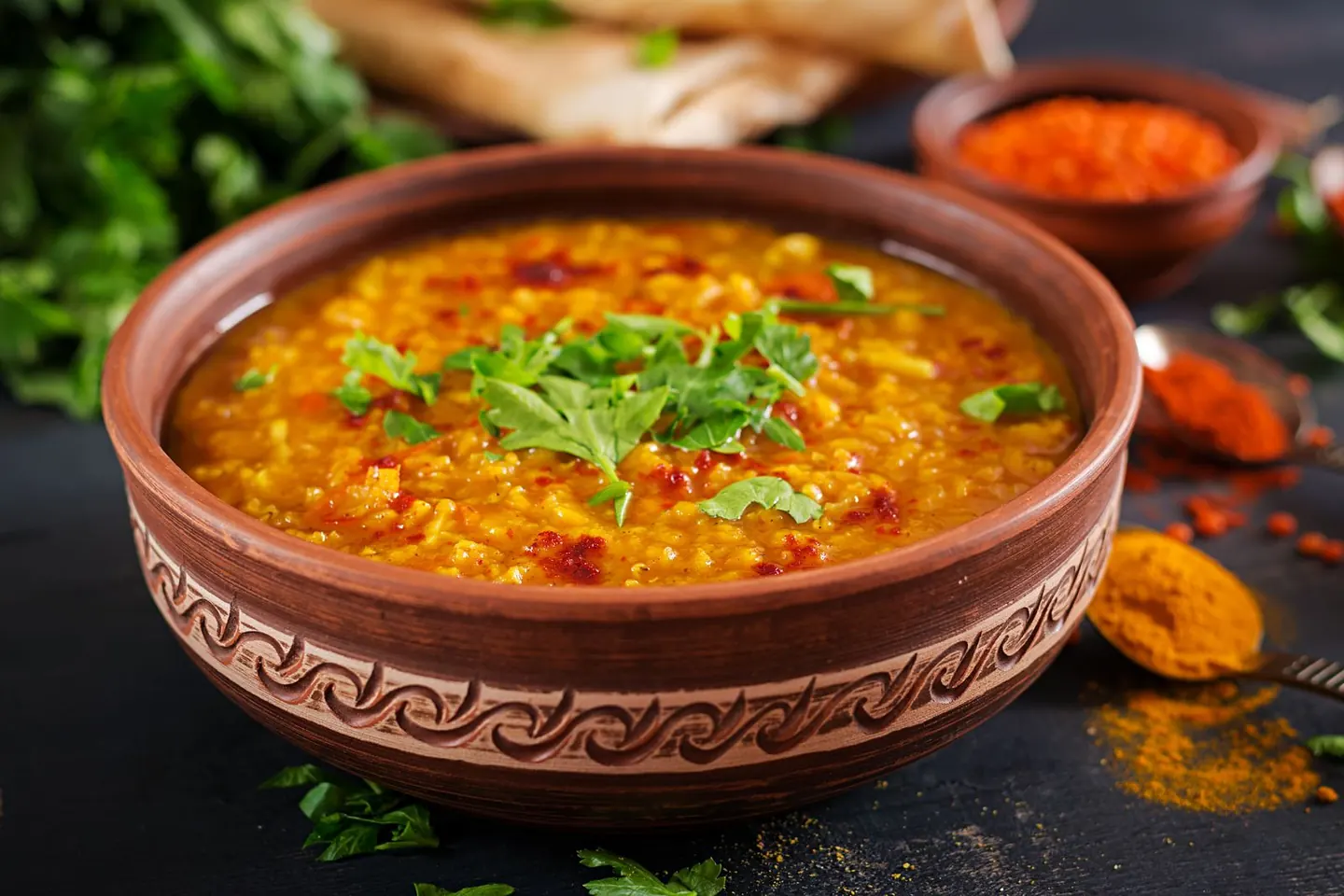
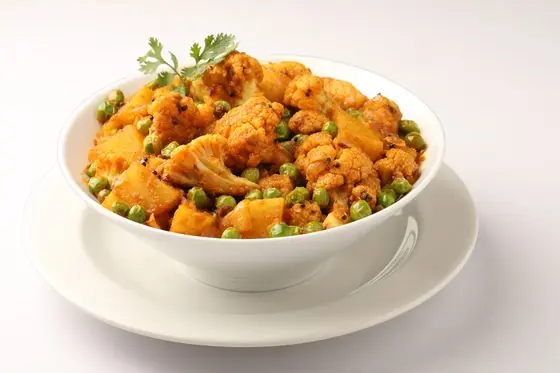
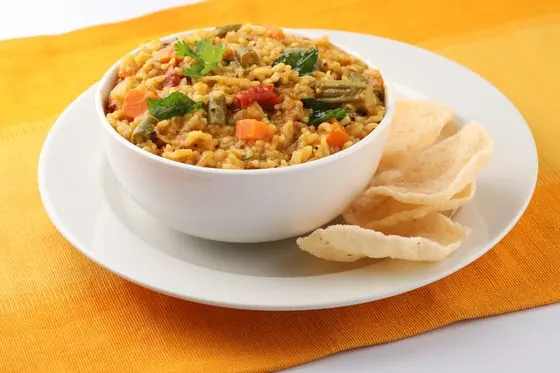
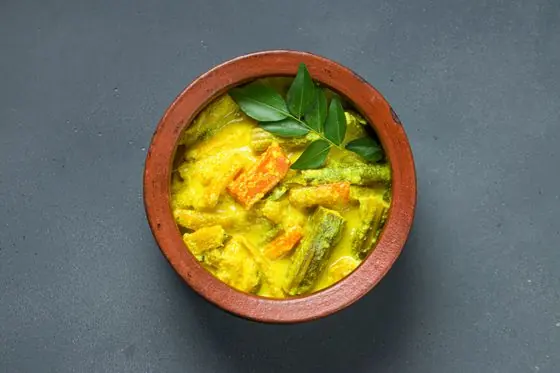
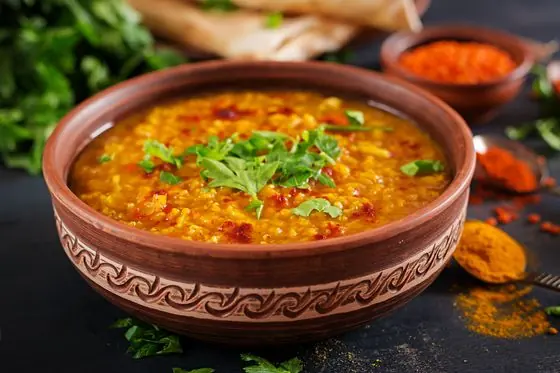
Photograph: Adobe Stock · representative of the dish
Plan ahead: plus 8–12 hours soaking and 20 minutes pressure-cooking — required.
This is the kadala curry of a Kerala breakfast, given a little more gravy and enough weight to be a dinner. The North Indian chana masala is a tomato-and-amchur dish; the Kerala version is a coconut dish, and varutharacha — roasted-ground coconut — is the register it wants. It also happens to be the highest-fibre recipe in this book at 18 g a serving, which is most of a day's target from one bowl, and the reason is the black chickpea's remarkable 25.2 g of fibre per 100 g dry.
Before you start: Take the M09 out of the freezer when you start the pressure cooker. If you have none, allow an extra fifteen minutes and read the sourcing note in R057.
Allergens: None of the major allergens as the recipe is written. Sesame or peanuts — whichever of the two oils you use (it reaches the dish through M16).
Equipment: Pressure cooker; heavy 26 cm pan or clay manchatti. Substitute: any heavy pan. Clay suits the tomato's acid and gives a gentler simmer.
| Energy | 260 kcal |
| Protein | 12 g |
| Fibre | 18 g |
| Net carbohydrate | 31 g |
| Total carbohydrate | 49 g |
| Sugars | 11 g |
| Fat | 10 g |
| Saturated fat | 5 g |
| Sodium | 300 mg |
From ICMR-NIN IFCT 2017 and USDA FoodData Central. Per-serving figures stay the same when you scale.
Black chickpea — kala chana, desi chana, Bengal gram whole — is the correct pulse and carries far more fibre than the pale kabuli type. White chickpeas work and give a softer, floury dish; soak them 8–12 hours and pressure-cook 18–22 minutes. Tinned chickpeas, 2 × 400 g drained and rinsed, are an acceptable weekday shortcut: check the sodium on the tin and drop the M07 to 2.5 g if it is above 200 mg per 100 g.
Blood sugar: 31 g of net carbohydrate with 18 g of fibre alongside it, at a category glycaemic index of 34 — an estimated glycaemic load near 10. Note that fibre at this level can be uncomfortable if your usual intake is low; build up over a fortnight rather than starting here.
Blood pressure: 300 mg, the highest in this chapter, from 4 g of salt across four servings. Three grams brings it to about 250 mg and the M01 covers it.
Cholesterol: 5 g of saturated fat, against about 14 g for the same dish made with 200 ml of thick coconut milk. That is the M09 substitution in one number.
White chickpea (kabuli) → fibre falls to about 12 g per serving and the dish goes softer and paler. Still good.
Coconut milk for M09 → 150 ml of second extraction at step 7. Lighter and paler, and about the same saturated fat; first extraction would take it to 14 g.
Add 200 g of diced green plantain or ash gourd at step 6 → six servings and more volume.
Add 200 g of shredded cooked chicken or 150 g of chopped leftover beef at step 6 → protein to about 22 g per serving. This is the best way in the book to stretch a small quantity of meat, and it is what the chapter opposite is arguing for.
Better on day two. Fridge 4 days. Freeze 3 months — no emulsion, so nothing to break. Reheat at a simmer with water to loosen; it thickens considerably as it cools.
Reduce it hard and it becomes a filling for pathiri, a wrap or a toasted sandwich. Or mash it coarsely, add lime and raw onion, and eat it cold as a salad.
Gravy thin: the chickpeas were not crushed at step 6, or the cooking liquid was discarded. Both matter.
Raw, dusty taste: the M09 needs its 5 minutes at step 7 and the powders need their 90 seconds at step 4.
Chickpeas hard: the soak was short. There is no rescue at the gravy stage; give them another 8 minutes under pressure before you build the curry.
Serve with
R004 Puttu · R001 Appam · R015 Matta Rice · R027 Ayala Varuthathu
Tap a star to rate this recipe
The Kindle edition is on its way. Until it lands, the complete book — all 25 chapters and 137 recipes — is free to read here, and it stays free after.