 R001
R001Palappam
The lace-edged fermented appam, the Syrian Christian breakfast bread
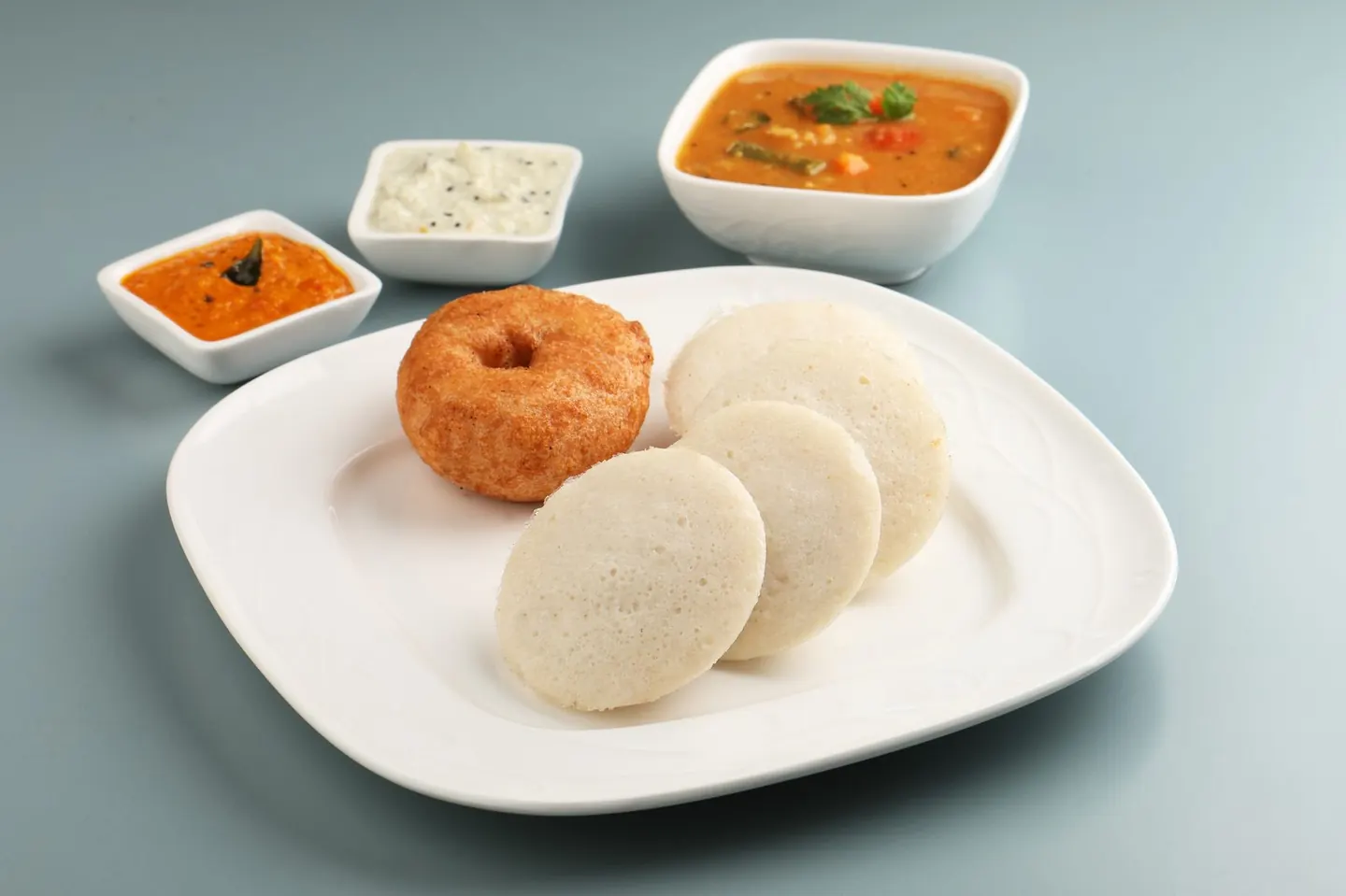
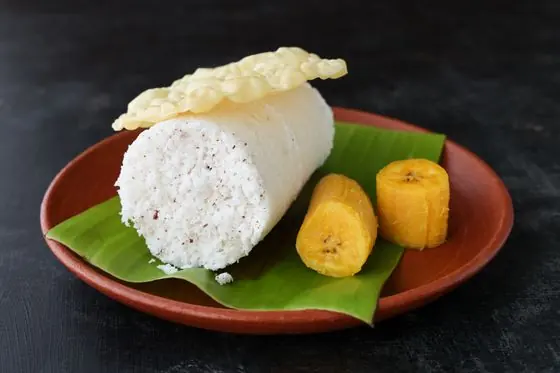
Photograph: Adobe Stock · representative of the dish
Plan ahead: including 4–6 hours soaking and 8–12 hours fermenting — both required.
Here is the case for it, stated without dressing. Oats carry a soluble fibre, beta-glucan, that rice does not, and the ingredient earns its place on that composition rather than on any heritage. There is a caution attached: in Pavithran's Kerala measurements, oats puttu came out at GI 51–52 against red rice puttu's 38, so oats are not automatically the lower-glycaemic option in a Kerala preparation. Ground into a fermented dosa batter with parboiled matta and urad dal, they give a soft, faintly sweet dosa with more fibre than R007 and a genuinely good flavour.
Before you start: Rice and dal soak separately and grind separately. The oats are not soaked at all — they go in as dry flour, whisked into water, because soaked rolled oats turn to a slime that will not ferment cleanly.
Allergens: Sesame. Gluten (wheat) — oats carry none of their own but are commonly milled alongside wheat; buy certified gluten-free oats if you need them.
Equipment: Wet grinder or strong blender; well-seasoned heavy iron griddle. Substitute: a good non-stick pan; this batter is stickier than M11 and non-stick is a reasonable choice.
| Energy | 211 kcal |
| Protein | 8 g |
| Fibre | 5 g |
| Net carbohydrate | 39 g |
| Total carbohydrate | 44 g |
| Sugars | 1 g |
| Fat | 3 g |
| Saturated fat | 1 g |
| Sodium | 280 mg |
From ICMR-NIN IFCT 2017 and USDA FoodData Central. Per-serving figures stay the same when you scale.
Use plain rolled or jumbo oats, not instant oat sachets, which are pre-cooked, often sweetened, and give a flat gummy batter. Steel-cut oats work if you grind them finer. The fenugreek here is 3 g across eight dosas and is present for aroma and fermentation, but readers taking insulin or a sulfonylurea should know that fenugreek has genuine glycaemic effects at 10–25 g a day and can compound those medicines; Chapter 9 gives that caution in full, and any change to a medicine is a conversation with your doctor, not with a cookbook.
Blood sugar: this is the highest-fibre dosa in the chapter and it is still 39 g of net carbohydrate. Note the honest caution in the headnote: oats measured GI 51–52 in a Kerala puttu, higher than red rice at 38, so treat this as a fibre gain rather than a glycaemic one.
Cholesterol: 1 g of saturated fat a serving with sesame oil. Between that and the beta-glucan, this is the most useful dish in the chapter for a reader working on LDL cholesterol, and it is still one dosa recipe among many rather than a treatment for anything.
Blood pressure: 280 mg a serving with M07, about 400 mg with plain salt.
150 g oats and 50 g rice → more soluble fibre, a softer and stickier dosa, and a batter that ferments more sluggishly. This is the limit; beyond it the dosa will not hold together.
Ragi for the oats → M12, which is the same idea with a Kerala grain and less soluble fibre.
Add 40 g grated carrot and chopped coriander to the ladle → an uttappam-style thick version, up about 1 g of fibre.
Batter keeps in the fridge 3 days and thickens as it stands, so expect to add water. Freeze the batter 1 month in portions — unusually for a batter, this one survives it reasonably, because the oats rehydrate. Freeze the cooked dosas 1 month interleaved with paper; reheat on a dry griddle 1–2 minutes a side.
Cold oat dosa crumbles well into a pan with mustard, curry leaf, shallot and leftover pulse. It also rolls around a vegetable filling more willingly than a rice dosa.
Gummy, slimy batter: instant or pre-cooked oats, or the oats were soaked. Grind them dry.
Barely rose: normal for this blend. Judge by smell and bubbles, not height.
Dosa will not release: griddle under-seasoned or not hot enough. Oat batter is stickier than M11.
Lumps visible in the cooked dosa: the oat flour went in dry. Whisk it into water separately.
Serve with
R010 Kadala Curry · R011 Cherupayar Curry · R089 Kerala Kitchen Salad
Tap a star to rate this recipe
The Kindle edition is on its way. Until it lands, the complete book — all 25 chapters and 137 recipes — is free to read here, and it stays free after.