 R001
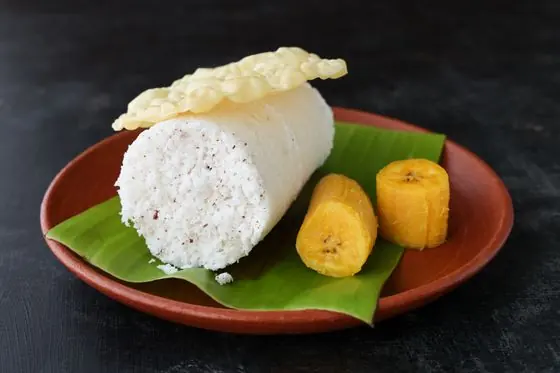
R001Palappam
The lace-edged fermented appam, the Syrian Christian breakfast bread
Photograph: Adobe Stock · representative of the dish
Plan ahead: plus 14 hours soaking and fermenting the M11 batter — required.
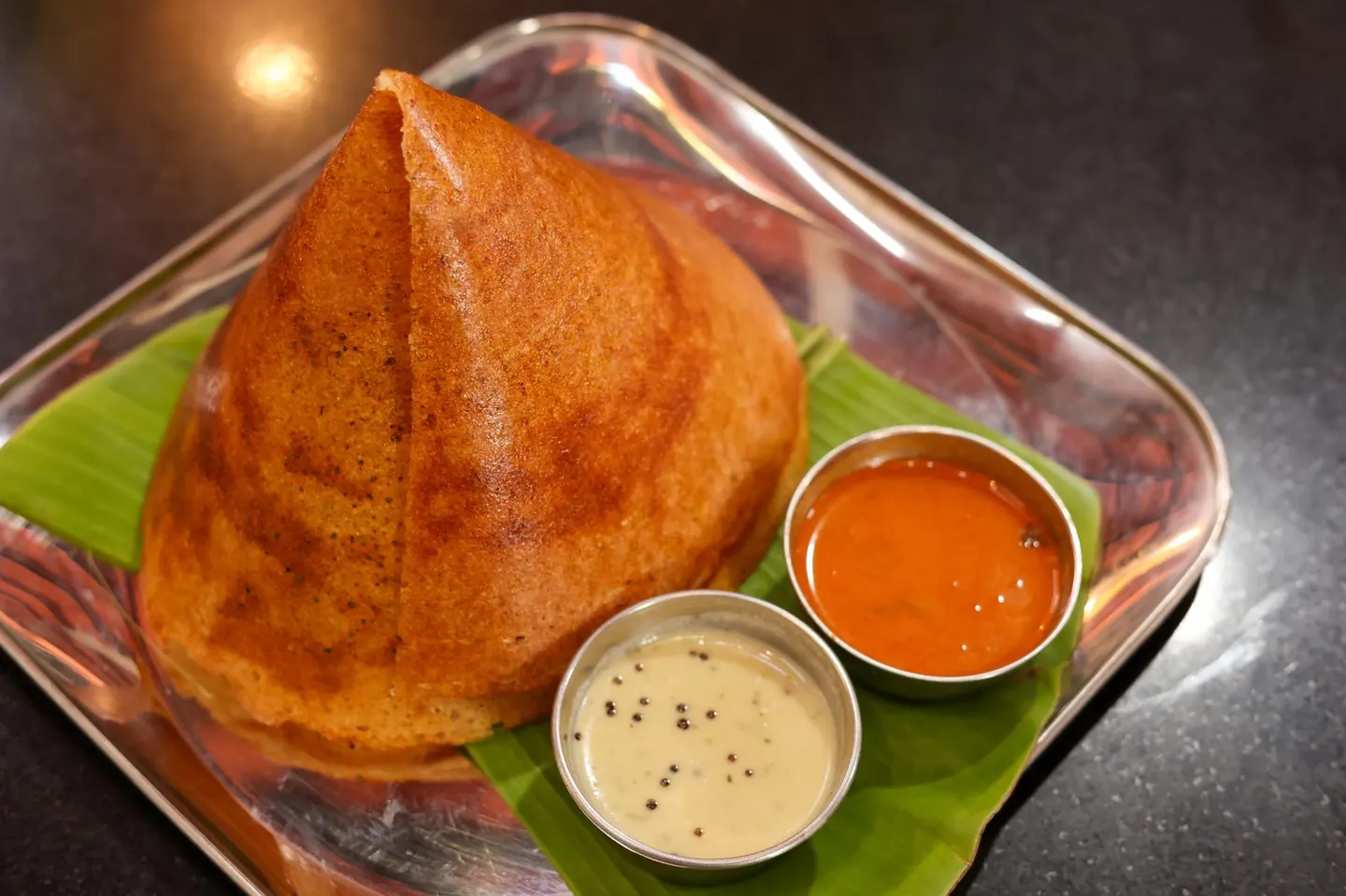
The thattukada — the roadside cart with its kerosene lamp and its iron griddle — is one of the four documented shifts that changed what Kerala eats, and it also produced the most likeable dosa in the state. Thattu dosa is small, thick, soft-centred, browned hard on one side only, and made in stacks of four while you wait. This version keeps the shape and the char and takes out the oil, and it is honest about what that costs: less of the fried crust, and a dosa that wants a chutney rather than standing alone.
Before you start: A thattu dosa is a two-minute dish cooked on one side only, so the lid, the oiled cloth and the plate all need to be beside the griddle before the first ladle. Have the accompaniment already on the table.
Allergens: None of the major allergens as the recipe is written. Sesame — only if you grease with sesame rather than coconut oil.
Equipment: Dosa kallu or heavy flat iron griddle, 26 cm or wider. Substitute: a heavy non-stick frying pan, which needs even less oil and gives a paler, less blistered underside.
| Energy | 246 kcal |
| Protein | 8 g |
| Fibre | 4 g |
| Net carbohydrate | 47 g |
| Total carbohydrate | 51 g |
| Sugars | 1 g |
| Fat | 3 g |
| Saturated fat | 1 g |
| Sodium | 400 mg |
From ICMR-NIN IFCT 2017 and USDA FoodData Central. Per-serving figures stay the same when you scale.
Day-two or day-three M11 batter makes a better thattu dosa than fresh, because the extra sourness is part of the flavour and the slightly thinner batter spreads more willingly. This is the recipe to make when the batter has gone too sour for idli. Chilled shop-bought batter works; thin it less than the packet suggests, since a thattu dosa wants a batter that mounds rather than runs.
Blood sugar: 47 g of net carbohydrate for two dosas. The stall version is the same carbohydrate with 15–20 g more fat, which slows the rise and adds 150 kcal, and that is not a trade worth making.
Blood pressure: 400 mg with M07 and about 580 mg with plain salt, all of it from the batter. Chutney and sambar will double this if you let them.
Cholesterol: 1 g of saturated fat with sesame oil, about 1.5 g with coconut oil. Sesame is 16.25% saturated against coconut oil's 90.86%, and on a griddle nobody can taste the difference.
Ragi batter M12 for M11 → a darker, softer dosa with about 1 g more fibre. It sticks more readily, so the griddle must be well seasoned.
Coconut oil for sesame → about 0.5 g more saturated fat a serving and a distinctly more Kerala aroma. In this dish the aroma is faint enough that sesame is the better default.
Spread thinner and wider, 22–24 cm → an ordinary crisp dosa, more surface, and it needs the same oil across a larger area, so the fat per gram of dosa rises slightly.
Batter keeps in the fridge 4 days and improves for this dish as it sours. Cooked dosas are best within 10 minutes and acceptable for 4 hours wrapped in a cloth. Freeze the cooked dosas 1 month, interleaved with paper; reheat on a dry griddle 1–2 minutes a side. Do not refrigerate cooked dosas — they go leathery.
Cut cold thattu dosa into ribbons and stir-fry them with onion, green chilli, curry leaf and a spoonful of leftover curry — the Kerala answer to kothu. Two dosas make one portion.
Dosa sticks and shreds: griddle not hot enough, or the iron is under-seasoned. Heat it longer, wipe with oil, and rub with half a cut onion.
Pale, no browning: flame too low, or too much oil, which steams rather than fries the base.
Batter will not spread and tears: too thick. One tablespoon of water at a time.
Third dosa much worse than the first: the griddle lost heat. Wait 20–30 seconds between dosas.
Serve with
R010 Kadala Curry · R089 Kerala Kitchen Salad · M06 with a few drops of sesame oil · R011 Cherupayar Curry
Tap a star to rate this recipe
The Kindle edition is on its way. Until it lands, the complete book — all 25 chapters and 137 recipes — is free to read here, and it stays free after.