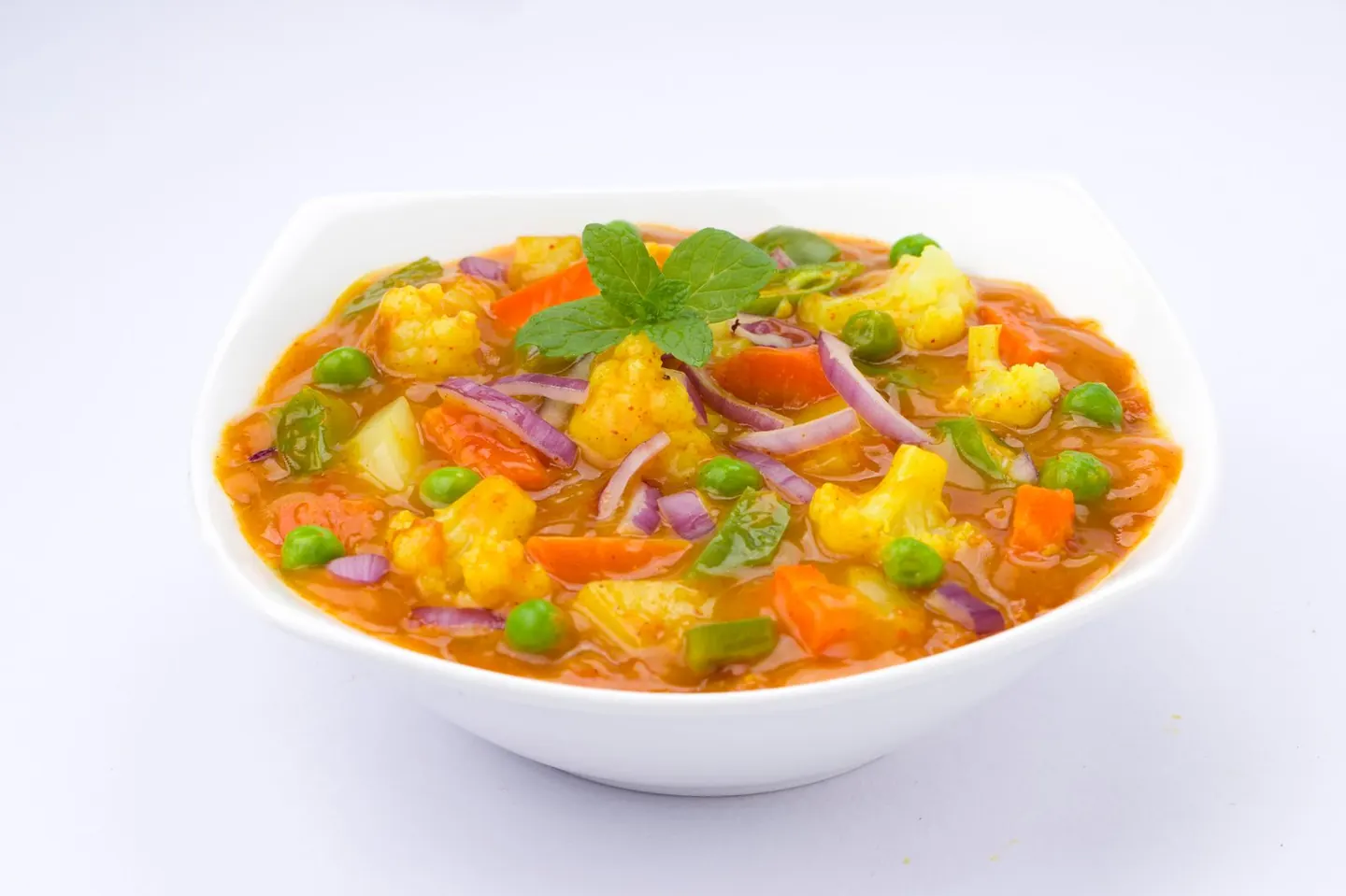
Chapter 22 — Curries, Pulissery and the Sour Family
Ask a Malayali cook what makes a curry theirs and they will not name a spice. They will name an acid. The choice of souring agent is the most reliable community and regional marker in the whole cuisine — sharper than chilli, sharper than the fat, sharper than the protein — and it is the one decision that cannot be reversed once the pot is on. Choosing the acid is choosing the dialect.
The map is real and it is worth learning. Kudampuli — Garcinia gummi-gutta, sun-dried to wrinkled blackish-brown pieces — is the fish-curry acid of central Travancore and Kottayam, and it belongs to the Syrian Christian table: smoky, rounded, deep rather than sharp, integrating into a coconut gravy instead of sitting on top of it, and the one acid in Kerala that makes a curry improve as it rests. It never goes into a sadya vegetable dish. Tamarind is flat, bright and frankly acidic, and it is the sadya and Tamil-inflected acid: sambar, rasam, chutney, inji puli, the theeyal family. Buttermilk and curd are lactic, soft and cooling, and they are the Brahmin acid — pulissery, kalan, kichadi, moru curry, sambharam, and the closing liquid of every formal feast. Kokum is mild and fruity and belongs to the Konkani and Gowda Saraswat Brahmin kitchens of Kochi, where it marks the edge of a different culinary language existing inside Kerala: sol kadhi, ambat, a Konkan grammar with a Malayali address. Raw mango is the seasonal alternative to kudampuli in coastal households during the pre-monsoon glut, and lime is the top note you add last, after the heat is off.
In this book souring does a second job, and it is why this chapter sits where it does. Acid is the most powerful single replacement for salt available to a cook. Sourness and saltiness are separate sensations the brain reads as one thing — "seasoned" — and a dish carrying enough acid tastes finished at a fraction of the sodium it would otherwise need. That matters because DASH lowered blood pressure by 11.4/5.5 mmHg in hypertensive adults with no change in salt intake and no weight loss at all. There is also a modest direct effect worth knowing: pooling clinical trials of vinegar, glucose area under the curve fell by a standardised mean difference of −0.60 and insulin area under the curve by −1.30 (Shishehbor et al., 2017), and an umbrella review of ten meta-analyses reported postprandial glucose down 14.59 mg/dL and systolic pressure down 2.94 mmHg (Shahmohammadi et al., 2026). Kerala's kudampuli, lime, tamarind and moru habits are not merely delicious; they are glycaemically useful. That is a modest claim and it is the correct size of claim.
These are also the lowest-energy dishes in the book: six of the eight come in under 200 kcal a portion, and R087 at 80. A curd curry is mostly water, and water fills a plate without filling a day's energy budget.
One rule governs half the chapter and it is not negotiable. Never let a curd or buttermilk curry boil. Milk proteins — casein micelles already destabilised by the lactic acid of fermentation — denature and aggregate on heating, and the aggregates trap the fat and drop out as grainy white curds in a thin whey. Once it splits, nothing recovers it. Warm through, and no further.
On the 70:30 salt. Recipes in this chapter offer M07, the 70% sodium chloride / 30% potassium chloride blend, in place of some or all of the salt, and the Blood pressure notes give the lower sodium figure it produces. Potassium-enriched salt is not for everyone: do not use M07, or any potassium-based salt substitute, without your doctor's approval if you have chronic kidney disease, or if you take a RAAS inhibitor (an ACE inhibitor, names ending -pril, or an angiotensin receptor blocker, names ending -sartan), a potassium-sparing diuretic (spironolactone, eplerenone, amiloride), or a potassium supplement. Read the safety box at M07 in full before you make the jar. Where M07 is not suitable, use ordinary salt at the same weight and take the higher, plain-salt sodium figure, or work with M06 and the acid-and-aroma techniques of Chapter 10 instead. This book does not tell anyone to change or stop a medicine.
R081 · Moru Curry [LOW SODIUM] [VEGETARIAN] [UNDER 250 KCAL]
Tempered buttermilk curry with ground coconut
ICONS: Q · L
THE RE-ENGINEERING: Coconut cut from a typical 100 g to 40 g and the coconut oil to 5 g across four portions; the body now comes from the ground coconut-cumin paste rather than from volume of fat, and the curd is diluted the traditional way rather than used thick.
Moru curry is the lightest thing in Kerala cooking and one of the lowest-energy-density dishes in this book: 126 kcal in 220 g, which is 0.57 kcal a gram. It closes a sadya, and in the Namboothiri tradition buttermilk at the end of a feast is described as essential rather than optional — cooling, acidic against the sugar of the payasam, and understood to settle what came before. On an ordinary Tuesday it turns 130 g of rice into a meal for the cost of fifteen minutes.
Serves 4 · about 220 g per portion Active 15 minutes · Total 20 minutes Difficulty: Easy
EQUIPMENT: Heavy 2-litre pan; mixie or small blender; small pan or steel ladle for the tempering. Substitute: an ammikkallu or mortar gives a coarser, better-textured paste; a stick blender in a jug works at some cost in smoothness.
BEFORE YOU START: This dish moves fast and it cannot be left. Grind the paste, whisk the buttermilk, and set the tempering ingredients out in one small bowl before you light anything. From the moment the pan goes on there are about four minutes of continuous attention and no window to fetch something.
INGREDIENTS
- 400 g (1⅔ cups) thick curd, whisked smooth with 400 ml water to make moru
- 40 g (½ cup) freshly grated coconut
- 1.5 g (½ tsp) cumin seed
- 10 g (about 2) green chillies
- 8 g (a 1.5 cm piece) ginger
- 1.5 g (¾ tsp) ground turmeric
- 2 g (⅓ tsp) M07 the 70:30 salt
- 5 g (1 tsp) coconut oil
- 1.5 g (⅓ tsp) mustard seed
- 0.5 g (⅛ tsp) fenugreek seed
- 2 dried red chillies, broken
- 3 g (1 sprig) curry leaves
- 20 g (about 2) shallots, thinly sliced
SOURCING NOTE: Moru is not a product you buy; it is curd let down with water, and the ratio is roughly 1:1 for a curry and 1:2 for a drink. Use full-fat set curd or plain whole-milk yoghurt — Greek-style yoghurt is too thick and too mild, so if that is all you have, use 300 g of it with 500 ml of water and add a squeeze of lime. Slightly sour curd, two or three days old, makes a better moru curry than fresh; this is one of the few dishes improved by a curd that has gone a little sharp. Frozen grated coconut works throughout this chapter and should be thawed but not squeezed.
ALLERGENS: Milk, mustard.
METHOD
- Grind the coconut, cumin, green chilli, ginger and turmeric with 60 ml water to a fine paste, 2–3 minutes in bursts, until no grit remains on your fingertip. Grit here is the single most common fault in the dish.
- Whisk the curd with the 400 ml water until absolutely smooth with no lumps of set curd left, 30–45 seconds. Lumps will not disperse once heat is applied.
- Combine the paste, the moru and the salt in the pan over a low flame.
- Warm, stirring slowly and continuously in one direction with a flat spoon, until the curry is hot to a fingertip held in it for a second, faintly steaming, and has thickened just enough to coat the spoon — 4–6 minutes. Take it off the heat before a single bubble breaks the surface. If you see the surface begin to shudder, lift the pan off the flame immediately. Do not walk away and do not raise the flame to save time.
- Heat the coconut oil in the small pan over a medium-high flame until a mustard seed dropped in circles and pops within 2 seconds.
- Add the mustard seed and cover for the 10–15 seconds it takes to finish popping. Add the fenugreek and the broken chillies and stir 10–15 seconds — fenugreek turns from reddish to black and irretrievably bitter in about twenty.
- Add the shallots and fry until deep golden and crisp at the edges, 2–3 minutes. Add the curry leaves last, stand back, and count 10–15 seconds until they go brittle.
- Pour the tempering over the curry and do not stir it in. It is a finishing perfume laid on top, and stirring it through wastes both the aroma and the crispness.
WHY THIS WORKS
Fermentation has already partly destabilised the curd's casein micelles by dropping the pH; heat above about 80°C (176°F) finishes the job, and the aggregating protein drags the fat out as grainy curds in a thin whey. Irreversibly. The ground coconut is doing the work heat is not allowed to do: its insoluble particles suspend in the liquid and give body without any risk of splitting.
PER SERVING (estimated)
| kcal | kJ | Carb | Fibre | Net carb | Sugars | Protein | Fat | Sat fat | Sodium |
|---|---|---|---|---|---|---|---|---|---|
| 126 | 529 | 8.7 g | 1.7 g | 7.0 g | 5.8 g | 4.4 g | 9.0 g | 6.8 g | 190 mg |
Curd from USDA FoodData Central "Yogurt, plain, whole milk" (FDC 171284) — ICMR-NIN IFCT 2017 contains no curd or buttermilk entry, so USDA is the source throughout this chapter. Fresh coconut from IFCT H007, with the saturated fraction of coconut fat taken as 88.6% after USDA FDC 170169. Shallot values from a USDA generic entry not tabulated in this book's nutrition tables.
IF YOU ARE WATCHING… Blood sugar: 7.0 g of net carbohydrate a portion, most of it lactose, and 4.4 g of protein. This is close to a free dish on a rice plate, and its acid is doing measurable work: pooled vinegar trials found glucose area under the curve down by a standardised mean difference of −0.60 (Shishehbor et al., 2017), and lactic acid is a plausible parallel. Serve it with the rice, not after it. Blood pressure: 190 mg a portion. Note that cultured buttermilk itself carries about 148 mg of sodium per 100 g before anyone adds salt, so if you buy buttermilk rather than diluting curd, leave the M07 out entirely. Fermented dairy is also the food group with the most consistent inverse associations across weight, type 2 diabetes and hypertension in cohort studies — 13% lower risk of overweight or obesity per 50 g a day of yoghurt (Feng et al., 2022) — and those are observational associations, not proof of cause. Cholesterol: 6.8 g of saturated fat a portion, and it is worth knowing where it comes from: about 3.7 g from the 40 g of grated coconut, about 2.1 g from the curd, about 1.0 g from the teaspoon of coconut oil. Halve the coconut for about 4.9 g total, at some cost in body. Using low-fat curd takes another 1.5 g off.
SWAP IT
- Full-fat curd → low-fat curd or buttermilk. Saturated fat drops by about 1.5 g a portion; the curry is thinner and splits more easily, not less, because there is less fat cushioning the protein.
- Ground coconut → 20 g cashews ground with the cumin. Body is comparable, saturated fat drops to about 3.5 g a portion, and the flavour turns sweeter and less like Kerala. (Allergen: this swap introduces tree nuts (cashew).)
- Coconut oil → gingelly oil for the tempering. Saturated fat down about 0.9 g; the aroma turns darker and nuttier, which suits this dish less well than most. (Allergen: this swap introduces sesame.)
- Add 200 g diced ash gourd, cooked soft in 150 ml water before step 3 → the dish becomes a kumbalanga moru curry, gains about 1.5 g of fibre a portion and drops to about 0.45 kcal a gram.
SCALE IT
| Serves | Curd | Water | Coconut | Coconut oil | Shallots | Salt (M07) |
|---|---|---|---|---|---|---|
| 2 | 200 g | 200 ml | 20 g | 3 g | 10 g | 1 g |
| 4 | 400 g | 400 ml | 40 g | 5 g | 20 g | 2 g |
| 8 | 800 g | 800 ml | 80 g | 8 g | 40 g | 4 g |
At eight servings warm the curry in a wide pan rather than a deep one; a deep pot heats unevenly and the base will pass 80°C (176°F) before the top is warm.
MAKE AHEAD · STORE · FREEZE The paste can be ground and refrigerated a day ahead. Fridge 2 days in a covered non-metal container. Do not freeze — the emulsion splits on thawing and there is no recovery. Reheat over the lowest possible flame, stirring, to barely warm only; better still, serve it at room temperature, which is how it is eaten on a sadya leaf anyway.
LEFTOVERS Thin it with an equal volume of water, add crushed ginger and a curry leaf, and drink it cold as sambharam. Or use it as the cooking liquid for a kalan-style yam curry.
SERVE WITH R015 Matta Rice, Properly Cooked · R084 Ulli Theeyal · R023 Kerala Khichdi · M08 Coconut Milk, Three Extractions
TROUBLESHOOTING Split into grains and watery liquid: it boiled, or the flame was too high at step 4. There is no repair. Next time, low flame, constant stirring, and off the heat at the first shudder. Gritty on the tongue: the coconut paste was not ground fine enough. Two to three minutes in bursts with 60 ml water, and test on a fingertip. Tastes thin and sharp with no body: not enough coconut paste, or the curd was very sour and very thin. Add 15 g more ground coconut, or a tablespoon of rice flour slaked in cold water. Raw, chalky taste: the paste went in and came straight off the heat. It needs the full 4–6 minutes below boiling to lose its rawness.
NOTES
R082 · Pineapple Pulissery [LOW SODIUM] [VEGETARIAN] [UNDER 250 KCAL]
Sweet-sour curd curry with pineapple
ICONS: Q · L
THE RE-ENGINEERING: Jaggery cut to 8 g across four portions, because ripe pineapple supplies most of the sweetness the dish needs, and the coconut held at 60 g where a sadya version would use twice that.
Pulissery is the curd family's showpiece, and the pineapple version is the one that converts people. It sits in the sweet-sour register the sadya reserves for the closing rice courses — a fruit cooked to softness, a curd-and-coconut body, mustard and curry leaf on top — and the tension between the acid of the curd and the acid of the fruit is the whole dish. Get the pineapple ripe. An underripe one gives sharpness without perfume, and no amount of jaggery corrects it.
Serves 4 · about 200 g per portion Active 15 minutes · Total 30 minutes Difficulty: Easy
EQUIPMENT: Heavy 2-litre pan; mixie; small pan for the tempering. Substitute: as R081.
BEFORE YOU START: Cook the pineapple first and let it cool for a few minutes before the curd goes anywhere near it. Adding whisked curd to fruit still at a boil is the commonest way this dish is ruined.
INGREDIENTS
- 300 g (about ½ a small one) ripe pineapple, in 1.5 cm dice
- 150 ml water
- 1.5 g (¾ tsp) ground turmeric
- 8 g (2 tsp) jaggery, grated
- 60 g (¾ cup) freshly grated coconut
- 1.5 g (½ tsp) cumin seed
- 10 g (about 2) green chillies
- 250 g (1 cup) thick curd, whisked smooth
- 2 g (⅓ tsp) M07 the 70:30 salt
- 5 g (1 tsp) coconut oil
- 1.5 g (⅓ tsp) mustard seed
- 0.5 g (⅛ tsp) fenugreek seed
- 2 dried red chillies, broken
- 3 g (1 sprig) curry leaves
SOURCING NOTE: Kerala pineapple — the Vazhakulam variety from Ernakulam district — is smaller, sweeter and less fibrous than the tinned kind, and is a registered geographical indication. Outside Kerala, buy a fresh pineapple that smells of pineapple at the base and gives slightly under a thumb at the crown. Tinned pineapple in juice is an acceptable substitute at 300 g drained; tinned in syrup is not, and if it is all you have, rinse it and leave the jaggery out. Jaggery is in every South Asian shop; dark muscovado sugar at the same weight is the closest supermarket substitute.
ALLERGENS: Milk, mustard.
METHOD
- Simmer the pineapple with the water, turmeric and jaggery in the pan, covered, over a medium flame until the fruit is translucent at the edges and yields easily to a spoon but still holds its shape, 8–12 minutes depending on ripeness. Most of the water should have gone; if a lot remains, uncover and boil it down for 2–3 minutes.
- Grind the coconut, cumin and green chilli with 60 ml water to a fine paste, 2–3 minutes in bursts, until no grit remains on a fingertip.
- Stir the paste into the pineapple and cook, uncovered, over a low flame for 3–4 minutes, until the raw coconut smell has gone and the mixture has thickened noticeably. Then take the pan off the heat and let it stand 2–3 minutes.
- Whisk the curd smooth. Add it to the pan off the heat, with the salt, stirring slowly until evenly combined.
- Return to the very lowest flame and warm, stirring continuously, until hot to a fingertip and faintly steaming, 2–3 minutes. Not one bubble. Take it off at the first sign that the surface is about to move.
- Temper exactly as in R081: coconut oil hot enough to pop a mustard seed in 2 seconds, mustard seeds covered until they finish popping, then fenugreek and broken chilli for 10–15 seconds, then curry leaves for 10–15 seconds.
- Pour the tempering over the surface and leave it there. Serve warm or at room temperature.
WHY THIS WORKS
Cooking the pineapple first solves a specific problem: raw pineapple contains bromelain, a protease that would cleave the curd's casein and turn the curry bitter and thin. Eight minutes at a simmer denatures it completely. The ground coconut then thickens by suspension rather than by protein, which is what lets the dish be warmed at all without splitting.
PER SERVING (estimated)
| kcal | kJ | Carb | Fibre | Net carb | Sugars | Protein | Fat | Sat fat | Sodium |
|---|---|---|---|---|---|---|---|---|---|
| 164 | 686 | 18.4 g | 3.0 g | 15.4 g | 13.1 g | 3.5 g | 9.9 g | 7.9 g | 170 mg |
Curd from USDA FDC 171284; fresh coconut from IFCT 2017 H007. Pineapple from a USDA generic entry that this book's nutrition tables do not carry; jaggery costed as sucrose at 98 g of carbohydrate and about 390 kcal per 100 g, the working assumption this book states in its reference tables.
IF YOU ARE WATCHING… Blood sugar: 15.4 g of net carbohydrate and 13.1 g of sugars a portion, and that is the highest sugar figure in this chapter. About 9 g of it is the pineapple's own fructose and glucose, about 2 g the jaggery, about 3 g the lactose. Leave the jaggery out — the dish survives it if the fruit is ripe — and you are at about 11 g of sugars. Eat it as one dish on a plate, not as a bowl on its own. Blood pressure: 170 mg a portion, which is low, and the fruit acid is carrying most of the seasoning. Cholesterol: 7.9 g of saturated fat a portion, from 60 g of grated coconut and a teaspoon of coconut oil for four. Cut the coconut to 40 g for about 6.3 g, at real cost to the body of the curry. This dish needs some of its coconut and it is not honest to pretend otherwise.
SWAP IT
- Pineapple → 300 g ripe mango, which gives R085. Sweeter, softer, less acidic, and no bromelain problem.
- Pineapple → 300 g ripe nendran banana in thick coins, simmered 5–6 minutes only. Sugars rise to about 17 g a portion; a very traditional sadya version.
- Jaggery → nothing. If the pineapple is genuinely ripe you will not miss it, and you lose 2 g of sugars a portion.
- Curd → 250 g coconut yoghurt, for a dairy-free version. It behaves similarly, does not split as readily, and saturated fat rises by about 1.5 g a portion.
SCALE IT
| Serves | Pineapple | Curd | Coconut | Jaggery | Coconut oil | Salt (M07) |
|---|---|---|---|---|---|---|
| 2 | 150 g | 125 g | 30 g | 4 g | 3 g | 1 g |
| 4 | 300 g | 250 g | 60 g | 8 g | 5 g | 2 g |
| 8 | 600 g | 500 g | 120 g | 15 g | 8 g | 4 g |
MAKE AHEAD · STORE · FREEZE The cooked pineapple base with the coconut paste — everything up to the end of step 3 — keeps in the fridge for 2 days and the curd goes in on the day. Fridge 2 days for the finished curry, covered, in a non-metal container. Do not freeze; the curd splits and the pineapple goes woolly. Reheat to barely warm over the lowest flame, or serve at room temperature.
LEFTOVERS Spoon it cold over R015 as a kind of Kerala rice salad, or fold a few tablespoons through plain curd for a pachadi-style side.
SERVE WITH R015 Matta Rice, Properly Cooked · R086 Rasam · R084 Ulli Theeyal · a thoran from Chapter 21
TROUBLESHOOTING Bitter and thin: the pineapple was not cooked long enough before the curd went in, and its bromelain has cleaved the milk protein. Eight minutes minimum, and take it off the heat before the curd. Split: it boiled after the curd went in. Never above a fingertip's warmth. Cloyingly sweet: the jaggery was measured by eye, or the pineapple was very ripe. Add a teaspoon of lime juice off the heat; acid is the corrective for sweetness, not salt. Watery: the pineapple's liquid was not reduced at step 1. Boil it down before the coconut paste goes in.
NOTES
R083 · Kumbalanga Pulissery [VEGETARIAN] [UNDER 250 KCAL]
Ash gourd in curd and coconut
ICONS: V · Q · L
THE RE-ENGINEERING: The gourd raised to 500 g for four and the coconut cut to 50 g, which takes the dish to 0.6 kcal a gram — one of the three lowest energy densities in the book — with 5.9 g of fibre a portion arriving from the gourd and the coconut together.
Ash gourd is the most useful vegetable in this chapter: 17 kcal, 2.84 g of available carbohydrate and 3.37 g of fibre per 100 g, and a texture that goes from squeaky to silken in about eight minutes. In a sadya it is the vegetable of olan and of the cooling closing curries, classified by tradition as calming and paired with coconut for exactly that reason. In a fat-loss kitchen it is the ingredient that lets you put 500 g of food on a plate for 85 kcal.
Serves 4 · about 230 g per portion Active 15 minutes · Total 30 minutes Difficulty: Easy
EQUIPMENT: Heavy 2-litre pan; mixie; small pan for the tempering. Substitute: as R081.
BEFORE YOU START: Cook the gourd, grind the paste and whisk the curd before the two are brought together. Once the curd is in the pan the dish has about three minutes of life and it will not wait while you find the mustard seeds.
INGREDIENTS
- 500 g (about ½ a medium one) ash gourd (kumbalanga), peeled, seeded, in 2 cm dice
- 150 ml water
- 1.5 g (¾ tsp) ground turmeric
- 10 g (about 2) green chillies, slit
- 50 g (⅔ cup) freshly grated coconut
- 1.5 g (½ tsp) cumin seed
- 300 g (1¼ cups) thick curd, whisked smooth
- 2 g (⅓ tsp) M07 the 70:30 salt
- 5 g (1 tsp) coconut oil
- 1.5 g (⅓ tsp) mustard seed
- 0.5 g (⅛ tsp) fenugreek seed
- 2 dried red chillies, broken
- 3 g (1 sprig) curry leaves
SOURCING NOTE: Ash gourd is sold as winter melon or wax gourd in Chinese, Vietnamese and Thai grocers, usually cut by the wedge and usually fresher and cheaper than in Indian shops — buy it with the cut face still wet-looking and use it within two days. Bottle gourd (churakka, lauki, opo) is the closest substitute at the same weight, cooks in about the same time, and is slightly sweeter. Chayote works too and holds its shape more firmly. Do not use courgette here; it collapses into water.
ALLERGENS: Milk, mustard.
METHOD
- Simmer the ash gourd with the water, turmeric, green chilli and a pinch of the salt in the covered pan over a medium flame, 8–10 minutes, until the dice have turned from opaque white to translucent and a piece pressed with a spoon gives way without falling apart. Ash gourd goes from firm to disintegrated in about three minutes, so start checking at seven.
- Grind the coconut and cumin with 60 ml water to a fine paste, 2–3 minutes in bursts, until no grit remains on a fingertip.
- Stir the paste into the gourd and cook uncovered over a low flame 3–4 minutes, until the raw coconut smell has lifted and the liquid has thickened enough to cling to the vegetable. Take the pan off the heat and stand it for 2 minutes.
- Whisk the curd smooth and stir it in off the heat, along with the rest of the salt.
- Return to the very lowest flame and warm, stirring continuously, until hot to a fingertip and faintly steaming, 2–3 minutes. Never to a bubble. Off the heat at the first shudder of the surface.
- Temper as in R081: mustard seeds in coconut oil hot enough to pop one in 2 seconds, covered until they finish; then fenugreek and broken chilli, 10–15 seconds; then curry leaves, 10–15 seconds.
- Pour the tempering over the surface. Do not stir. Serve warm or at room temperature.
WHY THIS WORKS
Ash gourd is 92% water held in a loose parenchyma, so it releases most of that water into the pot as it cooks and takes up flavour in exchange — which is why the curry needs so little added liquid. The curd's acid then keeps the remaining pectin firm enough that the dice hold together, provided the pot never boils and shears them apart.
PER SERVING (estimated)
| kcal | kJ | Carb | Fibre | Net carb | Sugars | Protein | Fat | Sat fat | Sodium |
|---|---|---|---|---|---|---|---|---|---|
| 137 | 575 | 14.5 g | 5.9 g | 8.6 g | 6.8 g | 4.5 g | 9.3 g | 7.3 g | 190 mg |
Ash gourd from IFCT 2017 D001; fresh coconut from H007; curd from USDA FDC 171284.
IF YOU ARE WATCHING… Blood sugar: 8.6 g of net carbohydrate against 5.9 g of fibre in a 230 g portion. There is very little here for glucose to do. This is the dish to put on the plate when you want the plate full and the numbers small. Blood pressure: 190 mg a portion, most of it the curd's own sodium plus the M07. Leave the salt out and it falls to about 120 mg, and the dish still tastes seasoned because the curd's acid is doing that job. Cholesterol: 7.3 g of saturated fat a portion, essentially all of it coconut — 50 g grated plus a teaspoon of oil across four. Cut the coconut to 30 g for about 5.5 g and add a tablespoon of rice flour slaked in water to keep the body. That is a real and reasonable trade.
SWAP IT
- Ash gourd → 500 g bottle gourd, chayote or snake gourd. Snake gourd is the lowest-carbohydrate of the four at 1.27 g per 100 g and needs only 5–6 minutes.
- Ash gourd → 400 g ripe nendran banana or 400 g cooked yam, for the sadya registers. Both take the net carbohydrate to about 20 g a portion; both are traditional; neither is a low-energy dish any more.
- Curd → 300 g buttermilk plus 15 g rice flour for body. Saturated fat drops to about 5.8 g a portion and the curry is looser and sharper.
- Add 80 g cooked vanpayar at step 4 → the dish becomes closer to an olan in spirit, gains about 4 g of protein and 2 g of fibre a portion, and now carries the plate's pulse.
SCALE IT
| Serves | Ash gourd | Water | Curd | Coconut | Coconut oil | Salt (M07) |
|---|---|---|---|---|---|---|
| 2 | 250 g | 80 ml | 150 g | 25 g | 3 g | 1 g |
| 4 | 500 g | 150 ml | 300 g | 50 g | 5 g | 2 g |
| 8 | 1 kg | 250 ml | 600 g | 100 g | 8 g | 4 g |
Water scales sub-linearly because the gourd's own water is the main liquid. At eight servings cook the gourd in two pans or a very wide one; piled deep, the bottom layer collapses before the top is done.
MAKE AHEAD · STORE · FREEZE The cooked gourd with the coconut paste keeps 2 days in the fridge and the curd goes in on the day — this is the sensible way to make it ahead. Fridge 2 days for the finished curry, covered, non-metal. Do not freeze: the curd splits and the gourd turns to water. Reheat to barely warm over the lowest flame, or eat it cold.
LEFTOVERS Blend it smooth with a little water for a cold soup that is better than the description suggests. Or drain the gourd out and fold it into a thoran with fresh coconut and a mustard tempering.
SERVE WITH R015 Matta Rice, Properly Cooked · R023 Kerala Khichdi · R086 Rasam · R084 Ulli Theeyal
TROUBLESHOOTING Gourd disintegrated into the sauce: overcooked at step 1, or boiled after the curd went in. Seven minutes, then check every 30 seconds. Split, grainy sauce: it boiled. No repair. Watery and bland: too much water at step 1. Ash gourd supplies most of its own; 150 ml for 500 g is the ceiling, not the target. Squeaky, raw-tasting gourd: undercooked. It should be translucent all the way through, not just at the edges.
NOTES
R084 · Ulli Theeyal [VEGAN] [UNDER 250 KCAL]
Shallots in roasted coconut and tamarind
ICONS: B · L
THE RE-ENGINEERING: The roasted coconut paste comes from M09, made in batch, at 75 g for four rather than a whole coconut roasted per pot; and the shallots are browned in 8 g of oil rather than deep-fried in 60 g, which is how a theeyal usually starts.
Theeyal means "burnt dish", and the name is the recipe: coconut roasted to the colour of dark toast, ground with coriander and chilli, and used as the body of a gravy in place of coconut milk. It is the third grammar of Kerala coconut cookery — neither thenga aracha nor thenga chertha — and it is why a theeyal tastes of nothing else in India. Tamarind is its acid, flat and bright against the smoke, and shallots are its classic subject. Made from M09 out of the freezer this is a twenty-five-minute curry.
Serves 4 · about 150 g per portion Active 25 minutes · Total 40 minutes Difficulty: Easy, if M09 is already made
EQUIPMENT: Heavy 2-litre pan or a manchatti. Substitute: any heavy non-reactive pan — tamarind will react with cast iron or aluminium and give the curry a metallic edge and a grey cast.
BEFORE YOU START: Soak the tamarind and have the M09 out of the freezer. If you are roasting coconut from scratch rather than using M09, do that first and completely — the roast is the only unforgiving step, and it cannot be attended to while shallots are browning.
INGREDIENTS
- 15 g (1 tbsp) tamarind pulp, soaked in 200 ml warm water for 15–20 minutes
- 8 g (1½ tsp) coconut oil
- 1.5 g (⅓ tsp) mustard seed
- 0.5 g (⅛ tsp) fenugreek seed
- 3 g (1 sprig) curry leaves
- 300 g (about 30) shallots, peeled and left whole if small, halved if large
- 75 g M09 varutharacha thenga (2½ frozen 30 g portions)
- 250 ml water
- 3 g (½ tsp) M07 the 70:30 salt
SOURCING NOTE: Shallots are the dish, so do not substitute onions — cheriya ulli are sweeter, lower in water and higher in the sulphur compounds that build depth, and an onion theeyal is noticeably flat. Frozen peeled shallots are a legitimate shortcut and save fifteen minutes of the worst job in Kerala cooking; thaw and pat dry, or they will steam rather than brown. Tamarind: buy the seedless block, not the concentrate, which is darker, saltier and flatter. Fifteen grams of block pulp is a piece about the size of a walnut.
ALLERGENS: Mustard.
METHOD
- Soak the tamarind in 200 ml warm water 15–20 minutes, then squeeze it hard with your fingers and strain, pressing the pulp against the sieve. Discard the fibres. You should have about 180 ml of thin brown liquid that tastes frankly sour and not at all sweet.
- Heat the coconut oil in the pan over a medium-high flame until a mustard seed dropped in pops within 2 seconds. Add the mustard seed and cover for the 10–15 seconds it takes to finish popping.
- Add the fenugreek and stir 10–15 seconds only, then the curry leaves for 10–15 seconds until brittle.
- Add the shallots and cook on a medium flame, stirring every minute or so, until they are browned in patches, glossy, and just beginning to soften — 8–10 minutes. You want colour on the outside and structure inside; they finish cooking in the gravy.
- Add the M09, straight from frozen, with 100 ml of the water, and stir over a low flame until the paste has dispersed and the mixture smells of roasted coconut rather than of freezer, 2–3 minutes.
- Pour in the tamarind liquid and the remaining 150 ml water with the salt. Bring to a simmer.
- Simmer, uncovered, on a low flame 12–15 minutes, until the shallots are completely tender to a fork, the gravy has darkened to the colour of strong tea and thickened enough to coat them, and a thin line of oil shows at the rim of the pan. That oil line is the cue that the paste has given up its fat and the curry is done.
- Rest off the heat 10 minutes before serving, and longer if you can. A theeyal is better after an hour and better still the next day.
WHY THIS WORKS
Roasting coconut runs Maillard reactions between its sugars and amino acids, generating aroma compounds available no other way, and ruptures the cell walls so a little of its own fat renders out and carries them. The paste then thickens the gravy as a suspension of insoluble particles rather than as an emulsion — which is why a theeyal, unlike a coconut-milk curry, can be boiled, reheated and frozen without splitting.
PER SERVING (estimated)
| kcal | kJ | Carb | Fibre | Net carb | Sugars | Protein | Fat | Sat fat | Sodium |
|---|---|---|---|---|---|---|---|---|---|
| 156 | 652 | 19.5 g | 5.3 g | 14.2 g | 8.4 g | 3.1 g | 9.0 g | 7.4 g | 220 mg |
M09 values as computed in Chapter 15, from IFCT 2017 H007 (fresh coconut kernel) with the saturated fraction taken as 88.6% after USDA FDC 170169. Shallot and tamarind values from USDA generic entries not tabulated in this book's nutrition tables.
IF YOU ARE WATCHING… Blood sugar: 14.2 g of net carbohydrate a portion, and about 8 g of it is the shallots' own sugars — shallots are sweeter than onions and 300 g of them is not a free ingredient. Fibre at 5.3 g is high for a side dish, most of it from the roasted coconut. Tamarind's acid is a small additional help on the same curve. Blood pressure: 220 mg a portion. Leave the M07 out and the tamarind carries the seasoning almost unaided; that takes it to about 15 mg, which makes this one of the very lowest-sodium dishes in the book. Cholesterol: 7.4 g of saturated fat a portion is the honest cost of this dish, and it is high for a vegetable side. A theeyal is a roasted-coconut dish; the coconut is not garnish, it is the body. Two real reductions: use 60 g of M09 rather than 75 g, for about 6.1 g; or use the M09 variant made with half coconut and half roasted chana dal, for about 4.5 g and a slightly less complex gravy. What you should not do is make a theeyal with less coconut and expect it to taste like one.
SWAP IT
- Shallots → 300 g pavakka (bitter gourd) in 1 cm slices, salted and squeezed first. The classic alternative, bitter against the smoke, and about 45 kcal less a portion.
- Shallots → 250 g prawns, added at step 7 for the last 4–5 minutes. Protein rises to about 12 g a portion; the dish becomes chemmeen theeyal and is arguably the best version of it. (Allergen: this swap introduces crustaceans.)
- Tamarind → 3 pieces of kudampuli, soaked. The curry becomes smokier, rounder and less bright, and it will improve overnight rather than merely keep. This is a real change of dialect, not a like-for-like swap.
- M09 → 150 g fresh coconut roasted from scratch and ground with 15 g coriander seed, 5 dried chillies and 3 g fennel. Better, and forty minutes longer. Chapter 15 explains why it is worth batching instead.
SCALE IT
| Serves | Shallots | M09 | Tamarind | Water | Coconut oil | Salt (M07) |
|---|---|---|---|---|---|---|
| 2 | 150 g | 40 g | 8 g | 220 ml | 5 g | 1.5 g |
| 4 | 300 g | 75 g | 15 g | 450 ml | 8 g | 3 g |
| 8 | 600 g | 150 g | 30 g | 850 ml | 14 g | 6 g |
Brown 600 g of shallots in two batches. Crowded, they steam, and a theeyal built on steamed shallots is a thin dish.
MAKE AHEAD · STORE · FREEZE This is the most make-ahead-friendly recipe in the chapter and it genuinely improves. Fridge 4 days in a covered non-metal container. Freeze 2 months — the roasted-coconut suspension freezes and thaws without splitting, which coconut milk does not. Reheat freely, even at a simmer, with a splash of water; there is no emulsion to break.
LEFTOVERS Spoon it cold over R015, or thin it with 100 ml of water and use it as the gravy for a piece of poached fish. Cold theeyal on a dosa is a household habit worth passing on.
SERVE WITH R015 Matta Rice, Properly Cooked · R016 The Chilled-and-Reheated Rice Method · R081 Moru Curry · M09 Varutharacha Thenga
TROUBLESHOOTING Bitter, ashy gravy: the coconut went past dark toast into burnt when M09 was made. Nothing buries it. Chapter 15 has the three stages of the roast. Thin, pale, tastes of raw onion: the shallots were not browned far enough at step 4, or the simmer was too short. Twelve minutes at step 7 is the minimum. Metallic, greyish curry: the tamarind reacted with the pan. Use clay, stainless steel or enamel, never bare cast iron or aluminium. Sour and flat: too much tamarind for the shallots' sweetness. Add 3 g of jaggery, which is traditional in some households and corrects it in a minute.
NOTES
R085 · Mango Curry [LOW SODIUM] [VEGETARIAN] [UNDER 250 KCAL]
Mambazha pulissery — ripe mango in curd and coconut
ICONS: Q · L
THE RE-ENGINEERING: No sugar or jaggery at all, where most versions add both to a fruit that is already 13.7 g of sugar per 100 g; the coconut held at 50 g for four; and the mango weighed at 400 g rather than "four mangoes", because mangoes vary threefold in size.
This is the sweet-sour register of the sadya at its clearest, and in Kerala it is the dish of the mango glut — the weeks in April and May when the trees drop more fruit than any household can eat and the curries turn yellow. Small, fibrous, intensely perfumed mangoes are the traditional choice, often cooked with the stone in and eaten with the fingers. It is a dish of a particular six weeks, and cooking it out of season with a shipped Kent mango is a pale imitation of a very good thing.
Serves 4 · about 200 g per portion Active 15 minutes · Total 30 minutes Difficulty: Easy
EQUIPMENT: Heavy 2-litre pan; mixie; small pan for the tempering. Substitute: as R081.
BEFORE YOU START: Cook the mango and grind the paste before the curd is whisked. As with every dish in this family, once the curd is in the pan you have about three minutes and no room to hunt for anything.
INGREDIENTS
- 400 g (about 3 small or 1½ large) ripe mango, peeled and in 2 cm pieces, stones reserved
- 150 ml water
- 1.5 g (¾ tsp) ground turmeric
- 8 g (about 1½) green chillies, slit
- 50 g (⅔ cup) freshly grated coconut
- 1.5 g (½ tsp) cumin seed
- 250 g (1 cup) thick curd, whisked smooth
- 2 g (⅓ tsp) M07 the 70:30 salt
- 5 g (1 tsp) coconut oil
- 1.5 g (⅓ tsp) mustard seed
- 0.5 g (⅛ tsp) fenugreek seed
- 2 dried red chillies, broken
- 3 g (1 sprig) curry leaves
SOURCING NOTE: Look for small, fibrous, very fragrant mangoes — chandrakaran, moovandan, kilichundan in Kerala; Indian totapuri or Pakistani chaunsa seconds elsewhere; the Mexican ataulfo or champagne mango is a good and widely available stand-in. What you want is perfume and acidity, not the bland sweetness of a large Kent or Tommy Atkins. Do not use tinned mango pulp, which is heavily sweetened and turns this into a dessert. If only unripe mango is available, that is a different and also excellent dish — cook it 12–15 minutes, add 6 g of jaggery, and you have manga curry rather than mambazha pulissery.
ALLERGENS: Milk, mustard.
METHOD
- Simmer the mango pieces and the reserved stones with the water, turmeric, green chilli and a pinch of the salt in the covered pan over a medium flame, 6–8 minutes, until the fruit is soft enough to crush against the side of the pan with a spoon but not yet a purée. Very ripe fruit may need only five.
- Crush about a third of the fruit against the pan with the back of the spoon and leave the rest in pieces. This gives the curry body and keeps its texture at the same time.
- Grind the coconut and cumin with 60 ml water to a fine paste, 2–3 minutes in bursts, until no grit remains on a fingertip.
- Stir the paste in and cook uncovered on a low flame 3–4 minutes, until the raw coconut smell has lifted. Take the pan off the heat and let it stand 2 minutes.
- Whisk the curd smooth and stir it in off the heat with the rest of the salt.
- Return to the very lowest flame and warm, stirring continuously, until hot to a fingertip and faintly steaming, 2–3 minutes. Not one bubble. The sugar in ripe mango makes the base of the pan run hotter than you expect, so keep the spoon moving and lift it off early.
- Temper as in R081 and pour the tempering over the surface without stirring. Serve warm or at room temperature, and leave the stones in for anyone who wants them.
WHY THIS WORKS
Ripe mango brings both acid and sugar, so the dish is balanced before any seasoning is added — which is precisely why it needs no jaggery. The curd's lactic acid then sits at a different point on the tongue from the fruit's citric and malic acids, and the two together read as far more complex than either alone. This is the sadya's sweet-sour course working exactly as designed.
PER SERVING (estimated)
| kcal | kJ | Carb | Fibre | Net carb | Sugars | Protein | Fat | Sat fat | Sodium |
|---|---|---|---|---|---|---|---|---|---|
| 168 | 704 | 22.2 g | 3.3 g | 18.9 g | 17.4 g | 3.8 g | 9.1 g | 7.0 g | 170 mg |
Curd from USDA FDC 171284; fresh coconut from IFCT 2017 H007. Ripe mango from a USDA generic entry not tabulated in this book's nutrition tables.
IF YOU ARE WATCHING… Blood sugar: 17.4 g of sugars a portion is the highest figure in this chapter and you should know it before you cook. All but about 3 g of it is the mango's own fructose, glucose and sucrose. There is no honest way to make ripe-mango pulissery a low-sugar dish; what you can do is treat it as one item on a plate rather than a bowlful, keep the rice at the quarter-plate, and choose the unripe-mango version in the SWAP IT below when your numbers are running high. A whole ripe mango eaten out of hand is much the same arithmetic and nobody worries about it. Blood pressure: 170 mg a portion, and this is a dish where the fruit acid genuinely replaces salt. It will taste fully seasoned with the M07 left out, at about 100 mg. Cholesterol: 7.0 g of saturated fat a portion from 50 g of grated coconut and a teaspoon of oil for four. Cut the coconut to 30 g for about 5.2 g; the curry is thinner and the mango carries it well enough.
SWAP IT
- Ripe mango → 400 g unripe green mango, cooked 12–15 minutes with 6 g jaggery. Sugars drop from 17.4 g to about 7 g a portion and the dish becomes sharper and more assertive. This is the version to cook if glucose is the concern.
- Ripe mango → 300 g pineapple, which gives R082. Sugars fall to about 13 g a portion.
- Curd → 250 g coconut yoghurt for a dairy-free version. Splits less readily; saturated fat rises by about 1.5 g a portion.
- Add 100 g cooked vanpayar at step 5 → protein up about 4 g, fibre up about 2 g, and the plate carries its pulse. Traditional in some Palakkad households and better than it sounds.
SCALE IT
| Serves | Mango | Water | Curd | Coconut | Coconut oil | Salt (M07) |
|---|---|---|---|---|---|---|
| 2 | 200 g | 80 ml | 125 g | 25 g | 3 g | 1 g |
| 4 | 400 g | 150 ml | 250 g | 50 g | 5 g | 2 g |
| 8 | 800 g | 250 ml | 500 g | 100 g | 8 g | 4 g |
MAKE AHEAD · STORE · FREEZE The cooked mango base with the coconut paste keeps 2 days in the fridge; add the curd on the day. Fridge 2 days for the finished curry, covered, non-metal. Do not freeze; the curd splits and the mango goes stringy. Reheat to barely warm over the lowest flame, or serve cold, which in a Kerala April is what most people do.
LEFTOVERS Blend it smooth, chill it hard, and drink it as a savoury mango sambharam. Or spoon it over R021 in place of the milk, which is a genuinely good breakfast.
SERVE WITH R015 Matta Rice, Properly Cooked · R086 Rasam · R084 Ulli Theeyal · a thoran or mezhukkupuratti from Chapter 21
TROUBLESHOOTING Split: it boiled, and ripe mango makes the pan base run hot. Lowest flame, constant stirring, off early. Purée rather than curry: the mango was overripe or overcooked. Six minutes, and crush only a third of it. Cloying: add a teaspoon of lime juice off the heat, or three or four crushed black peppercorns. Acid and pungency are the correctives for sweetness; more salt is not. Stringy and fibrous: the cultivar. Small Kerala mangoes are fibrous by nature and the fibres are traditionally sucked off the stone rather than strained out.
NOTES
R086 · Rasam [LOW SODIUM] [VEGAN] [UNDER 250 KCAL]
Tamarind and pepper broth, the third rice course
ICONS: P · Q · L
THE RE-ENGINEERING: Salt cut to 2 g across four portions — about 150 mg of sodium each — because M03's pepper does the work salt usually does, and a rasam is drunk rather than eaten, which makes it the easiest place in a Kerala meal to add 400 mg of sodium without noticing.
Rasam — from Sanskrit rasa, juice or essence — is the third rice course of a sadya, explicitly digestive, and often the last savoury thing before the buttermilk. Its character is thin, sharp and pungent, and its job is to cut what came before. The Anglo-Indian calque is worth knowing: mulligatawny, from Tamil milagu thanni, "pepper water", which is exactly what this is. At 78 kcal a bowl it is also the cheapest thing on this plate.
Serves 4 · about 200 ml per portion Active 15 minutes · Total 30 minutes Difficulty: Easy
EQUIPMENT: Heavy 2-litre pan, non-reactive. Small pan or steel ladle for the tempering. Substitute: a clay pot is traditional and genuinely better here — the slow, even heat keeps the rasam below a hard boil, which is where the pepper's aroma survives.
BEFORE YOU START: Cook the dal ahead or use leftover parippu. Everything else takes fifteen minutes, and the tempering happens in the last thirty seconds.
INGREDIENTS
- 40 g (3 tbsp) toor dal, cooked soft in 300 ml water and mashed
- 15 g (1 tbsp) tamarind pulp, soaked in 250 ml warm water for 15–20 minutes
- 200 g (about 2) tomatoes, roughly chopped
- 12 g (2 tbsp) M03 rasam podi
- 400 ml water
- 2 g (⅓ tsp) M07 the 70:30 salt
- 5 g (1 tsp) coconut oil
- 1.5 g (⅓ tsp) mustard seed
- 2 dried red chillies, broken
- 5 g (about 1 clove) garlic, lightly crushed, skin on
- 3 g (1 sprig) curry leaves
- 8 g (2 tbsp) coriander leaves, chopped
SOURCING NOTE: M03 is the recipe's flavour and it takes twenty minutes to make; commercial rasam powder is a reasonable substitute at 12 g but almost all of it is salted, so if you use one, leave the M07 out altogether and taste before adding anything. Tamarind: seedless block, not concentrate. Buy pepper whole and recently — Malabar pepper is a registered geographical indication and it is worth the premium in this dish specifically, because pre-ground pepper has lost the aroma and kept only the burn.
ALLERGENS: Mustard. Gluten (wheat) — only if your asafoetida is compounded with wheat flour, as most brands are (it arrives with M03).
METHOD
- Soak the tamarind in 250 ml warm water 15–20 minutes, squeeze hard, and strain, pressing the pulp against the sieve. You want about 220 ml of frankly sour liquid.
- Simmer the tamarind water with the chopped tomato and the M03 in the pan over a medium flame, uncovered, 8–10 minutes, until the tomato has collapsed completely, the raw smell of the podi has gone, and a thin froth has formed and subsided. This stage is not optional: raw tamarind and raw podi both taste harsh, and eight minutes is what it takes to lose that.
- Add the mashed dal and the remaining 400 ml water with the salt. Stir well; the dal should disperse into a cloudy broth rather than sitting as lumps.
- Bring to the very edge of a boil — the surface should be shivering with a bubble breaking here and there — and hold it there 2–3 minutes, no more. A rasam must not be boiled hard. Its whole character is volatile: piperine's aroma, the cumin, the curry leaf, all of it leaves in steam. It is ready when a froth rises to the surface and the kitchen smells of pepper.
- Heat the coconut oil in the small pan over a medium-high flame until a mustard seed dropped in pops within 2 seconds. Add the mustard seed and cover 10–15 seconds until it finishes popping.
- Add the broken chillies and the crushed garlic and fry 20–30 seconds, until the garlic is golden and smells sweet. Add the curry leaves and count 10–15 seconds until brittle.
- Pour the tempering into the rasam, cover the pan immediately, and take it off the heat. Covering traps the aroma that has just been released. Stir in the coriander leaves and serve within about ten minutes, hot, over rice or in a cup.
WHY THIS WORKS
Piperine stimulates the trigeminal nerve rather than the taste buds — a physical warmth rather than a taste — and that warmth raises the perceived intensity of everything else in the bowl, saltiness included. A properly peppery rasam tastes fully seasoned at half the usual salt. The tamarind adds the second lever: sourness and saltiness are read together, so acid substitutes for sodium directly.
PER SERVING (estimated)
| kcal | kJ | Carb | Fibre | Net carb | Sugars | Protein | Fat | Sat fat | Sodium |
|---|---|---|---|---|---|---|---|---|---|
| 78 | 328 | 13.4 g | 2.9 g | 10.5 g | 3.2 g | 3.5 g | 2.1 g | 1.2 g | 150 mg |
Toor dal from IFCT 2017 B021; M03 computed from its own ingredients as in Chapter 15. Tomato, tamarind, garlic and coriander leaf from USDA generic entries not tabulated in this book's nutrition tables.
IF YOU ARE WATCHING… Blood sugar: 10.5 g of net carbohydrate a bowl, with 2.9 g of fibre and 3.5 g of protein, most of it the toor dal. As a starter before a rice meal it slows the meal down for almost nothing, and the tamarind's acid is the same lever discussed in this chapter's introduction. Blood pressure: 150 mg a portion, and this is the point of the recipe. A commercial rasam powder plus a normal hand with the salt cellar would put the same bowl near 600 mg, and because rasam is drunk it goes down without registering as salty food. Leave the M07 out entirely and you are at about 80 mg, and with M03 in the pot you will not miss it. Garlic is also worth noting here as the one aromatic whose trial doses overlap ordinary cooking: across 108 trials in 7,137 participants, garlic gave −3.7/−2.0 mmHg (Behrouz et al., 2026). Cholesterol: 1.2 g of saturated fat a portion. Swap the coconut oil for gingelly and it falls to about 0.3 g, and gingelly oil suits a rasam rather well.
SWAP IT
- M03 → 12 g commercial rasam powder. Convenient, and almost certainly salted; omit the M07 and taste first.
- Tamarind → 3 pieces of kudampuli, soaked. Smokier and rounder, and no longer really a rasam — this is the Kottayam dialect intruding on a Tamil-inflected dish, and it is worth trying once to hear the difference.
- Toor dal → 40 g moong dal. Lighter, cooks in half the time, slightly less body.
- Add 100 g cooked chena or 100 g drumstick pods at step 3, simmered 6–8 minutes → the rasam becomes a light vegetable soup at about 100 kcal, and drumstick brings 6.83 g of fibre per 100 g with it.
SCALE IT
| Serves | Toor dal | Tamarind | Tomato | M03 | Water (total) | Salt (M07) |
|---|---|---|---|---|---|---|
| 2 | 20 g | 8 g | 100 g | 6 g | 450 ml | 1 g |
| 4 | 40 g | 15 g | 200 g | 12 g | 900 ml | 2 g |
| 8 | 80 g | 30 g | 400 g | 22 g | 1.7 litres | 4 g |
The podi scales sub-linearly: a larger volume of liquid extracts more from the same weight of pepper, and 24 g in a big pot tastes harsh.
MAKE AHEAD · STORE · FREEZE Rasam is at its best within ten minutes of the tempering and declines noticeably after an hour, because everything good about it is volatile. Fridge 2 days in a covered non-metal container. Freeze 1 month — freeze the base from the end of step 3 and temper it fresh on the day, which is the only way freezing makes sense here. Reheat to just below a boil, never hard, and add a fresh tempering if you can be bothered; it is four minutes and it is the difference between a rasam and a sour soup.
LEFTOVERS Cold rasam over rice is a legitimate lunch and needs no apology. Or use it as the poaching liquid for a piece of white fish, which takes six minutes and is very good.
SERVE WITH R015 Matta Rice, Properly Cooked · R081 Moru Curry to follow it, as a sadya does · R023 Kerala Khichdi · M03 Rasam Podi
TROUBLESHOOTING Harsh, raw, puckering: the tamarind and podi were not simmered long enough at step 2. Eight minutes minimum. Flat and dull despite the tamarind: it was boiled hard, and the pepper's aroma has gone. Add 2 g more M03, warm briefly, and cover. Bitter: the podi's fenugreek was over-roasted when M03 was made, or the tempering's garlic burnt. Muddy rather than clear-tasting: too much dal. Forty grams for four is the ceiling; a rasam is a broth, not a sambar.
NOTES
R087 · Moru Kachiyathu [LOW SODIUM] [VEGETARIAN] [UNDER 250 KCAL]
Buttermilk, warmed and tempered, with nothing else in it
ICONS: Q · L
THE RE-ENGINEERING: There is nothing to re-engineer, and that is the point. This dish arrives at 80 kcal in 200 g — 0.4 kcal a gram, the lowest energy density of any cooked dish in this book — with 3.9 g of protein. What changes is only that the salt is measured.
Moru kachiyathu is "warmed buttermilk", and it is the simplest cooked thing in Kerala: curd let down with water, turmeric, a slit chilli, a scrap of ginger, warmed to just below a bubble and finished with mustard and curry leaf. It closes a meal, it rescues a plate that has too much rice on it, and in the hot months it is what people eat instead of a curry. If you cook one dish from this chapter on a weeknight, cook this. It takes eight minutes and it is almost impossible to get wrong, provided you do the one thing.
Serves 4 · about 200 g per portion Active 8 minutes · Total 12 minutes Difficulty: Easy
EQUIPMENT: Heavy 2-litre pan; small pan or steel ladle for the tempering. Substitute: a clay pot is the traditional vessel and it makes the "just below a bubble" instruction easier to obey, because clay heats slowly and holds.
BEFORE YOU START: Whisk the curd absolutely smooth before it goes near the pan, and have the tempering ingredients in one bowl. The whole dish is over in eight minutes and it cannot be paused.
INGREDIENTS
- 400 g (1⅔ cups) thick curd, whisked smooth with 300 ml water
- 1 g (½ tsp) ground turmeric
- 10 g (about 2) green chillies, slit lengthways
- 8 g (a 1.5 cm piece) ginger, finely chopped or crushed
- 2 g (⅓ tsp) M07 the 70:30 salt
- 4 g (¾ tsp) coconut oil
- 1.5 g (⅓ tsp) mustard seed
- 2 dried red chillies, broken
- 3 g (1 sprig) curry leaves
- 15 g (about 1½) shallots, thinly sliced
SOURCING NOTE: Two or three days of age improves the curd for this dish considerably; fresh sweet curd makes a bland moru. If you buy cultured buttermilk rather than diluting curd, use 700 ml of it and leave the M07 out entirely — cultured buttermilk carries about 148 mg of sodium per 100 g before anyone adds anything, so 700 ml already brings over 1,000 mg to the pot. Plain whole-milk yoghurt from any supermarket works. Coconut yoghurt makes a good dairy-free version that splits less readily.
ALLERGENS: Milk, mustard.
METHOD
- Whisk the curd with the 300 ml water until there is not a single lump of set curd left, 30–45 seconds. Hold the whisk up: the liquid should run off it evenly, like thin cream.
- Combine the whisked moru in the pan with the turmeric, green chilli, ginger and salt over a low flame.
- Warm, stirring slowly and continuously in one direction, until the liquid is hot to a fingertip held in it for a second and steam is just visible off the surface — 3–5 minutes. Take it off the heat before a single bubble breaks. The moment you see the surface begin to shudder or a bubble form at the edge of the pan, lift it off. There is no repair after this point and there is no reason ever to reach it.
- Heat the coconut oil in the small pan over a medium-high flame until a mustard seed dropped in circles and pops within 2 seconds.
- Add the mustard seed and cover for the 10–15 seconds it takes to finish popping.
- Add the shallots and broken chillies and fry, stirring, until the shallots are deep golden and crisp at the edges, 2–3 minutes. Add the curry leaves, stand back, and count 10–15 seconds until they go brittle and translucent.
- Pour the tempering over the surface of the moru and do not stir it in. Serve at once, warm, or cool it and serve at room temperature.
WHY THIS WORKS
Fermentation has already dropped the curd's pH to around 4.5, part-destabilising its casein micelles. Heat above roughly 80°C (176°F) completes the unfolding, the proteins aggregate, and the fat is dragged out as grainy curds in a thin whey — irreversibly, because the bonds that re-form are not the ones that were broken. Below that temperature nothing happens except that the spices infuse. Hence the rule.
PER SERVING (estimated)
| kcal | kJ | Carb | Fibre | Net carb | Sugars | Protein | Fat | Sat fat | Sodium |
|---|---|---|---|---|---|---|---|---|---|
| 80 | 335 | 6.5 g | 0.5 g | 6.0 g | 5.2 g | 3.9 g | 4.5 g | 3.0 g | 180 mg |
Curd from USDA FoodData Central "Yogurt, plain, whole milk" (FDC 171284) — IFCT 2017 has no curd or buttermilk entry. Shallot values from a USDA generic entry not tabulated in this book's nutrition tables.
IF YOU ARE WATCHING… Blood sugar: 6.0 g of net carbohydrate a portion, all of it lactose, against 3.9 g of protein. This is the closest thing to a free dish in the book, and putting it beside 130 g of rice raises the volume of the meal by 200 g at a cost of 80 kcal. Blood pressure: 180 mg a portion as written, and about 110 mg with the M07 left out, which is what the ginger and chilli make possible. If you use bought cultured buttermilk instead, add no salt at all. Fermented dairy shows the most consistent inverse associations in the cohort literature across weight, type 2 diabetes and blood pressure — low-fat dairy at a relative risk of 0.94 for hypertension per 200 g a day (Feng et al., 2022) — and those are associations, not demonstrated causes. Cholesterol: 3.0 g of saturated fat a portion, from 400 g of whole-milk curd and less than a teaspoon of coconut oil across four. Low-fat curd takes it to about 1.4 g and the dish is nearly as good, which is not something this book says often about a fat reduction.
SWAP IT
- Whole curd → low-fat curd or bought buttermilk. Saturated fat roughly halves. Watch the sodium if you buy buttermilk.
- Curd → coconut yoghurt. Dairy-free, marginally more stable on the heat, and saturated fat rises to about 4.5 g a portion. The protein falls to under 1 g, which matters if this was carrying your protein.
- Add 30 g ground coconut-and-cumin paste → the dish becomes R081, with body, at about 45 kcal more a portion.
- Skip the warming entirely, dilute further and add crushed ginger and curry leaf → sambharam, the cold drink, in Chapter 25.
SCALE IT
| Serves | Curd | Water | Green chilli | Ginger | Coconut oil | Shallots | Salt (M07) |
|---|---|---|---|---|---|---|---|
| 2 | 200 g | 150 ml | 5 g | 4 g | 2 g | 8 g | 1 g |
| 4 | 400 g | 300 ml | 10 g | 8 g | 4 g | 15 g | 2 g |
| 8 | 800 g | 600 ml | 20 g | 16 g | 7 g | 30 g | 4 g |
At eight servings use a wide pan rather than a deep one. A deep pot will take the base past 80°C (176°F) while the surface is still cool, and the split starts at the bottom where you cannot see it.
MAKE AHEAD · STORE · FREEZE Fridge 2 days in a covered non-metal container; it is arguably better cold on the second day, when the tempering's aroma has gone through it. Do not freeze — the emulsion splits on thawing and cannot be brought back. Reheat only to barely warm over the lowest flame, or better, do not reheat at all: this is a dish that is perfectly good at room temperature and is served that way on every sadya leaf in Kerala.
LEFTOVERS Dilute with an equal volume of cold water, add more crushed ginger and a pinch of asafoetida, and drink it as sambharam. Or use it as the liquid in a dosa batter, where its acid speeds the ferment.
SERVE WITH R015 Matta Rice, Properly Cooked · R022 Millet Upma · R023 Kerala Khichdi · R084 Ulli Theeyal · M07 the 70:30 salt
TROUBLESHOOTING Split into grains and whey: it boiled, or the pan was deep and the base overheated unseen. No repair. Wide pan, low flame, constant stirring, off at the first shudder. Lumpy, with pieces of set curd: it was not whisked smooth before heating. Heat sets those lumps permanently. Bland: the curd was too fresh, or too diluted. Use curd two or three days old, and 400 g to 300 ml rather than 1:1. Bitter: the mustard seeds burnt, or the curry leaves went in before the oil was hot enough and then sat in it. The leaves want 10–15 seconds and no more.
NOTES
R088 · Thakkali Curry [LOW SODIUM] [VEGAN] [UNDER 250 KCAL]
Tomato curry with shallots, coconut milk and mustard
ICONS: Q · B · L
THE RE-ENGINEERING: Thick first-extraction coconut milk replaced with 150 ml of second extraction, which takes the saturated fat from about 8 g a portion to 4.4 g; and the sweetness that usually comes from sugar comes instead from 100 g of shallots cooked down slowly.
Tomato is a latecomer to Kerala. It is absent from the classical sadya and from a Kottayam kudampuli fish curry, and its presence in a "traditional" Kerala recipe is a reliable dating marker — it arrived with the Portuguese and took centuries to be admitted to everyday cooking. This dish is therefore modern by Kerala's standards and entirely at home now: a quick sour curry for a night when there is nothing in the house, at 104 kcal a portion, built on the fruit's own acidity rather than on tamarind or curd.
Serves 4 · about 190 g per portion Active 15 minutes · Total 30 minutes Difficulty: Easy
EQUIPMENT: Heavy 2-litre pan, non-reactive. Substitute: a manchatti is ideal; avoid bare cast iron and aluminium, which react with tomato acid and dull both flavour and colour.
BEFORE YOU START: Have the second-extraction coconut milk ready and set aside away from the hob. It goes in at the end, off a rolling boil, and there is no time to make it then.
INGREDIENTS
- 8 g (1½ tsp) coconut oil
- 1.5 g (⅓ tsp) mustard seed
- 0.5 g (⅛ tsp) fenugreek seed
- 2 dried red chillies, broken
- 3 g (1 sprig) curry leaves
- 100 g (about 10) shallots, thinly sliced
- 10 g (about 3 cloves) garlic, sliced
- 10 g (a 2 cm piece) ginger, finely chopped
- 10 g (about 2) green chillies, slit
- 3 g (1½ tsp) ground coriander
- 2 g (1 tsp) Kashmiri chilli powder
- 1.5 g (¾ tsp) ground turmeric
- 500 g (about 5) ripe tomatoes, roughly chopped
- 3 g (½ tsp) M07 the 70:30 salt
- 150 ml second-extraction coconut milk (M08)
- 100 ml water
SOURCING NOTE: This dish is only as good as the tomatoes, and out of season the best available option is usually 400 g of tinned chopped tomatoes plus 150 g of fresh — the tinned fruit is picked ripe and carries more acid and more body than a pale winter tomato. Check the tin for added salt and count it: many carry 200 mg of sodium per 100 g. For the coconut milk, M08's second extraction is the target; from a tin, dilute full-fat coconut milk 1:1.5 with water. Kashmiri chilli powder gives the colour without much heat; ordinary chilli powder at 1 g will be hotter and paler.
ALLERGENS: Mustard.
METHOD
- Heat the coconut oil in the pan over a medium-high flame until a mustard seed dropped in circles and pops within 2 seconds. Add the mustard seed and cover for the 10–15 seconds it takes to finish popping.
- Add the fenugreek and the broken chillies and stir 10–15 seconds only, then the curry leaves for 10–15 seconds until brittle.
- Add the shallots with a pinch of the salt and cook on a medium-low flame, stirring every minute, until they have collapsed, lost their water and turned an even light gold, 8–10 minutes. This is where the sweetness comes from, and it cannot be hurried without losing it.
- Add the garlic, ginger and green chilli and cook until the raw garlic smell has lifted and the mixture smells sweet, 90 seconds to 2 minutes.
- Add the coriander, chilli powder and turmeric and stir constantly for 20–30 seconds only, until the powders darken by a shade and the dusty raw smell goes. Add a tablespoon of water if anything catches. Turmeric turns bitter within a minute at this heat.
- Add the tomatoes, the rest of the salt and the 100 ml water. Bring to a simmer, then cover and cook 10–12 minutes, stirring twice, until the tomatoes have broken down completely, the mass has darkened from bright red to brick, and a thin rim of oil shows at the edge of the pan. That rim is the cue.
- Take the pan off the heat and stir in the second coconut milk. Second extraction carries about a tenth of first milk's fat and will tolerate the barest warmth, so if it needs it, return it to the lowest flame for 1–2 minutes only, swirling the pan rather than stirring, until warmed through. Do not boil it.
- Rest 5 minutes and serve. Like most Kerala curries it is better after an hour and very good the next day.
WHY THIS WORKS
Slow-cooked shallots supply what sugar would: their fructans hydrolyse and caramelise into a sweetness that balances the tomato's citric and malic acid, so the curry tastes rounded without any added sweetener. The second-extraction coconut milk then adds body at a tenth of first milk's fat, and holding so little fat it has far less emulsion to break — which makes this the most forgiving coconut-milk curry in the book.
PER SERVING (estimated)
| kcal | kJ | Carb | Fibre | Net carb | Sugars | Protein | Fat | Sat fat | Sodium |
|---|---|---|---|---|---|---|---|---|---|
| 104 | 437 | 13.0 g | 3.5 g | 9.5 g | 6.0 g | 2.7 g | 5.7 g | 4.4 g | 220 mg |
Second-extraction coconut milk scaled from USDA FDC 170172 as in M08. Tomato, shallot, garlic and ginger from USDA generic entries not tabulated in this book's nutrition tables.
IF YOU ARE WATCHING… Blood sugar: 9.5 g of net carbohydrate and 3.5 g of fibre a portion. Negligible on its own, and the tomato acid contributes to the same effect the introduction to this chapter describes. Blood pressure: 220 mg a portion, and about 15 mg with the M07 left out, which the tomato's acidity makes genuinely possible. If you use tinned tomatoes, read the label first — 400 g of a salted tin can carry 800 mg on its own and would double this figure. Cholesterol: 4.4 g of saturated fat a portion, of which about 2.7 g is the coconut milk and 1.6 g the coconut oil. Made with first-extraction milk, as most recipes specify, this dish would carry about 8 g. Swap the frying oil to gingelly for about 3.0 g total.
SWAP IT
- Second coconut milk → first extraction, 80 ml. Richer, rounder, and saturated fat rises to about 7 g a portion. Add it strictly off the heat.
- Second coconut milk → 20 g cashews blended with 130 ml water. Comparable body, about 2.5 g of saturated fat a portion, more monounsaturated fat, and a sweeter finish. (Allergen: this swap introduces tree nuts (cashew).)
- Tomatoes → 400 g tomato plus 150 g ripe mango. Sweeter and more perfumed; sugars rise to about 9 g a portion.
- Add 2 hard-boiled eggs, halved, at step 8 → protein rises from 2.7 g to about 6.1 g a portion and the curry becomes a meal rather than a side. (Allergen: this swap introduces egg.)
SCALE IT
| Serves | Tomatoes | Shallots | Coconut milk (2nd) | Water | Coconut oil | Salt (M07) |
|---|---|---|---|---|---|---|
| 2 | 250 g | 50 g | 80 ml | 50 ml | 5 g | 1.5 g |
| 4 | 500 g | 100 g | 150 ml | 100 ml | 8 g | 3 g |
| 8 | 1 kg | 200 g | 280 ml | 180 ml | 14 g | 6 g |
Cook 200 g of shallots in a wide pan or in two batches; crowded, they steam instead of caramelising and the curry loses its sweetness.
MAKE AHEAD · STORE · FREEZE Everything up to the end of step 6 can be made two days ahead and the coconut milk added on the day, which is the best way to handle this. Fridge 3 days, covered, non-metal. Freeze 2 months — freeze the base without the coconut milk, which separates on thawing, and finish it fresh. Reheat the base freely; add or warm the coconut milk only at the very end and never at a boil.
LEFTOVERS Reduce it hard for five minutes and it becomes a thick sauce for eggs or fish. Or thin it with 200 ml of water and a handful of chopped cheera for a fast soup.
SERVE WITH R015 Matta Rice, Properly Cooked · R017 Ghee Rice, Reworked · R022 Millet Upma · M08 Coconut Milk, Three Extractions
TROUBLESHOOTING Sharp and raw-tasting: the tomatoes were not cooked down far enough at step 6, or the shallots were rushed at step 3. Both stages are about losing rawness and neither can be shortened. Split, oily, with grainy white specks: the coconut milk boiled. Second extraction is forgiving but not immune. Off the heat. Bitter: the turmeric or the fenugreek burnt. Twenty to thirty seconds for the powders, ten to fifteen for the fenugreek. Metallic, with a dull brownish colour: the pan reacted with the tomato acid. Use clay, stainless steel or enamel.
NOTES
The sour end of the leaf. Eight preparations, and what holds them together is acid rather than technique: curd in pulissery and kalan and moru curry, tamarind in theeyal and rasam, raw mango where the season gives it. These are the dishes that close a Kerala meal, and they do a job the book has argued for from Chapter 10 onwards — acidity makes food taste more seasoned than it is, which is why a properly sour pulissery needs less salt than a bland one and why rasam is the lowest-sodium thing on the leaf. They are also, almost all of them, cheap, quick and mostly liquid, which is exactly the profile a meal wants at its end. Two rules carry the whole chapter: curd never boils, and roasted coconut is a different ingredient from fresh. The next chapter is the condiment row that sits beside all of this.