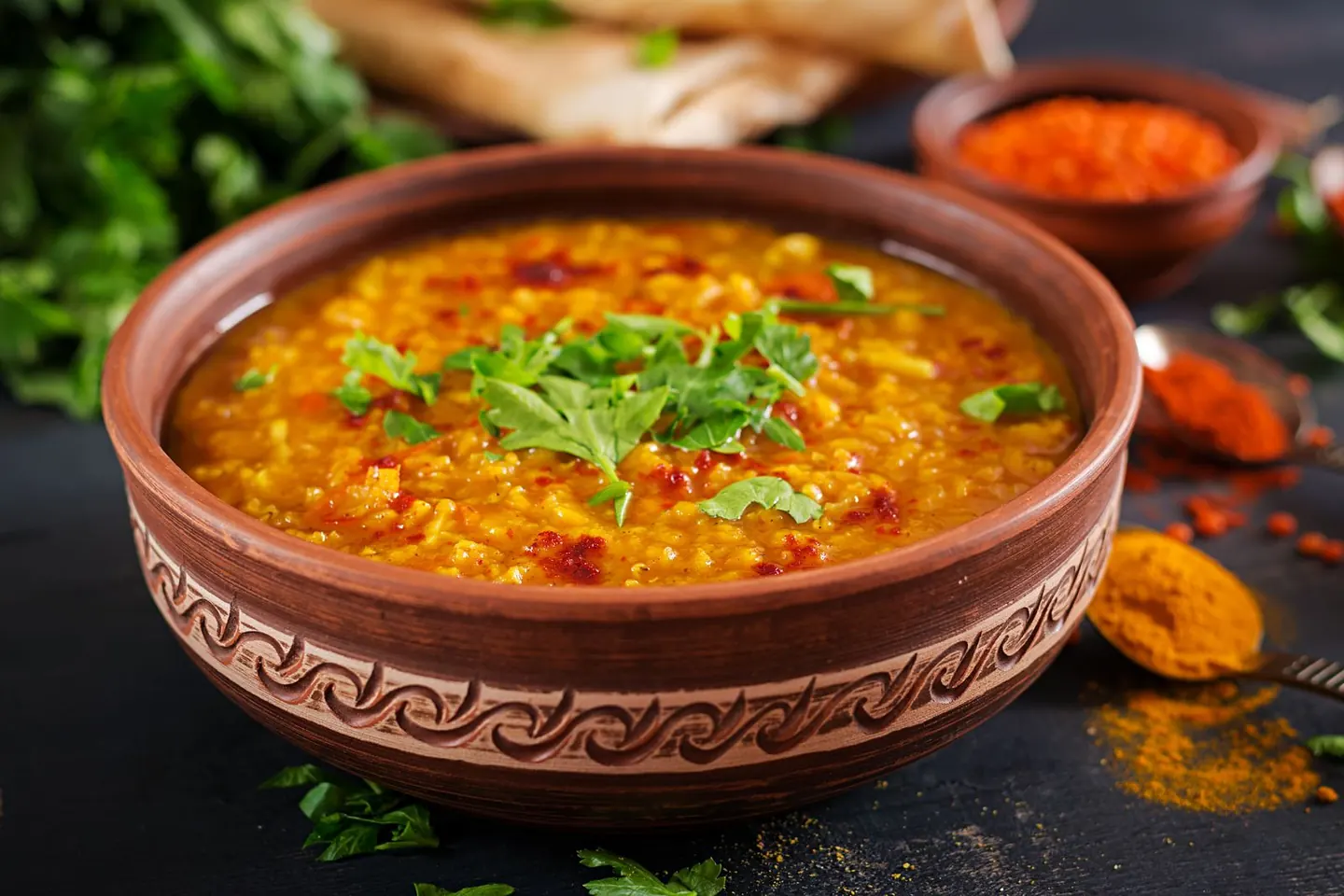
Chapter 20 — Pulses and Legumes
This is the most important chapter in Part Three, and the one most readers will skip. Ten recipes for beans, in a book with sixteen fish dishes and a beef roast in it. Cook this one properly if you cook no other, because the evidence behind it is the cleanest in the whole file — cleaner than the rice evidence and far cleaner than the coconut evidence.
Start with the finding that turned this book's argument around. Mohan and colleagues put continuous glucose monitors on 15 overweight Asian Indian adults and ran them through three five-day diets: white rice, brown rice, and brown rice with 50 g of legumes a day added. Against white rice, brown rice lowered the five-day average incremental glucose area under the curve by 19.8%. Brown rice with the legumes lowered it by 22.9% (Mohan et al., 2014) — the two changes together, with the pulse worth the last three percentage points on top of the grain. Fifteen people over five days is a mechanism demonstration, not an outcome trial. Set it beside the Chennai trial in which 166 adults swapped brown rice for white for three months and moved no HbA1c in the group as a whole (Malik et al., 2019), and the lesson is unmistakable. Adding a pulse to the rice meal did more than changing the rice on its own did.
Better-powered studies point the same way. Jenkins randomised 121 adults with type 2 diabetes to a low-glycaemic-index diet including at least a cup of legumes a day — about 190 g cooked — or to a high-wheat-fibre control, for three months: HbA1c fell 0.5% against 0.3%, systolic blood pressure 4.5 mmHg, total cholesterol 8 mg/dL, triglycerides 22 mg/dL (Jenkins et al., 2012). Ha's meta-analysis of 26 trials in 1,037 people found a median 130 g of pulses a day lowered LDL cholesterol by 0.17 mmol/L, about 6.6 mg/dL (Ha et al., 2014). Kim's meta-analysis of 21 trials in 940 people found a median 132 g a day gave a weight reduction of 0.34 kg — in diets not calorie-restricted at all (Kim et al., 2016). No number there is dramatic. Together, in a food you were going to eat anyway, they are the best return per unit of effort in this cuisine.
There is also the second-meal effect: a pulse-containing meal appearing to improve glucose tolerance at the following meal, through slower gastric emptying and colonic fermentation of resistant starch. It is a real and long-studied observation, and it is why a pulse at breakfast is not only a breakfast decision.
The last piece is the plainest. Pulses are low-glycaemic by category, not by cultivar: the international tables give legumes a mean glycaemic index of 34 ± 14, with 94% of entries in the low-GI band, against 73 for white rice (Atkinson et al., 2021). ICMR-NIN's 2024 guidelines make the argument Indian kitchens always made: combining cereals with pulses in a 3:1 ratio improves a meal's protein quality, because the amino acids each is short of are the ones the other has.
Here is the uncomfortable part. Kerala already had this habit. Not in the North Indian way: two monsoons and no winter meant Kerala never built a dried-pulse store cupboard. What Kerala had instead was pulses in fixed places — kadala curry with the morning's puttu, whole green gram with kanji, vanpayar inside the olan and the erissery, parippu and ghee as the first rice course of every sadya. Between them they put a pulse on the plate most days without anyone calling it a health measure.
Then breakfast changed. All of that gave way to parotta, commercial bread, packaged cereal, sweetened tea, bakery items, or for a working urban population nothing at all. The pulse was not argued out of the Kerala plate; it was left behind by the schedule. Which is why this chapter is written as it is — pressure-cooker timings for everything, soak-overnight logic, batch quantities, and a freezer note on every recipe. The habit is recoverable, because it was never a preference in the first place.
So the rule, and it is the one non-negotiable rule in this book:
A pulse on every plate. Fifty grams cooked, minimum.
Not fifty grams to aspire to — fifty grams as a floor, at one meal a day at least and ideally two. It is two heaped tablespoons, or 20 g of dry vanpayar. Every recipe here delivers well over it; the floor exists for the other hundred recipes, where a spoonful of cooked pulse goes into almost anything without changing the dish.
The working table
Dry weights, cooked yields and timings for the six pulses this chapter uses. Cook once, cool, and portion; the fridge and freezer notes on each recipe assume you have.
| Pulse | Dry weight for 50 g cooked | Cooked yield | Soak | Pressure cooker, at full pressure | Open pot | Protein, g/100 g dry | Fibre, g/100 g dry |
|---|---|---|---|---|---|---|---|
| Vanpayar — brown cowpea | 20 g | ×2.6 | 6–8 hours | 8–10 min | 35–45 min | 20.4 | 11.5 |
| Muthira — horse gram | 21 g | ×2.4 | 10–12 hours, overnight | 20–25 min | 1½–2 hours | 21.7 | 7.9 |
| Kadala — black chickpea, Bengal gram whole | 23 g | ×2.2 | 8–12 hours, overnight | 15–20 min | 1¼–1½ hours | 18.8 | 25.2 |
| Toor dal — red gram, split | 17 g | ×3.0 | none needed; 20–30 min helps | 6–8 min | 35–45 min | 21.7 | 9.1 |
| Moong dal — green gram, split and skinned | 17 g | ×3.0 | none | 4–5 min | 20–25 min | 23.9 | 9.4 |
| Cherupayar — whole green gram (moong) | 22 g | ×2.3 | 8 hours, or sprout | 5–6 min | 25–30 min | 22.5 | 17.0 |
| Chana dal — Bengal gram, split | 20 g | ×2.5 | 30–60 min | 10–12 min | 45–60 min | 21.6 | 15.2 |
Composition from ICMR-NIN IFCT 2017 (B005, B012, B002, B021, B010, B011, B001), per 100 g of dry pulse. White chickpea (kabuli) is not tabulated separately in IFCT 2017; treat it as Bengal gram whole for composition, soak it 8–12 hours and pressure-cook it 18–22 minutes.
Four working notes. Salt after, not before — salt in the soaking or cooking water slows the softening of the skins on whole pulses, though it makes less difference than kitchen lore claims; add it once the pulse is tender. Discard the soaking water and cook in fresh, which reduces the oligosaccharides that cause wind and does no measurable harm to the nutrition. Old pulses never soften; a muthira that is still hard after two hours is two years old, and nothing will save it. And cook the whole packet. A pressure cooker takes the same twenty minutes for 200 g as for 600 g, and cooked pulses keep four days in the fridge and three months in the freezer in 100 g portions, which is what turns the rule at the top of this chapter from an intention into a habit.
On the numbers in this chapter. Panels are computed from the per-100 g values in this book's nutrition tables (ICMR-NIN IFCT 2017; USDA FoodData Central SR Legacy where IFCT has no entry), summed and divided by the stated servings, with energy calculated as 4 kcal per gram of net carbohydrate and of protein and 9 kcal per gram of fat. Net carbohydrate is total carbohydrate minus fibre. Pulse quantities are computed on dry weight, which is what the tables measure. Sodium is rounded to the nearest 10 mg, macronutrients to the nearest gram. Every panel is an estimate and labelled so.
On the 70:30 salt. Every recipe in this chapter is seasoned with M07, the 70% sodium chloride / 30% potassium chloride blend, and the sodium figures in the panels assume it. Potassium-enriched salt is not for everyone: do not use M07, or any potassium-based salt substitute, without your doctor's approval if you have chronic kidney disease, or if you take a RAAS inhibitor (an ACE inhibitor, names ending -pril, or an angiotensin receptor blocker, names ending -sartan), a potassium-sparing diuretic (spironolactone, eplerenone, amiloride), or a potassium supplement. Read the safety box at M07 in full before you make the jar. Where M07 is not suitable, use ordinary salt at the same weight and add about 125 mg of sodium for every gram of M07 the recipe lists, or work with M06 and the acid-and-aroma techniques of Chapter 10 instead. This book does not tell anyone to change or stop a medicine.
— shallot, onion, tomato, ginger, garlic, green chilli, carrot, cucumber, lime, tamarind, coriander seed, chilli powder, turmeric, pepper, fennel, cumin, fenugreek, mustard seed, asafoetida, ghee and sesame oil are not in this book's nutrition tables. Values are USDA SR Legacy, with paprika standing in for ground dried red chilli. Mathanga, Kerala's pumpkin, is not tabulated in IFCT 2017 either; USDA "pumpkin, raw" stands in as the closest documented food, and its low carbohydrate figure should be treated as provisional. Fresh curry leaves and kudampuli are counted as nil, being untabulated and negligible at the quantities used. The sugars figures for pulses are USDA values for the nearest documented species and are the least reliable column in these panels.
On the tags. [HIGH PROTEIN] means 25 g or more per serving — no dish in this chapter reaches it alone, which is the honest reason a pulse belongs beside fish, egg or curd rather than instead of them. [HIGH FIBRE] means 6 g or more. [LOW SODIUM] and the L icon mean under 300 mg. [LOW SAT FAT] means 5 g or less. [UNDER 250 KCAL] is literal. [LOW GL] is used where the carbohydrate comes predominantly from pulses, whose category mean glycaemic index is 34 (Atkinson et al., 2021), giving an estimated glycaemic load under about 10 per serving.
R053 · Vanpayar Thoran [LOW GL] [HIGH FIBRE] [VEGAN]
Brown cowpea with grated coconut
ICONS: V · P · B · F · L
THE RE-ENGINEERING: Coconut down from about 150 g to 80 g and coconut oil to 8 g, with the pulse raised to 180 g dry so that the dish is mostly bean rather than mostly coconut. That single reversal takes a side dish of 380 kcal a serving to one of 256, and raises protein from 6 g to 11 g.
Vanpayar is the pulse a Kerala kitchen reaches for without thinking — the small brown cowpea that goes into olan, into erissery, and into this, the plainest and best thing you can do with it. Cowpea carries 20.4 g of protein and 11.5 g of fibre per 100 g dry, and it holds its shape after cooking in a way that lentils do not, which is exactly what a thoran needs. Cook 400 g of it on a Sunday and you have four dishes' worth of the rule at the top of this chapter.
Serves 4 · about 150 g per portion Active 15 minutes · Total 30 minutes (plus 6–8 hours soaking and 10 minutes pressure-cooking — required) Difficulty: Easy
EQUIPMENT: Pressure cooker; 26 cm pan or cheena chatti; flat wooden turner (chattuvam). Substitute: an open pot for the cowpea, 35–45 minutes. A metal spatula will break the beans and turn the thoran to paste — use wood or coconut shell.
BEFORE YOU START: A thoran is a three-minute dish once the pan is hot. Have the cowpea cooked and drained, the coconut mixture crushed, and the curry leaves picked before you light the flame.
INGREDIENTS
- 180 g (1 cup) vanpayar (brown cowpea), soaked 6–8 hours in plenty of water
- 2 g (⅓ tsp) ground turmeric, for the cooking water
- 80 g (about ¾ cup) fresh grated coconut
- 60 g (about 6) shallots, roughly chopped
- 15 g (about 3) green chillies, chopped
- 8 g (1½ tsp) coconut oil
- 3 g (½ tsp) mustard seed
- 2 dried red chillies, broken
- 20 fresh curry leaves
- 2.5 g (½ tsp) 70:30 salt (M07)
SOURCING NOTE: Vanpayar is sold as brown cowpea, red cowpea, van payar or rosecoco by Kerala grocers, and the small dark-brown Kerala variety is a different bean from the large white-and-black-eyed pea sold as black-eyed bean in Western supermarkets. Either works; the black-eyed bean is softer, cooks 3–4 minutes faster and breaks up more readily, so under-cook it slightly. Tinned cowpea or black-eyed bean is a legitimate shortcut — 400 g drained, rinsed thoroughly, and skip to step 3 — but check the sodium on the tin, which can be 250 mg per 100 g and will double this dish's figure.
ALLERGENS: Mustard.
METHOD
- Drain the soaked cowpea, discard the water, and pressure-cook it in 400 ml of fresh water with the turmeric for 8–10 minutes at full pressure. Release naturally. In a pot, 35–45 minutes.
- Test and drain. A cooked cowpea should crush between finger and thumb with light pressure but keep its skin intact and its shape unbroken. If they have burst, they were cooked 4 minutes too long and the thoran will be a mash — still good, no longer a thoran. Drain thoroughly; wet beans make a wet dish.
- Crush the coconut, shallots and green chilli together, coarsely — fingers, a pestle, or two short pulses in a mixie. It must stay separate and flaky, not become a paste.
- Heat the oil in the pan over medium-high, add the mustard seed, and wait until it pops and the popping subsides, 30–45 seconds. Add the dried chilli and curry leaves and let them crackle 10 seconds.
- Add the coconut mixture and cook, stirring, until the coconut smells warm and nutty and has gone from white to ivory, 2–3 minutes. This is the step people skip, and raw coconut is the difference between a good thoran and a dull one.
- Fold in the cowpea and the salt with the wooden turner, lifting from the base rather than stirring, until everything is coated and heated through, 2–3 minutes. Serve warm.
WHY THIS WORKS
Cowpea's starch is packaged inside intact cell walls and behind a tough seed coat, which is why the whole bean digests slowly even when fully cooked — the physical structure, not the starch chemistry, is what makes pulses low-glycaemic. Cooking them until they hold their shape rather than until they collapse preserves that structure. Toasting the coconut before the beans go in drives its aroma compounds to the surface, so 20 g per serving does the work 40 g of raw coconut would.
PER SERVING (estimated)
| kcal | kJ | Carb | Fibre | Net carb | Sugars | Protein | Fat | Sat fat | Sodium |
|---|---|---|---|---|---|---|---|---|---|
| 256 | 1,073 | 37 g | 8 g | 29 g | 6 g | 11 g | 11 g | 9 g | 220 mg |
IF YOU ARE WATCHING… Blood sugar: 29 g of net carbohydrate at a category glycaemic index of about 34 gives an estimated glycaemic load near 10 — low, for a substantial dish. Eaten alongside rice it does more than lower the meal's average: this is the dish that Mohan's finding is about. Blood pressure: 220 mg per serving, and 2.5 g of salt in the whole pan. Cowpea itself is naturally low in sodium. Cholesterol: 9 g of saturated fat, effectively all of it the 20 g of coconut per serving. Cut the coconut to 50 g and you land at about 6 g of saturated fat and 210 kcal, with a drier, less fragrant dish. Pulses are on the other side of this ledger — a median 130 g a day lowered LDL cholesterol by about 6.6 mg/dL across 26 trials (Ha et al., 2014).
SWAP IT
- Muthira for vanpayar → see R056. Higher protein, lower fibre, a longer soak and much longer cooking.
- Cherupayar (whole green gram) → 180 g, no soak, pressure-cooked 5–6 minutes. Softer, sweeter, faster, and it breaks up more.
- Add 200 g of shredded cabbage or chopped amaranth at step 5 → six servings, more volume, more fibre, and the classic payar-cabbage thoran of a Travancore kitchen.
- No coconut → 30 g of crushed roasted peanuts folded in at step 6. Less saturated fat, more monounsaturated, and no longer a thoran. (Allergen: this swap introduces peanuts.)
SCALE IT
| Serves | Vanpayar (dry) | Coconut | Shallots | Oil | Cooking water | M07 | Pressure / pot |
|---|---|---|---|---|---|---|---|
| 2 | 90 g | 40 g | 30 g | 4 g | 220 ml | 1.5 g | 8–10 min / 35–45 min |
| 4 | 180 g | 80 g | 60 g | 8 g | 400 ml | 2.5 g | 8–10 min / 35–45 min |
| 8 | 360 g | 160 g | 120 g | 15 g | 750 ml | 5 g | 10–12 min / 45–55 min |
MAKE AHEAD · STORE · FREEZE The cooked cowpea is the make-ahead, and the reason this chapter works. Fridge 4 days cooked and drained, or 2 days as a finished thoran. Freeze 3 months as plain cooked cowpea in 100 g portions — it thaws perfectly. Reheat the finished thoran in a dry pan for 2–3 minutes, or eat it at room temperature, which is how it is usually eaten in Kerala anyway.
LEFTOVERS Fold cold thoran into R047 egg thoran, stir it through leftover rice with lime for a five-minute lunch, or spoon it over R020 kanji.
SERVE WITH R015 Matta Rice · R024 Meen Vevichathu · R040 Nadan Kozhi Curry · R107 Sambharam
TROUBLESHOOTING Beans burst and mushy: overcooked at step 1. Release the pressure naturally rather than fast, which continues cooking, and check 2 minutes early. Beans still hard after the full time: old pulses, or hard water. Another 5 minutes will help; if not, they are too old to save. Wet, claggy thoran: the beans were not drained, or the coconut went in with them. Drain hard; coconut first, beans second.
NOTES
R054 · Vanpayar Erissery [LOW SODIUM] [VEGAN] [UNDER 250 KCAL]
Cowpea and pumpkin, with roasted coconut on top
ICONS: V · P · B · F · L
THE RE-ENGINEERING: Total coconut down from about 220 g to 140 g, split as 100 g ground into the body and 40 g roasted for the topping, and coconut oil to 10 g. The topping stays at full strength, because that is where the dish's identity lives; the reduction comes out of the ground paste, where it is invisible.
Erissery is one of the four ceremonial curries of the Namboothiri feast, remembered as the "roasted" one — its partners being kalan for sour, olan for neutral and a sweet madhura curry. What makes it erissery rather than a pumpkin curry is the two registers of coconut in one dish: a raw ground paste in the body and a separately roasted, darkly fried coconut scattered over the top. Cowpea and pumpkin together are also, incidentally, a textbook pulse-and-vegetable plate that predates anybody's dietary guidelines by several centuries.
Serves 6 · about 185 g per portion Active 30 minutes · Total 45 minutes (plus 6–8 hours soaking and 10 minutes pressure-cooking — required) Difficulty: Moderate — the coconut roast is the only unforgiving step
EQUIPMENT: Pressure cooker; heavy 26 cm pan; small heavy pan for the roasted topping; mixie or ammikkallu. Substitute: roast the topping in the same pan before you start the curry, and wipe it out — one pan, two stages.
BEFORE YOU START: Roast the topping coconut first, while the pan is clean and your attention is undivided. Once the curry is assembled the topping burns in ninety seconds of inattention.
INGREDIENTS
- 150 g (about ¾ cup) vanpayar (brown cowpea), soaked 6–8 hours
- 500 g pumpkin (mathanga), peeled, deseeded, in 3 cm cubes
- 3 g (½ tsp) ground turmeric
- 15 g (about 3) green chillies, slit
- 2.5 g (½ tsp) 70:30 salt (M07)
- 150 ml water
- For the ground paste: 100 g (1 cup) fresh grated coconut · 4 g (¾ tsp) cumin seed · 20 g (2) shallots
- For the roasted topping: 40 g (⅓ cup) fresh grated coconut · 20 g (2) shallots, sliced · 10 g (2 tsp) coconut oil · 3 g (½ tsp) mustard seed · 2 dried red chillies · 20 fresh curry leaves
- 1.5 g (¼ tsp) 70:30 salt (M07), to finish
SOURCING NOTE: Mathanga is Kerala's field pumpkin — dense, dry-fleshed, deep orange, closer to a Western winter squash than to a Halloween pumpkin, which is watery and will collapse. Butternut squash, kabocha or crown prince are all good substitutes at the same weight. Note honestly that ICMR-NIN IFCT 2017 has no mathanga entry, so the panel below uses USDA "pumpkin, raw", which may understate the carbohydrate of a dense Kerala pumpkin. Frozen grated coconut works for both the paste and the topping; thaw and pat the topping portion dry or the first five minutes of roasting go on driving off water.
ALLERGENS: Mustard.
METHOD
- Drain the soaked cowpea, discard the water, and pressure-cook in 350 ml fresh water for 8–10 minutes at full pressure. Release naturally, and do not drain — keep about 100 ml of the cooking liquid, which carries flavour and body.
- Roast the topping now. Heat the 10 g of oil in the small pan over medium-low, add the mustard seed and wait for it to pop. Add the sliced shallots, dried chilli and the 40 g of coconut, and stir continuously through three stages: white to ivory smelling of hot milk, 3–4 minutes; pale gold smelling of biscuit, 2–3 minutes; then the colour of dark toast, visibly releasing oil and smelling nutty with an edge of smoke, a further 2–3 minutes. Add the curry leaves for the last 20 seconds. Tip the lot onto a cold plate at once — a hot pan takes it past the point in ninety seconds.
- Cook the pumpkin with the turmeric, green chilli, the first 2.5 g of salt and 150 ml of water in the heavy pan, covered, until a cube yields to a spoon but still holds its edges, 8–12 minutes. Do not stir much; you want cubes, not purée.
- Grind the paste coconut with the cumin and the 20 g of shallots and 3–4 tablespoons of water into a thick, slightly coarse paste. It should hold on a spoon and still show flecks.
- Add the cooked cowpea with its liquid to the pumpkin, then stir in the ground paste. Bring to a bare simmer and cook 4–6 minutes, until the raw coconut smell has lifted and the curry has thickened to the consistency of a loose porridge. Crush a few pumpkin cubes against the side of the pan with the back of a spoon — that is what gives erissery its body.
- Season with the remaining salt, take off the heat, and scatter the roasted coconut topping over the surface. Do not stir it in. The topping is meant to sit on top and be broken through with each spoonful.
WHY THIS WORKS
Two coconut grammars in one dish, deliberately. The raw ground paste emulsifies into the gravy and thickens it, contributing sweetness and body. The roasted coconut has been through Maillard reactions between its own sugars and amino acids, generating aroma compounds available no other way, plus a little rendered fat that carries them. Stirring the topping in would dissolve the contrast the dish is built on.
PER SERVING (estimated)
| kcal | kJ | Carb | Fibre | Net carb | Sugars | Protein | Fat | Sat fat | Sodium |
|---|---|---|---|---|---|---|---|---|---|
| 225 | 940 | 28 g | 6 g | 22 g | 6 g | 7 g | 12 g | 10 g | 200 mg |
IF YOU ARE WATCHING… Blood sugar: 22 g of net carbohydrate, split between cowpea and pumpkin. The pumpkin's glycaemic index is not a figure this book can source for mathanga, so the honest statement is that the cowpea half of this dish is low-GI and the pumpkin half is unquantified. Treat it as a moderate-load dish and portion the rice accordingly. Blood pressure: 200 mg per serving, one of the lowest in the book, from 4 g of salt across six servings. Cholesterol: 10 g of saturated fat, all of it coconut, and 23 g of coconut per serving is what makes this dish what it is. If that number is the problem, R059 sambar and R060 parippu with cheera give you the pulse at 2 g of saturated fat.
SWAP IT
- Elephant foot yam (chena) or raw plantain for the pumpkin → both are traditional in erissery and both land near 17.5 g of available carbohydrate per 100 g against pumpkin's 6, so net carbohydrate per serving rises to about 30 g. Denser, more filling, higher load.
- Ash gourd (kumbalanga) → 2.84 g of available carbohydrate per 100 g and a much lighter dish. Not traditional here, and it works.
- Chana dal for the cowpea → 130 g dry, pressure-cooked 10–12 minutes. Different texture, slightly higher fibre.
- Skip the topping → do not. Make R053 instead if you have not the time; an erissery without the roasted coconut is a pumpkin curry with beans in it.
SCALE IT
| Serves | Vanpayar (dry) | Pumpkin | Paste coconut | Topping coconut | Oil | M07 |
|---|---|---|---|---|---|---|
| 3 | 75 g | 250 g | 50 g | 20 g | 5 g | 2 g |
| 6 | 150 g | 500 g | 100 g | 40 g | 10 g | 4 g |
| 12 | 300 g | 1 kg | 200 g | 80 g | 19 g | 8 g |
MAKE AHEAD · STORE · FREEZE Cook the cowpea and the topping up to three days ahead; keep the topping in a sealed jar at room temperature, where it stays crisp. Fridge 3 days assembled. Freeze 2 months without the topping, which goes soggy; add fresh topping on reheating. Reheat gently with a splash of water, 4–5 minutes.
LEFTOVERS Mash it, thin it with second-extraction coconut milk and it becomes a soup. Or spread it thickly and eat it with pathiri as the whole meal.
SERVE WITH R015 Matta Rice · R069 Avial · R024 Meen Vevichathu · R086 Rasam
TROUBLESHOOTING Topping bitter and ashy: the coconut went past dark toast. There is no correction; roast a fresh 40 g. Curry watery: too much cooking liquid kept at step 1, or the pumpkin was a watery variety. Reduce uncovered for 4–5 minutes and crush more of the pumpkin. Grainy, split-looking gravy: the ground paste boiled hard. A bare simmer only, once the paste is in.
NOTES
R055 · Kadala Ularthiyathu [LOW GL] [HIGH FIBRE] [VEGAN]
Black chickpea, roasted dry with coconut slivers
ICONS: V · P · B · F · L
THE RE-ENGINEERING: Coconut oil down from about 40 g to 10 g and coconut slivers from 120 g to 60 g. The dryness comes from reducing the masala completely and roasting in the pan's own heat — the same technique as R048, applied to a pulse instead of to beef, and for a quarter of the fat.
Kadala — the small dark Bengal gram, the whole black chickpea — carries 25.2 g of fibre per 100 g dry, which is the highest of any pulse in the Kerala pantry by a wide margin, and more than four times the fibre of a comparable weight of oats. It is usually met in kadala curry with morning puttu. This is the other thing to do with it: a dry roast, dark and nutty, that eats like a snack and sits on a plate like a main dish. If R048 is this chapter's argument about meat, this is its answer.
Serves 4 · about 150 g per portion Active 25 minutes · Total 40 minutes (plus 8–12 hours soaking and 20 minutes pressure-cooking — required) Difficulty: Easy
EQUIPMENT: Pressure cooker; heavy 26 cm pan or cheena chatti; flat wooden turner. Substitute: an open pot for the chickpeas, 1¼–1½ hours. A thin pan will burn the coconut slivers before the chickpeas dry.
BEFORE YOU START: Sliver the coconut — thin pieces about 2 cm long, thenga kothu — rather than grating it. Grated coconut disappears; slivers stay as texture, and texture is the dish.
INGREDIENTS
- 200 g (1 cup) kadala (black chickpea), soaked 8–12 hours
- 2 g (⅓ tsp) ground turmeric, for the cooking water
- 10 g (2 tsp) coconut oil
- 3 g (½ tsp) mustard seed
- 60 g (about ⅔ cup) fresh coconut, in thin slivers
- 100 g (about 10) shallots, sliced
- 25 fresh curry leaves
- 20 g (1 tbsp) ginger-garlic-green chilli paste (M16)
- 5 g (1 tbsp) ground coriander
- 4 g (¾ tsp) coarsely crushed black pepper
- 3.5 g (⅔ tsp) 70:30 salt (M07)
- 3 g (½ tsp) Kerala garam masala (M01)
SOURCING NOTE: Black chickpea is sold as kala chana, desi chana, Bengal gram whole or brown chickpea, and it is a different, smaller, tougher, far higher-fibre bean than the pale kabuli chickpea used in hummus. Buy the black one for this dish; kabuli will work but goes floury and the skins slip off in the roast. Tinned chickpeas are usually kabuli and are too soft for this technique. Do not skip the overnight soak — an unsoaked kadala takes 45 minutes under pressure and cooks unevenly.
ALLERGENS: Mustard. Sesame or peanuts — whichever of the two oils you use (it reaches the dish through M16).
METHOD
- Drain the soaked chickpeas, discard the water, and pressure-cook in 500 ml fresh water with the turmeric for 15–20 minutes at full pressure. Release naturally. In a pot, 1¼–1½ hours.
- Test and drain thoroughly. A cooked kadala should be tender all the way through but still firm enough to keep its round shape when pressed — it should give, not squash. Drain hard and let the chickpeas steam-dry in the colander for 5 minutes; surface water is what stops them roasting.
- Heat the oil in the pan over medium heat, add the mustard seed and wait for it to pop, 30–45 seconds.
- Add the coconut slivers and cook, stirring, until they turn from white to the colour of pale toast, 3–4 minutes. Then add the shallots and curry leaves and cook until the shallots are soft and gilded, 6–8 minutes.
- Add the M16 and cook 90 seconds, until the raw garlic smell has gone. Then the coriander and pepper, for 45 seconds, until they smell toasted.
- Fold in the chickpeas and the salt. Raise the heat and roast, turning with the wooden turner every 30 seconds, until the masala has dried onto the chickpeas as a dark crust, the coconut is deep brown and the pan sounds dry rather than wet, 6–9 minutes.
- Add the M01 off the heat and toss 30 seconds. Best eaten warm; genuinely good cold.
WHY THIS WORKS
Black chickpea keeps its cell walls and its thick seed coat intact through cooking, which is why 26 g of net carbohydrate here behaves so differently from 26 g from rice — the starch is physically enclosed, and the 16 g of fibre per serving slows gastric emptying on top of that. The dry roast then dehydrates the surface of each chickpea so the masala can crust rather than coat, which is the same physics as R048 and needs the same thing: all the free water gone first.
PER SERVING (estimated)
| kcal | kJ | Carb | Fibre | Net carb | Sugars | Protein | Fat | Sat fat | Sodium |
|---|---|---|---|---|---|---|---|---|---|
| 260 | 1,087 | 42 g | 16 g | 26 g | 8 g | 11 g | 12 g | 8 g | 260 mg |
IF YOU ARE WATCHING… Blood sugar: 16 g of fibre in a single serving is more than most people manage in a day, and 26 g of net carbohydrate at a category glycaemic index of 34 gives an estimated glycaemic load near 9. This is the single most useful dish in the chapter to put beside rice. Blood pressure: 260 mg, from 3.5 g of salt across four servings. Cholesterol: 8 g of saturated fat, of which about 5.5 g is the coconut slivers and 1.8 g the coconut oil. Cutting the slivers to 40 g takes it to about 6 g. Set against that, pulses at around 130 g a day lowered LDL cholesterol by about 6.6 mg/dL in 26 randomised trials (Ha et al., 2014).
SWAP IT
- Sesame or groundnut oil for the coconut oil → saturated fat to about 6.5 g per serving. Worth doing here; the slivers, not the oil, are the coconut flavour.
- Cashews for the slivers → 40 g, chopped. Less saturated fat, more monounsaturated. (Allergen: this swap introduces tree nuts (cashew).)
- Vanpayar or cherupayar → 200 g dry, cooked to their own timings. Both roast well; neither has kadala's fibre.
- Add 200 g of diced green plantain at step 4 → six servings and a fuller plate, in the manner of a koottukari.
SCALE IT
| Serves | Kadala (dry) | Coconut slivers | Shallots | Oil | Cooking water | M07 | Pressure / pot |
|---|---|---|---|---|---|---|---|
| 2 | 100 g | 30 g | 50 g | 5 g | 280 ml | 2 g | 15–18 min / 70–85 min |
| 4 | 200 g | 60 g | 100 g | 10 g | 500 ml | 3.5 g | 15–20 min / 75–90 min |
| 8 | 400 g | 120 g | 200 g | 19 g | 950 ml | 7 g | 20–25 min / 90–110 min |
MAKE AHEAD · STORE · FREEZE Cook and drain the chickpeas up to four days ahead — this is the whole make-ahead. Fridge 4 days finished. Freeze 3 months, cooked chickpeas plain or the finished dish; both survive well, because there is no emulsion. Reheat in a dry pan, 3–4 minutes, until it sizzles.
LEFTOVERS Eat it cold, by the handful, instead of a packet of anything. Or fold it into R062 sprouted moong salad, or stir it through leftover rice with lime and raw onion.
SERVE WITH R004 Puttu · R015 Matta Rice · R040 Nadan Kozhi Curry · R048 Beef Ularthiyathu
TROUBLESHOOTING Skins everywhere and floury insides: those were kabuli chickpeas, or the kadala was cooked 5 minutes too long. Chickpeas still hard after full pressure: the soak was short, or the pulses are old. Another 8 minutes; if still hard, they are too old. Masala pasty rather than crusted: the chickpeas went in wet, or the flame was too low at step 6. Steam-dry them in the colander first.
NOTES
R056 · Muthira Thoran [LOW SODIUM] [HIGH FIBRE] [VEGAN]
Horse gram with coconut — the highest-protein pulse in the pantry
ICONS: V · P · B · F · L
THE RE-ENGINEERING: Coconut down to 80 g from about 150 g, oil to 8 g. Nothing else needed doing, because muthira was never a rich dish — it was the pulse of the poorest households and the working cattle, and its rehabilitation as an expensive health food is recent.
Muthira — horse gram, Macrotyloma uniflorum — carries 21.7 g of protein and only 0.62 g of fat per 100 g dry, which makes it the leanest and one of the most protein-dense pulses in the Kerala pantry. It is also the hardest bean here, needing an overnight soak and twenty-five minutes under pressure, and it has a distinctly earthy, faintly bitter flavour that coconut and green chilli are exactly the right partners for. It was fed to animals and to people who had no choice, and it is now sold in Kerala at a premium. That inversion is worth noticing.
Serves 4 · about 145 g per portion Active 15 minutes · Total 30 minutes (plus 10–12 hours soaking and 25 minutes pressure-cooking — required) Difficulty: Easy, with a long wait
EQUIPMENT: Pressure cooker — genuinely necessary here; 26 cm pan; flat wooden turner. Substitute: an open pot takes 1½–2 hours and needs topping up with hot water. This is the one recipe in the chapter where a pressure cooker changes what is practical.
BEFORE YOU START: Start the soak the night before. Twelve hours is not optional for muthira, and a four-hour soak will leave you with a bean that never softens.
INGREDIENTS
- 180 g (1 cup) muthira (horse gram), soaked 10–12 hours in plenty of water
- 2 g (⅓ tsp) ground turmeric, for the cooking water
- 80 g (about ¾ cup) fresh grated coconut
- 60 g (about 6) shallots, roughly chopped
- 15 g (about 3) green chillies, chopped
- 8 g (1½ tsp) coconut oil
- 3 g (½ tsp) mustard seed
- 2 dried red chillies, broken
- 20 fresh curry leaves
- 2.5 g (½ tsp) 70:30 salt (M07)
SOURCING NOTE: Horse gram is sold as muthira, kollu, kulthi, hurali or horse gram by every South Indian grocer and increasingly by health-food shops at three times the price. Buy from the grocer. Check the date if you can: horse gram that has been in a warehouse for two years will not soften in any amount of time, and this is the pulse where that failure is most common. There is no acceptable tinned version.
ALLERGENS: Mustard.
METHOD
- Drain the soaked horse gram, discard the water, and pressure-cook in 550 ml fresh water with the turmeric for 20–25 minutes at full pressure. Release naturally. In a pot, 1½–2 hours, topping up with boiling water as needed.
- Test and drain. A cooked muthira should be tender enough to crush between finger and thumb but will still feel firmer than a cooked cowpea — that is correct, not undercooked. If it squeaks against the teeth, give it 5 more minutes under pressure. Drain thoroughly and keep the cooking water; see the leftovers note.
- Crush the coconut, shallots and green chilli together coarsely, keeping it flaky and separate.
- Heat the oil over medium-high, add the mustard seed and wait until it pops and subsides, 30–45 seconds. Add the dried chilli and curry leaves and let them crackle 10 seconds.
- Add the coconut mixture and cook 2–3 minutes, until the coconut smells nutty and has gone ivory.
- Fold in the horse gram and the salt, lifting from the base with the wooden turner, until coated and hot through, 2–3 minutes. Taste: muthira takes a little more chilli than cowpea does, because its earthiness needs the lift.
WHY THIS WORKS
Horse gram's seed coat is exceptionally hard and its cotyledons dense, which is why the long soak and long cook are unavoidable — water has to penetrate the coat before heat can gelatinise the starch inside. That same density is why it stays intact in the pan and why it is satisfying out of proportion to its 260 kcal. At 0.62 g of fat per 100 g it is also the only pulse here where essentially all the fat in the panel is coconut you added.
PER SERVING (estimated)
| kcal | kJ | Carb | Fibre | Net carb | Sugars | Protein | Fat | Sat fat | Sodium |
|---|---|---|---|---|---|---|---|---|---|
| 261 | 1,094 | 36 g | 6 g | 30 g | 4 g | 11 g | 11 g | 9 g | 220 mg |
IF YOU ARE WATCHING… Blood sugar: 30 g of net carbohydrate at a category glycaemic index near 34 gives an estimated glycaemic load around 10. Note honestly that no Kerala-specific glycaemic index measurement for muthira exists in this book's sources; the category figure is what is available. Blood pressure: 220 mg per serving from 2.5 g of salt. Cholesterol: 9 g of saturated fat, all coconut. Cut to 50 g of coconut for about 6 g. A systematic review of horse gram's traditional uses and composition exists (Oli et al., 2024), and it should not be read as evidence of any therapeutic effect; this book makes no such claim.
SWAP IT
- Vanpayar → see R053. Faster, softer, sweeter, 4 g more fibre per serving and 1 g less protein.
- Sprouted muthira → soak 12 hours, then sprout 24 hours before cooking; the cooking time falls to 12–15 minutes under pressure and the flavour sweetens noticeably. Follow the food-safety method in R062.
- Add 200 g of grated carrot or shredded cabbage at step 5 → six servings, more volume.
- Add 100 g of green mango, diced, at step 6 → the sharp Malabar version, and very good.
SCALE IT
| Serves | Muthira (dry) | Coconut | Shallots | Oil | Cooking water | M07 | Pressure / pot |
|---|---|---|---|---|---|---|---|
| 2 | 90 g | 40 g | 30 g | 4 g | 300 ml | 1.5 g | 18–22 min / 80–100 min |
| 4 | 180 g | 80 g | 60 g | 8 g | 550 ml | 2.5 g | 20–25 min / 90–120 min |
| 8 | 360 g | 160 g | 120 g | 15 g | 1 litre | 5 g | 25–30 min / 2–2½ hours |
MAKE AHEAD · STORE · FREEZE Given the soak and the cook, this pulse should only ever be made in quantity. Fridge 4 days cooked and drained. Freeze 3 months in 100 g portions — the single highest-value thing in this chapter to have in a freezer. Reheat the finished thoran in a dry pan, 2–3 minutes.
LEFTOVERS The cooking water — muthira vellam — is drunk warm in parts of Kerala and Tamil Nadu, and it is a pleasant, faintly nutty broth; treat it as a cultural practice rather than a health measure, because there is no clinical evidence about it. Cold thoran folds into R062, into an omelette, or into leftover rice.
SERVE WITH R015 Matta Rice · R020 Kanji · R026 Mathi Curry · R107 Sambharam
TROUBLESHOOTING Never softens: old pulses, or a soak under 10 hours. Both are common with horse gram and neither is fixable once cooking has started. Bitter or harsh: the soaking water was not discarded. Always change it. Dish tastes flat: under-chillied. Muthira needs more heat than the other pulses to lift its earthiness.
NOTES
R057 · Muthira Curry [HIGH FIBRE] [VEGAN]
Horse gram in a roasted-coconut gravy
ICONS: V · P · B · F · L
THE RE-ENGINEERING: No coconut milk at all. The body comes from 30 g of roasted coconut paste (M09), which delivers more depth than 150 ml of thick milk at roughly a third of the saturated fat and brings 4 g of fibre with it. Oil at 10 g.
The thoran in R056 is what a Kerala household does with muthira on a weekday. This is what it does on a Sunday: a dark, sour, varutharacha gravy — the roasted-coconut register that is the third grammar of Kerala cooking, neither ground raw coconut nor added milk. Tamarind, or kudampuli if you have it, cuts the earthiness. At 6 g of fat and 5 g of saturated fat a serving, it is also the leanest substantial dish in this chapter apart from the sambar.
Serves 4 · about 220 g per portion Active 25 minutes · Total 40 minutes (plus 10–12 hours soaking and 25 minutes pressure-cooking — required) Difficulty: Easy
EQUIPMENT: Pressure cooker; heavy 24 cm pan or clay manchatti. Substitute: clay is better with this much acid and holds a gentler simmer; any non-reactive pan works. Avoid bare iron or aluminium with the tamarind.
BEFORE YOU START: Take the M09 portion out of the freezer when you start the pressure cooker, or soak 10 g of tamarind in 80 ml of warm water at the same time. Both need twenty minutes and neither can be hurried.
INGREDIENTS
- 180 g (1 cup) muthira (horse gram), soaked 10–12 hours
- 2 g (⅓ tsp) ground turmeric, for the cooking water
- 10 g (2 tsp) coconut oil
- 3 g (½ tsp) mustard seed
- 120 g (about 12) shallots, sliced
- 12 g (about 4 cloves) garlic, sliced
- 25 fresh curry leaves
- 6 g (1 tbsp) ground coriander
- 5 g (1 tsp) Kashmiri chilli powder
- 3 g (½ tsp) fennel seed, crushed
- 100 g (1 medium) tomato, chopped
- 10 g tamarind pulp, soaked in 80 ml warm water and strained — or 2 pieces kudampuli, rinsed and soaked
- 30 g roasted coconut paste (M09), thawed
- 3.5 g (⅔ tsp) 70:30 salt (M07)
- 300 ml water, plus the pulse cooking liquid
SOURCING NOTE: If you have no M09 in the freezer, make it fresh from 40 g of grated coconut, 10 g of sliced shallot, 5 g of coriander seed and 3 dried chillies, dry-roasted together to the colour of dark toast and ground with 40 ml of water — about twelve minutes of continuous stirring, which is exactly why M09 exists as a batch preparation. Kudampuli is the more interesting acid here and is sold by every Kerala grocer as Malabar tamarind or kodampuli; rinse it before use, because commercial smoke-curing leaves a bonfire note on the surface.
ALLERGENS: Mustard.
METHOD
- Drain the soaked horse gram, discard the water, and pressure-cook in 550 ml fresh water with the turmeric, 20–25 minutes at full pressure. Release naturally. Keep the cooking liquid.
- Heat the oil in the pan over medium heat, add the mustard seed, and wait for it to pop, 30–45 seconds.
- Add the shallots, garlic and curry leaves. Cook until the shallots have collapsed and gone the colour of weak tea, 10–12 minutes. This is where the gravy's sweetness comes from and it cannot be rushed.
- Add the coriander, chilli powder and fennel and stir 45–60 seconds, until they darken a shade and smell toasted rather than dusty.
- Add the tomato and cook until it breaks down completely and a rim of oil shows at the edge, 5–7 minutes.
- Add the horse gram with its cooking liquid, the tamarind extract or kudampuli, the salt and enough water to bring it to a loose gravy — about 300 ml. Simmer 8–10 minutes.
- Stir in the M09 and simmer a further 5–6 minutes, until the gravy has thickened, darkened and no longer tastes of raw spice. It should coat the back of a spoon and taste distinctly sour behind the earthiness.
- Rest 10 minutes off the heat. Like the fish curries, this is better on day two.
WHY THIS WORKS
A roasted-coconut paste thickens a gravy as a suspension of insoluble particles rather than as an emulsion, which is why it does not split on reheating and why it brings its fibre along. Meanwhile the acid does two jobs: it balances the sweetness of twelve minutes of shallots, and there is reasonable pooled trial evidence that vinegar-type acidity with a meal attenuates the postprandial glucose response (Shishehbor et al., 2017) — which is a small point in favour of a habit Kerala already had.
PER SERVING (estimated)
| kcal | kJ | Carb | Fibre | Net carb | Sugars | Protein | Fat | Sat fat | Sodium |
|---|---|---|---|---|---|---|---|---|---|
| 240 | 1,005 | 41 g | 7 g | 34 g | 6 g | 12 g | 6 g | 5 g | 260 mg |
IF YOU ARE WATCHING… Blood sugar: 34 g of net carbohydrate, almost all of it from the pulse, plus an acid in the pot. This is a dish you can build a rice meal around rather than one you need to compensate for. Blood pressure: 260 mg from 3.5 g of salt. The acid is doing part of the seasoning work, which is the whole craft argument of Chapter 10. Cholesterol: 5 g of saturated fat, against 9 g for the thoran version and 10 g for the erissery. If a lipid panel is why you bought this book, this is the pulse recipe to start from.
SWAP IT
- Kudampuli for tamarind → smokier, rounder, and it deepens overnight rather than flattening. The better choice if you have it, and the reason is in Chapter 12's souring-agent map.
- Vanpayar or kadala → 180 g dry, cooked to their own timings. Kadala makes the best version after muthira.
- No M09 → 100 ml of second-extraction coconut milk added at step 7. Lighter, paler, less interesting, and about the same saturated fat.
- Add 200 g of drumstick pods or ash gourd at step 6 → six servings, more volume, more fibre.
SCALE IT
| Serves | Muthira (dry) | Shallots | M09 | Tamarind | Oil | Water | M07 |
|---|---|---|---|---|---|---|---|
| 2 | 90 g | 60 g | 15 g | 5 g | 5 g | 150 ml | 2 g |
| 4 | 180 g | 120 g | 30 g | 10 g | 10 g | 300 ml | 3.5 g |
| 8 | 360 g | 240 g | 60 g | 20 g | 19 g | 580 ml | 7 g |
MAKE AHEAD · STORE · FREEZE Better on day two, decidedly. Fridge 4 days in a covered non-metal container. Freeze 3 months — it freezes better than any coconut-milk curry, because there is no emulsion to break. Reheat at a simmer with a splash of water; this is one of the few curries in the book that can take a proper boil.
LEFTOVERS Mash it coarsely, reduce it, and it becomes a thick spread for pathiri or dosa. Or thin it with the pulse cooking water into a broth with more vegetables.
SERVE WITH R015 Matta Rice · R004 Puttu · R027 Ayala Varuthathu · R079 Cabbage-Carrot Upperi
TROUBLESHOOTING Gravy tastes raw and dusty: the M09 went in at the end without its 5 minutes. It needs to cook. Thin and grey: the shallots were rushed at step 3, or there is too much water. Reduce uncovered 5 minutes. Harshly sour: too much tamarind, or it went in unstrained with its fibre. Strain it, and remember 10 g of pulp is enough for four.
NOTES
R058 · Parippu Curry [LOW SODIUM] [VEGETARIAN] [UNDER 250 KCAL]
The sadya dal, with its spoon of ghee
ICONS: V · P · B · F · L
THE RE-ENGINEERING: The ghee stays. It is 12 g for six people — 2 g each, about 18 kcal — and it is the whole point of the dish, the upastharanam poured over the first course of rice. What changed is that the coconut paste is 80 g rather than 150 g, and the dal has gone up, so the curry is dal thickened with coconut rather than coconut thickened with dal.
Parippu with a spoon of ghee is the first rice course of every sadya, served when agni — the digestive fire, in the tradition's own terms — is held to be at its strongest. It is also, read as nutrition, an unusually sensible way to open a feast: 24 g of protein per 100 g dry moong dal, arriving before any of the rich curries, at a low glycaemic load. This is a temple-register recipe, so there is no onion and no garlic in it. Do not add them; there are nine other recipes in this chapter where they belong.
Serves 6 · about 145 g per portion Active 20 minutes · Total 35 minutes Difficulty: Easy
EQUIPMENT: Pressure cooker or heavy pot; mixie or ammikkallu; small pan for the tempering. Substitute: a pot takes 20–25 minutes for moong dal against 4–5 minutes under pressure, and needs skimming.
BEFORE YOU START: Dry-roast the moong dal before you cook it — 3–4 minutes in a dry pan, until it smells of biscuit. This is the step that separates a sadya parippu from a plain dal, and it takes almost no time.
INGREDIENTS
- 200 g (1 cup) moong dal (split skinned green gram)
- 2 g (⅓ tsp) ground turmeric
- 700 ml water
- For the paste: 80 g (¾ cup) fresh grated coconut · 3 g (½ tsp) cumin seed · 15 g (about 3) green chillies
- 3 g (½ tsp) 70:30 salt (M07)
- 12 g (1 tbsp) ghee
- For the tempering: 6 g (1¼ tsp) coconut oil · 3 g (½ tsp) mustard seed · 2 dried red chillies, broken · 20 fresh curry leaves
SOURCING NOTE: Moong dal — cherupayar parippu — is the correct pulse here and gives the pale gold, faintly sweet parippu of a Kerala feast; toor dal makes a heavier, more Tamil-inflected dal and is a different dish. Buy the dal that looks bright yellow rather than dull and grey, which indicates age. Ghee is not optional in this recipe, and a tablespoon between six people is not the thing to economise on.
ALLERGENS: Milk, mustard.
METHOD
- Roast the dry moong dal in a dry pan over medium-low heat, stirring, until it darkens by a shade and smells of biscuit rather than of flour, 3–4 minutes. Do not let it colour past pale gold.
- Rinse the roasted dal twice, then pressure-cook with the turmeric and 700 ml of water for 4–5 minutes at full pressure; release naturally. In a pot, 20–25 minutes, skimming the froth. The dal should be completely soft and just holding its shape, not a purée.
- Grind the coconut with the cumin and green chilli and 60 ml of water into a smooth-ish paste; a little texture is correct.
- Mash the cooked dal lightly against the side of the pot with the back of a ladle — four or five strokes, not twenty. You want some whole grains left.
- Stir in the coconut paste and the salt and bring to a bare simmer. Cook 5–6 minutes, until the raw coconut smell has gone and the curry has thickened to a loose, pourable consistency that will run over rice. Add water if it has gone past that.
- Temper in the small pan: heat the coconut oil, add the mustard seed and wait for it to pop, then the dried chilli and curry leaves for 10 seconds. Pour the lot over the curry and do not stir it in — a sadya parippu comes to the leaf with its tempering sitting on top.
- Add the ghee last, in a single spoon, at the table or just before serving. Ghee added off the heat smells of ghee; ghee stirred in and simmered does not.
WHY THIS WORKS
Dry-roasting the dal before cooking does two things: it drives off surface moisture so the grains hold their shape rather than dissolving, and it starts the Maillard reaction on the pulse's own surface proteins, which is where the nutty note in a good parippu comes from. The ghee goes in last because its aroma compounds are volatile and lipid-soluble — they reach you from the surface of the dish, not from within it, which is why 2 g per person is enough.
PER SERVING (estimated)
| kcal | kJ | Carb | Fibre | Net carb | Sugars | Protein | Fat | Sat fat | Sodium |
|---|---|---|---|---|---|---|---|---|---|
| 194 | 813 | 24 g | 5 g | 19 g | 3 g | 9 g | 9 g | 7 g | 150 mg |
IF YOU ARE WATCHING… Blood sugar: 19 g of net carbohydrate at a pulse glycaemic index, giving an estimated load near 7. Eaten as the first course of a rice meal, this is precisely the practice Mohan's finding supports — and it is what a sadya has always done. Blood pressure: 150 mg per serving, the lowest figure in this chapter. There is 3 g of salt in the whole pot. Cholesterol: 7 g of saturated fat, of which about 5.5 g is the coconut and 1.2 g the ghee. If you want the number lower, take it from the coconut paste — 50 g gives about 5 g — and keep the ghee.
SWAP IT
- Toor dal → 180 g, pressure-cooked 6–8 minutes. Heavier, earthier, and no longer a Kerala sadya parippu.
- No ghee, for a vegan version → 8 g of coconut oil added off the heat instead. It works, and the dish is genuinely different; ghee's aroma is not reproducible.
- Add 150 g of chopped amaranth or spinach at step 5 → see R060, which is that dish done properly.
- Onion and garlic → for an everyday, non-temple version, cook 80 g of sliced shallots and 8 g of garlic into the tempering at step 6. Better on a weekday, wrong on a leaf.
SCALE IT
| Serves | Moong dal | Water | Coconut | Green chilli | Ghee | Tempering oil | M07 |
|---|---|---|---|---|---|---|---|
| 3 | 100 g | 350 ml | 40 g | 8 g | 6 g | 3 g | 1.5 g |
| 6 | 200 g | 700 ml | 80 g | 15 g | 12 g | 6 g | 3 g |
| 20 (a small sadya) | 650 g | 2.3 litres | 260 g | 50 g | 40 g | 20 g | 10 g |
MAKE AHEAD · STORE · FREEZE Cook the dal up to two days ahead and finish with the paste and tempering on the day. Fridge 3 days. Freeze 2 months without the tempering or the ghee; both are added fresh on reheating. Reheat with a splash of water at a bare simmer — it thickens considerably in the fridge.
LEFTOVERS Thin it with water into a soup, or thicken it with a spoon of rice flour and use it as a filling. Cold parippu over hot rice with a squeeze of lime is a complete lunch.
SERVE WITH R015 Matta Rice · R069 Avial · R063 Cabbage Thoran · R098 Inji Puli
TROUBLESHOOTING Dal disintegrated to soup: cooked too long, or not roasted first. Both, next time. Curry tastes of raw coconut: it needs the 5–6 minutes at step 5. Ghee smells of nothing: it was stirred in and simmered. Last, off the heat, on top.
NOTES
R059 · Sambar [HIGH FIBRE] [VEGAN] [UNDER 250 KCAL]
Toor dal, tamarind and five vegetables
ICONS: V · P · B · F · L
THE RE-ENGINEERING: Oil down to 10 g for six, and no salt in the spice blend, because M02 is unsalted and hands the sodium decision back to the pot. Vegetable weight raised to 500 g against 150 g of dal, which is what makes this a whole plate rather than a gravy.
Sambar arrives in the Kerala sadya comparatively late, which is why the older four-curry scheme of erissery, kalan, olan and a sweet curry does not include it. Its origin story — the Thanjavur royal kitchen of Shahaji I in the late seventeenth century — is the popular attribution and rests on no primary source anyone has produced, and Tamil literature refers to comparable tamarind-and-dal preparations earlier. Tell it as a story. What is not in doubt is that sambar is now the most-cooked gravy in South India, and that at 147 kcal a serving with 8 g of fibre and 8 g of protein it is one of the most efficient things in this book.
Serves 6 · about 245 g per portion Active 30 minutes · Total 50 minutes Difficulty: Easy
EQUIPMENT: Pressure cooker or heavy pot, 4 litre; small pan for the tempering. Substitute: an open pot for the dal, 35–45 minutes, skimming the froth.
BEFORE YOU START: Soak the tamarind in 150 ml of warm water for 20 minutes and strain it before you begin. Tamarind added unstrained brings fibre and grit into the pot and tastes harsher.
INGREDIENTS
- 150 g (¾ cup) toor dal (red gram, split)
- 3 g (½ tsp) ground turmeric
- 600 ml water
- 20 g tamarind pulp, soaked in 150 ml warm water and strained
- 120 g (about 2) drumstick pods (muringakka), in 6 cm lengths
- 100 g ash gourd (kumbalanga), in 3 cm cubes
- 80 g (1 medium) carrot, in thick rounds
- 80 g okra (vendakka), in 3 cm lengths, tops trimmed
- 60 g (about 6) shallots, peeled and left whole
- 60 g (about ½) tomato, in wedges
- 28 g (4 tbsp) sambar podi (M02)
- 5 g (¾ tsp) 70:30 salt (M07)
- For the tempering: 10 g (2 tsp) coconut oil · 4 g (⅔ tsp) mustard seed · 3 g (½ tsp) fenugreek seed · 2 g (⅓ tsp) asafoetida · 2 dried red chillies · 25 fresh curry leaves
SOURCING NOTE: Drumstick pods are the vegetable that makes a sambar taste of Kerala, and they are sold frozen in 300 g packs by most Indian grocers, which is entirely acceptable — add them 4 minutes later than fresh. Any five or six vegetables work: pumpkin, snake gourd, aubergine, cluster beans, chayote, radish, plantain. What matters is that they go in in order of cooking time. These quantities assume compounded asafoetida, the granular kind cut with rice flour; with pure resin use a third as much.
ALLERGENS: Mustard. Gluten (wheat) — only if your asafoetida is compounded with wheat flour, as most brands are.
METHOD
- Rinse the toor dal twice and pressure-cook it with the turmeric and 600 ml of water for 6–8 minutes at full pressure. Release naturally and mash it lightly with a ladle — it should be soft and creamy but not entirely smooth. In a pot, 35–45 minutes with skimming.
- Simmer the tamarind extract in a wide pot with 300 ml of water and the shallots for 5 minutes, until the raw astringency of the tamarind has gone and the liquid smells fruity rather than sharp.
- Add the vegetables in order: carrot and ash gourd first, then after 4 minutes the drumstick, then after another 4 minutes the okra and tomato. Total 12–15 minutes, until each vegetable is tender but distinct and the drumstick's flesh scoops out of its ridged skin.
- Stir in the M02 and the salt and simmer 6–8 minutes. This step is not optional and cannot be shortened. A sambar powder that has not simmered tastes raw and dusty, and no amount of later cooking hides it.
- Add the cooked dal, stir well, and bring back to a simmer for 4–5 minutes. Loosen with water to a consistency that pours from a ladle in a stream rather than in lumps.
- Temper in the small pan: heat the oil, add the mustard seed and wait for it to pop; add the fenugreek and let it turn reddish-brown, 20–30 seconds — past that it is irreversibly bitter; then the dried chilli, curry leaves and asafoetida for 10 seconds. Pour it over the sambar and stir it in this time.
- Rest 10 minutes covered. Sambar is better after twenty minutes and better still the next day.
WHY THIS WORKS
M02's roasted dals do a job no fat can: their gelatinised, then dried starch thickens the sambar slightly as it simmers, giving body from a spice blend rather than from oil. That is why step 4 needs its full time. Meanwhile the tamarind's acid keeps the vegetables' pectin firm — which is why sambar vegetables stay distinct through fifteen minutes of cooking, where the same vegetables in a plain stew would collapse.
PER SERVING (estimated)
| kcal | kJ | Carb | Fibre | Net carb | Sugars | Protein | Fat | Sat fat | Sodium |
|---|---|---|---|---|---|---|---|---|---|
| 147 | 616 | 30 g | 8 g | 22 g | 4 g | 8 g | 3 g | 2 g | 260 mg |
IF YOU ARE WATCHING… Blood sugar: 22 g of net carbohydrate, a pulse, five vegetables and an acid in one pot, at an estimated glycaemic load near 8. If you make one change to a rice meal, make it this dish rather than a different rice. Blood pressure: 260 mg, and half of that is the sodium naturally present in the vegetables. Commercial sambar powder is salted and invisible to you, which is the entire argument for M02. The fenugreek in the tempering: 3 g across six servings is a seasoning quantity, far below the 10–25 g a day at which fenugreek's glycaemic trial evidence sits, and this book makes no claim for it here. If you do take fenugreek in quantity — soaked seeds, methi leaves, batters — and you take insulin or a sulfonylurea, discuss it with your doctor first, because the combination can lower blood glucose further than expected. Chapter 9 sets out what that evidence does and does not support. Cholesterol: 2 g of saturated fat per serving. This chapter's leanest recipe and one of the leanest in the book, and it gives up nothing to get there.
SWAP IT
- No M02 → 20 g ground coriander, 8 g chilli powder, 3 g fenugreek, 3 g pepper and 2 g turmeric, added at step 4. Close. A packet sambar powder also works and brings 200–400 mg of sodium you did not choose.
- Moong dal for toor → 130 g, pressure-cooked 4–5 minutes. Sweeter, lighter, faster; not a classical sambar.
- Add 30 g of grated coconut ground with the M02 → the Kerala varutharacha sambar register. Deeper, and about 4 g more fat per serving.
- Fewer vegetables → possible, and it becomes a gravy rather than a dish. Keep at least three, one of them a gourd for body and one a drumstick for aroma.
SCALE IT
| Serves | Toor dal | Vegetables (total) | Tamarind | M02 | Oil | Water (total) | M07 |
|---|---|---|---|---|---|---|---|
| 3 | 75 g | 250 g | 10 g | 14 g | 5 g | 450 ml | 2.5 g |
| 6 | 150 g | 500 g | 20 g | 28 g | 10 g | 900 ml | 5 g |
| 12 | 300 g | 1 kg | 40 g | 56 g | 19 g | 1.7 litres | 10 g |
MAKE AHEAD · STORE · FREEZE Cook the dal up to three days ahead; that is 40 minutes of the total. Fridge 4 days — sambar keeps better than anything else in this chapter and improves for the first two. Freeze 3 months; the okra softens, nothing else suffers. Reheat at a full simmer with water to loosen; sambar is one of the few dishes here that wants a proper boil.
LEFTOVERS Reduce it hard and it becomes a thick koottu to eat with rice. Thin it with water and drink it as a broth. Or use it as the cooking liquid for R022 millet upma.
SERVE WITH R015 Matta Rice · R008 Ragi Dosa · R009 Oats and Matta Dosa · R063 Cabbage Thoran
TROUBLESHOOTING Raw, dusty taste: step 4 was cut short. Six minutes minimum, and eight is better. Bitter: the fenugreek in the tempering went past reddish-brown. Start the tempering again; there is no fixing it. Vegetables collapsed: they went in together instead of in order, or the tamarind went in after them rather than before. Watery and thin: too much water at step 5, or the dal was not mashed. Mash more, reduce 5 minutes.
NOTES
R060 · Parippu with Cheera [HIGH FIBRE] [LOW SAT FAT] [VEGAN]
Moong dal with amaranth greens
ICONS: V · P · Q · B · F · L
THE RE-ENGINEERING: No coconut at all, which is unusual in this book and deliberate — this is the recipe for a day when the saturated fat has to go somewhere else. Oil at 10 g, 300 g of greens against 150 g of dal, and lime rather than more salt at the finish.
Greens and dal in the same pot is the plainest good idea in South Indian cooking, and cheera is the green Kerala grows most easily: amaranth, 3.29 g of protein and 4.41 g of fibre per 100 g at 31 kcal, in the ground everywhere from a March sowing. The dish takes twenty-five minutes, needs no soaking, and delivers 12 g of protein and 8 g of fibre a serving at 187 kcal with 2 g of saturated fat. If someone asks what a re-engineered Kerala dish looks like, show them this one.
Serves 4 · about 240 g per portion Active 20 minutes · Total 30 minutes Difficulty: Easy
EQUIPMENT: Pressure cooker or heavy pot; 26 cm pan. Substitute: one pot does both if you cook the dal first, tip it out, wilt the greens, and return the dal.
BEFORE YOU START: Wash the greens in three changes of water — amaranth grows low and carries grit — and chop the tender stalks along with the leaves; they have more fibre than the leaves and cook in the same time.
INGREDIENTS
- 150 g (¾ cup) moong dal (split skinned green gram)
- 2 g (⅓ tsp) ground turmeric
- 450 ml water
- 10 g (2 tsp) coconut oil
- 3 g (½ tsp) mustard seed
- 3 g (½ tsp) cumin seed
- 60 g (about 6) shallots, sliced
- 12 g (about 4 cloves) garlic, sliced
- 15 g (about 3) green chillies, slit
- 20 fresh curry leaves
- 300 g amaranth leaves and tender stalks (cheera), washed and chopped
- 3.5 g (⅔ tsp) 70:30 salt (M07)
- 10 g (2 tsp) lime juice
SOURCING NOTE: Any tender green works: amaranth (green or red), spinach, colocasia leaf — which must be thoroughly cooked — drumstick leaf, water spinach, or beet tops. Frozen chopped spinach at 300 g, thawed and squeezed hard, is a good substitute; an unsqueezed block will flood the pan. Red amaranth gives a startling magenta dal that tastes identical to the green.
ALLERGENS: Mustard.
METHOD
- Rinse the moong dal twice and pressure-cook with the turmeric and 450 ml of water for 4–5 minutes at full pressure. Release naturally. In a pot, 20–25 minutes. The dal should be soft but not a purée.
- Heat the oil in the pan over medium-high heat, add the mustard seed and wait for it to pop, 30–45 seconds. Add the cumin and let it sizzle 10 seconds.
- Add the shallots, garlic, green chilli and curry leaves. Cook until the shallots are soft and the garlic is pale gold, 6–8 minutes. Do not let the garlic brown; it turns bitter.
- Add the greens in two batches — they will look like far too much and will collapse to a quarter of the volume. Toss over high heat until wilted, glossy and dark, 3–4 minutes.
- Cook 2 minutes more, until the water the greens released has gone from the base of the pan. Amaranth holds a surprising amount and a wet base makes a watery dal.
- Add the cooked dal and the salt. Stir, mashing lightly against the pan, and simmer 4–5 minutes to bring the two together. It should be thick enough to hold a shallow furrow from a spoon for a second.
- Take off the heat, stir in the lime juice, and taste. The lime is not a garnish — it is what lifts the dish, and it is the reason the salt can stay at 3.5 g.
WHY THIS WORKS
Amaranth's leaves are high in oxalate and in soluble iron, and the vitamin C in the lime juice, added off the heat where it survives, improves the absorption of that non-haem iron in the same meal — a real and specific mechanism rather than a general claim. The garlic goes in early because allicin's pungency needs to mellow into the dish; the lime goes in last because its volatile aromatics do not survive heat at all.
PER SERVING (estimated)
| kcal | kJ | Carb | Fibre | Net carb | Sugars | Protein | Fat | Sat fat | Sodium |
|---|---|---|---|---|---|---|---|---|---|
| 187 | 784 | 33 g | 8 g | 25 g | 5 g | 12 g | 4 g | 2 g | 270 mg |
IF YOU ARE WATCHING… Blood sugar: 25 g of net carbohydrate at a pulse glycaemic index, an estimated load near 8, with 8 g of fibre and an acid in the pot. There is very little in this cuisine that does more per calorie. Blood pressure: 270 mg per serving. Amaranth is also potassium-rich, which is the other half of the blood-pressure equation and the subject of Chapter 10. Cholesterol: 2 g of saturated fat — the coconut-free version of a Kerala dal, and proof that the reduction can be total where coconut is not the flavour. Garlic is the one aromatic in this book whose effective dose overlaps ordinary cooking: pooled across 108 trials and 7,137 participants, garlic gave −3.7/−2.0 mmHg and LDL cholesterol −5.9 mg/dL (Behrouz et al., 2026). Twelve grams here is three cloves.
SWAP IT
- Toor dal → 130 g, pressure-cooked 6–8 minutes. Earthier, heavier, and it stands up to stronger greens.
- Drumstick leaves (muringayila) → 200 g, added at step 4 for 2 minutes only. The highest-protein green in the Kerala list at 6.41 g per 100 g. Claim nothing therapeutic for it; a meta-analysis of nine trials of moringa supplementation found no consistent cardiometabolic effect at very low certainty (Crișan et al., 2025).
- Add 30 g grated coconut at step 5 → the more usual Kerala version, with about 3 g more saturated fat per serving.
- Add 2 eggs, beaten in at step 6 → protein to 17 g per serving, and the dish becomes a one-bowl meal. (Allergen: this swap introduces egg.)
SCALE IT
| Serves | Moong dal | Greens | Shallots | Garlic | Oil | Water | M07 |
|---|---|---|---|---|---|---|---|
| 2 | 75 g | 150 g | 30 g | 6 g | 5 g | 225 ml | 2 g |
| 4 | 150 g | 300 g | 60 g | 12 g | 10 g | 450 ml | 3.5 g |
| 8 | 300 g | 600 g | 120 g | 24 g | 19 g | 850 ml | 7 g |
MAKE AHEAD · STORE · FREEZE Cook the dal up to three days ahead; the greens want to be done fresh, and take four minutes. Fridge 3 days finished, though the greens dull in colour. Freeze 2 months; texture is fine, colour is not. Reheat with a splash of water, 3–4 minutes, and add fresh lime after reheating.
LEFTOVERS Thin it into a soup, or thicken it and use it as a filling for pathiri. Cold, with rice and lime, it is a better packed lunch than most things.
SERVE WITH R015 Matta Rice · R008 Ragi Dosa · R027 Ayala Varuthathu · R093 Coconut Chutney
TROUBLESHOOTING Watery: step 5 was skipped. Cook the greens' water off before the dal goes in. Bitter: the garlic browned, or colocasia leaves were undercooked. Colocasia needs a full 6–8 minutes. Grey and dull: overcooked greens. Four minutes at high heat, not eight at low.
NOTES
R061 · Kerala Chana Masala [HIGH FIBRE] [VEGAN]
Black chickpea in a roasted-coconut gravy
ICONS: V · P · B · F
THE RE-ENGINEERING: No coconut milk. Thirty grams of roasted coconut paste (M09) carries the body at roughly a third of the saturated fat of the 200 ml of thick milk a kadala curry usually gets, and brings 4 g of fibre with it. Oil at 12 g, and 200 g of shallots and 150 g of tomato doing the rest.
This is the kadala curry of a Kerala breakfast, given a little more gravy and enough weight to be a dinner. The North Indian chana masala is a tomato-and-amchur dish; the Kerala version is a coconut dish, and varutharacha — roasted-ground coconut — is the register it wants. It also happens to be the highest-fibre recipe in this book at 18 g a serving, which is most of a day's target from one bowl, and the reason is the black chickpea's remarkable 25.2 g of fibre per 100 g dry.
Serves 4 · about 240 g per portion Active 30 minutes · Total 45 minutes (plus 8–12 hours soaking and 20 minutes pressure-cooking — required) Difficulty: Easy
EQUIPMENT: Pressure cooker; heavy 26 cm pan or clay manchatti. Substitute: any heavy pan. Clay suits the tomato's acid and gives a gentler simmer.
BEFORE YOU START: Take the M09 out of the freezer when you start the pressure cooker. If you have none, allow an extra fifteen minutes and read the sourcing note in R057.
INGREDIENTS
- 200 g (1 cup) kadala (black chickpea), soaked 8–12 hours
- 2 g (⅓ tsp) ground turmeric, for the cooking water
- 12 g (2½ tsp) coconut oil
- 200 g (about 20) shallots, sliced
- 25 g (1½ tbsp) ginger-garlic-green chilli paste (M16)
- 25 fresh curry leaves
- 12 g (2 tbsp) ground coriander
- 6 g (1 tsp) Kashmiri chilli powder
- 3 g (½ tsp) fennel seed, crushed
- 150 g (1½) tomatoes, chopped
- 4 g (⅔ tsp) 70:30 salt (M07)
- 30 g roasted coconut paste (M09), thawed
- 4 g (¾ tsp) Kerala garam masala (M01)
- 250 ml water, plus the pulse cooking liquid
SOURCING NOTE: Black chickpea — kala chana, desi chana, Bengal gram whole — is the correct pulse and carries far more fibre than the pale kabuli type. White chickpeas work and give a softer, floury dish; soak them 8–12 hours and pressure-cook 18–22 minutes. Tinned chickpeas, 2 × 400 g drained and rinsed, are an acceptable weekday shortcut: check the sodium on the tin and drop the M07 to 2.5 g if it is above 200 mg per 100 g.
ALLERGENS: None of the major allergens as the recipe is written. Sesame or peanuts — whichever of the two oils you use (it reaches the dish through M16).
METHOD
- Drain the soaked chickpeas, discard the water, and pressure-cook in 500 ml fresh water with the turmeric for 15–20 minutes at full pressure. Release naturally. Keep the cooking liquid — it is dark, slightly viscous, and it is what makes the gravy taste of kadala.
- Heat the oil in the pan over medium heat. Add the shallots and cook until they have collapsed and gone the colour of weak tea, 12–15 minutes. Uncover the pan for the last 4 minutes so the water leaves.
- Add the M16 and curry leaves and cook 2 minutes, until the raw garlic smell has lifted.
- Add the coriander, chilli powder and fennel. Stir constantly 60–90 seconds, until they darken by a shade. Splash in a tablespoon of water if they catch.
- Add the tomato and the salt and cook until the tomato has broken down entirely and a rim of oil shows at the edge of the mass, 6–8 minutes.
- Add the chickpeas with their cooking liquid and enough water to make a loose gravy, about 250 ml. Simmer 8–10 minutes, crushing a spoonful of the chickpeas against the side of the pan to thicken it.
- Stir in the M09 and simmer 5–6 minutes more, until the gravy is dark, thick enough to coat the chickpeas, and free of any raw-spice edge.
- Finish with the M01 off the heat and rest 10 minutes.
WHY THIS WORKS
Crushing a spoonful of the cooked chickpeas releases starch and cell-wall material that thickens the gravy — the same job flour or coconut milk would do, from the pulse already in the pot. The M09 then thickens further as a particle suspension rather than an emulsion, which is why this curry reheats and freezes without splitting where a coconut-milk version would. The 18 g of fibre per serving is not an added ingredient; it is what a black chickpea is.
PER SERVING (estimated)
| kcal | kJ | Carb | Fibre | Net carb | Sugars | Protein | Fat | Sat fat | Sodium |
|---|---|---|---|---|---|---|---|---|---|
| 260 | 1,088 | 49 g | 18 g | 31 g | 11 g | 12 g | 10 g | 5 g | 300 mg |
IF YOU ARE WATCHING… Blood sugar: 31 g of net carbohydrate with 18 g of fibre alongside it, at a category glycaemic index of 34 — an estimated glycaemic load near 10. Note that fibre at this level can be uncomfortable if your usual intake is low; build up over a fortnight rather than starting here. Blood pressure: 300 mg, the highest in this chapter, from 4 g of salt across four servings. Three grams brings it to about 250 mg and the M01 covers it. Cholesterol: 5 g of saturated fat, against about 14 g for the same dish made with 200 ml of thick coconut milk. That is the M09 substitution in one number.
SWAP IT
- White chickpea (kabuli) → fibre falls to about 12 g per serving and the dish goes softer and paler. Still good.
- Coconut milk for M09 → 150 ml of second extraction at step 7. Lighter and paler, and about the same saturated fat; first extraction would take it to 14 g.
- Add 200 g of diced green plantain or ash gourd at step 6 → six servings and more volume.
- Add 200 g of shredded cooked chicken or 150 g of chopped leftover beef at step 6 → protein to about 22 g per serving. This is the best way in the book to stretch a small quantity of meat, and it is what the chapter opposite is arguing for.
SCALE IT
| Serves | Kadala (dry) | Shallots | Tomato | M09 | Oil | Water | M07 |
|---|---|---|---|---|---|---|---|
| 2 | 100 g | 100 g | 75 g | 15 g | 6 g | 125 ml | 2 g |
| 4 | 200 g | 200 g | 150 g | 30 g | 12 g | 250 ml | 4 g |
| 8 | 400 g | 400 g | 300 g | 60 g | 22 g | 500 ml | 7 g |
MAKE AHEAD · STORE · FREEZE Better on day two. Fridge 4 days. Freeze 3 months — no emulsion, so nothing to break. Reheat at a simmer with water to loosen; it thickens considerably as it cools.
LEFTOVERS Reduce it hard and it becomes a filling for pathiri, a wrap or a toasted sandwich. Or mash it coarsely, add lime and raw onion, and eat it cold as a salad.
SERVE WITH R004 Puttu · R001 Appam · R015 Matta Rice · R027 Ayala Varuthathu
TROUBLESHOOTING Gravy thin: the chickpeas were not crushed at step 6, or the cooking liquid was discarded. Both matter. Raw, dusty taste: the M09 needs its 5 minutes at step 7 and the powders need their 90 seconds at step 4. Chickpeas hard: the soak was short. There is no rescue at the gravy stage; give them another 8 minutes under pressure before you build the curry.
NOTES
R062 · Sprouted Moong Salad [HIGH FIBRE] [VEGAN] [UNDER 250 KCAL]
Cherupayar mulapichathu — sprouted green gram, raw, with coconut and lime
ICONS: V · P · L
THE RE-ENGINEERING: Nothing to reduce — this dish barely existed in the traditional repertoire in this form, and it is included because it is the fastest route in the book to the rule at the top of this chapter. Sesame oil rather than coconut oil, 40 g of coconut for four, and lime doing the seasoning.
Sprouted whole green gram is eaten across India and in Kerala usually appears steamed, with coconut, as a breakfast dish beside kanji. This version is raw and dressed, which is closer to a pachadi in spirit than to a Western salad. Sprouting is nearly free and takes two days of no attention, and it changes the pulse: the seed's own enzymes begin breaking down starch and the oligosaccharides that cause wind, and the bean sweetens and softens enough to eat without cooking. Read the food-safety box before you start, because raw sprouts are the one item in this book that carries a genuine microbiological caution.
Sprouting safely, and who should not eat these raw at all. The US Food and Drug Administration explains the hazard in one sentence: sprouts are grown from seed in warm, humid conditions, and "these conditions are ideal for the growth of bacteria, including Salmonella, Listeria, and E. coli." The seed itself is where the contamination begins, which is why the FDA's advice does not depend on how clean your kitchen is.
The instruction that matters most, and it is the FDA's, not this book's. "Vulnerable populations should avoid eating raw or lightly cooked sprouts of any kind (including onion, alfalfa, clover, radish, and mung bean sprouts)." The FDA's guidance for pregnancy is more direct still: "avoid eating raw sprouts of any kind (including alfalfa, clover, radish, and mung bean)", and "cook sprouts thoroughly. This significantly reduces the risk of illness." Health Canada names the same groups and adds the older reader: "children, the elderly and those with weakened immune systems are particularly vulnerable to these bacteria and should not eat any raw sprouts at all", and should "avoid eating cooked sprouts unless they can be sure the sprouts have been thoroughly cooked." So: if you are pregnant, elderly, very young, or your immune system is suppressed for any reason, do not eat these raw — steam them for 4–5 minutes instead, which this recipe accommodates in the swap list. The same applies to sprouts in a restaurant sandwich or salad, which the FDA suggests asking to have left out.
The home-sprouting method below is this book's own practice, not an authority's, because no food-safety authority publishes a home-sprouting temperature, a rinse frequency or a refrigerated shelf life. It is sensible kitchen craft and it is labelled as such. One, use whole pulses sold for eating, not seed sold for planting, which may be treated with fungicide. Two, wash your hands, the jar, the cloth and the colander in hot soapy water first. Three, rinse the sprouting beans in clean running water twice a day, every day, and drain them completely each time; standing water is the problem. Four, sprout at cool room temperature, not in a warm cupboard, and never above 25°C (77°F). Five, smell and look at them: sprouts that smell sour, musty or sweetish, or feel slimy, or show any discolouration at the root, go in the bin — no rinsing rescues them. Six, refrigerate as soon as they are ready and use within two days. None of this changes the FDA's position for the groups named above, and none of it makes a raw sprout safe for them.
Serves 4 · about 170 g per portion Active 15 minutes · Total 15 minutes (plus 8 hours soaking and 24–48 hours sprouting — required) Difficulty: Easy
EQUIPMENT: Wide-mouthed glass jar or a colander with a clean cloth; a bowl. Substitute: a purpose-made sprouting jar with a mesh lid makes the twice-daily rinse easier and nothing else.
BEFORE YOU START: Start three days before you want to eat. Soak on the evening of day one, drain on the morning of day two, and the sprouts will be ready some time on day three depending on your kitchen's temperature.
INGREDIENTS
- 150 g (¾ cup) whole green gram (cherupayar, whole moong), for sprouting — yields about 340 g of sprouts
- 100 g (½) cucumber, in 1 cm dice
- 80 g (1 small) tomato, deseeded and diced
- 60 g (1 small) carrot, coarsely grated
- 40 g (about 4) shallots, very finely sliced
- 10 g (2) green chillies, finely chopped
- 40 g (⅓ cup) fresh grated coconut
- 10 g coriander leaves, chopped
- 20 g (4 tsp) lime juice
- 8 g (1½ tsp) sesame or groundnut oil
- 2 g (⅓ tsp) 70:30 salt (M07)
- 15 fresh curry leaves, torn
SOURCING NOTE: Whole green gram is sold as cherupayar, whole moong, mung bean or green gram whole. Buy a bag with a visible date and use it within the year; old pulses sprout poorly and unevenly, and an unsprouted bean in a raw salad is unpleasant to eat. Pre-sprouted moong is sold refrigerated by some supermarkets — check the date, rinse it thoroughly, and use it the day you buy it.
ALLERGENS: None of the major allergens as the recipe is written. Sesame or peanuts — whichever of the two oils you use.
METHOD
- Soak the green gram in three times its volume of cool water for 8 hours, or overnight. It will swell to roughly twice its size.
- Drain completely, rinse twice in fresh water, and drain again — really drain, tipping the jar upside down for a minute. Put the beans in the jar or in the cloth-lined colander, cover loosely so air circulates, and leave at cool room temperature out of direct sun.
- Rinse and drain thoroughly twice a day, morning and evening. After 24 hours you will see white tails 3–5 mm long; after 36–48 hours they will be 1–2 cm. Stop at 1–2 cm — longer tails turn bitter and fibrous.
- Check them by smell and touch as set out in the box above, then rinse a final time, drain well, and refrigerate. You should have about 340 g.
- Toss the sprouts with the cucumber, tomato, carrot, shallots, green chilli, coconut and coriander in a wide bowl.
- Dress with the lime juice, oil and salt and toss again. Add the torn curry leaves last, and eat within 20 minutes — the salt draws water out of the cucumber and tomato, and after half an hour there is a pool in the bowl.
WHY THIS WORKS
Germination activates the seed's own amylases and phytases: starch begins converting to simple sugars, so the bean sweetens and softens enough to eat raw, and phytate — which binds iron and zinc — is partly broken down, so more of both becomes available. The oligosaccharides responsible for wind are also reduced. None of this makes a sprout a different food; it makes a hard dry bean into something you can eat in fifteen minutes.
PER SERVING (estimated)
| kcal | kJ | Carb | Fibre | Net carb | Sugars | Protein | Fat | Sat fat | Sodium |
|---|---|---|---|---|---|---|---|---|---|
| 188 | 787 | 31 g | 9 g | 22 g | 6 g | 10 g | 7 g | 4 g | 160 mg |
*Computed on the dry weight of the green gram, which is what ICMR-NIN IFCT 2017 tabulates (B011). Sprouting changes the composition somewhat — starch falls, some vitamin C appears — but this book has no sourced figures for the sprouted pulse, so the dry-weight basis is used and stated.
IF YOU ARE WATCHING… Blood sugar: 22 g of net carbohydrate at a pulse glycaemic index and 9 g of fibre, with lime juice in the dressing. As a mid-afternoon dish instead of a bakery item, this is one of the highest-value swaps in the book. Blood pressure: 160 mg per serving, from 2 g of salt across four. The lime is carrying the seasoning, which is the technique Chapter 10 is about. Cholesterol: 4 g of saturated fat, almost all of it the 10 g of coconut per serving. Sesame oil rather than coconut oil is why the number is not higher.
SWAP IT
- Steamed rather than raw → steam the sprouts 4–5 minutes and cool them before dressing. Required for anyone in the groups the FDA and Health Canada name in the box above — pregnancy, older adults, young children, and anyone immunocompromised — and a better dish in cold weather.
- Sprouted muthira or kadala → both sprout well and both take 48–72 hours. Kadala sprouts need cooking; they are too hard to eat raw.
- Add 100 g of diced raw mango or 80 g of pomegranate → sharper, and it is what a Kerala household would actually do in season.
- Add 2 chopped boiled eggs or 100 g of flaked cooked fish → protein to about 15–17 g per serving and a complete lunch. (Allergen: this swap introduces fish, egg.)
SCALE IT
| Serves | Green gram (dry) | Sprout yield | Cucumber | Coconut | Lime | Oil | M07 |
|---|---|---|---|---|---|---|---|
| 2 | 75 g | about 170 g | 50 g | 20 g | 10 g | 4 g | 1 g |
| 4 | 150 g | about 340 g | 100 g | 40 g | 20 g | 8 g | 2 g |
| 8 | 300 g | about 680 g | 200 g | 80 g | 40 g | 15 g | 4 g |
MAKE AHEAD · STORE · FREEZE The sprouts are the make-ahead: fridge 2 days once sprouted, rinsed and drained, and no longer. The dressed salad does not keep at all — assemble within 20 minutes of eating. Freeze: no, for the salad. Raw sprouts can be blanched 2 minutes and frozen for 1 month, after which they are a cooking ingredient rather than a salad. Reheat: not applicable.
LEFTOVERS Dressed salad that has sat and wept can be drained and folded into R047 egg thoran, or stirred into R059 sambar in the last minute. Undressed sprouts go into any thoran, any upma, or a dosa batter.
SERVE WITH R041 Kerala Chicken Stew · R027 Ayala Varuthathu · R020 Kanji · R107 Sambharam
TROUBLESHOOTING Beans did not sprout: old pulses, split beans, or the jar was too cold. Split moong will never sprout; use whole. Sour or slimy smell: bacterial growth from standing water or too warm a spot. Discard the batch, wash everything, start again with twice-daily draining. Bitter sprouts: the tails grew past 2 cm. Stop earlier. Watery salad: dressed too far ahead, or the tomato was not deseeded.
NOTES
The cheapest thing this book asks of you. Ten preparations, and between them they solve more problems than any other chapter: protein without saturated fat, fibre in quantity, a slower glycaemic response for the rice beside them, and a second-meal effect that runs into the following meal. Vanpayar, kadala and muthira cost a fraction of what fish or meat costs, keep for a year dry, and reward the one thing they ask — that you remember to put them in water the night before. That is the whole friction, and a jar of soaked pulse on the counter is the single most reliable habit in this book. If a week goes badly, cook a pulse. It is the meal that will still be good on the third day, and it is the one that makes a plate of rice into a plate of food. The vegetables chapter that follows is the other half of the plate.