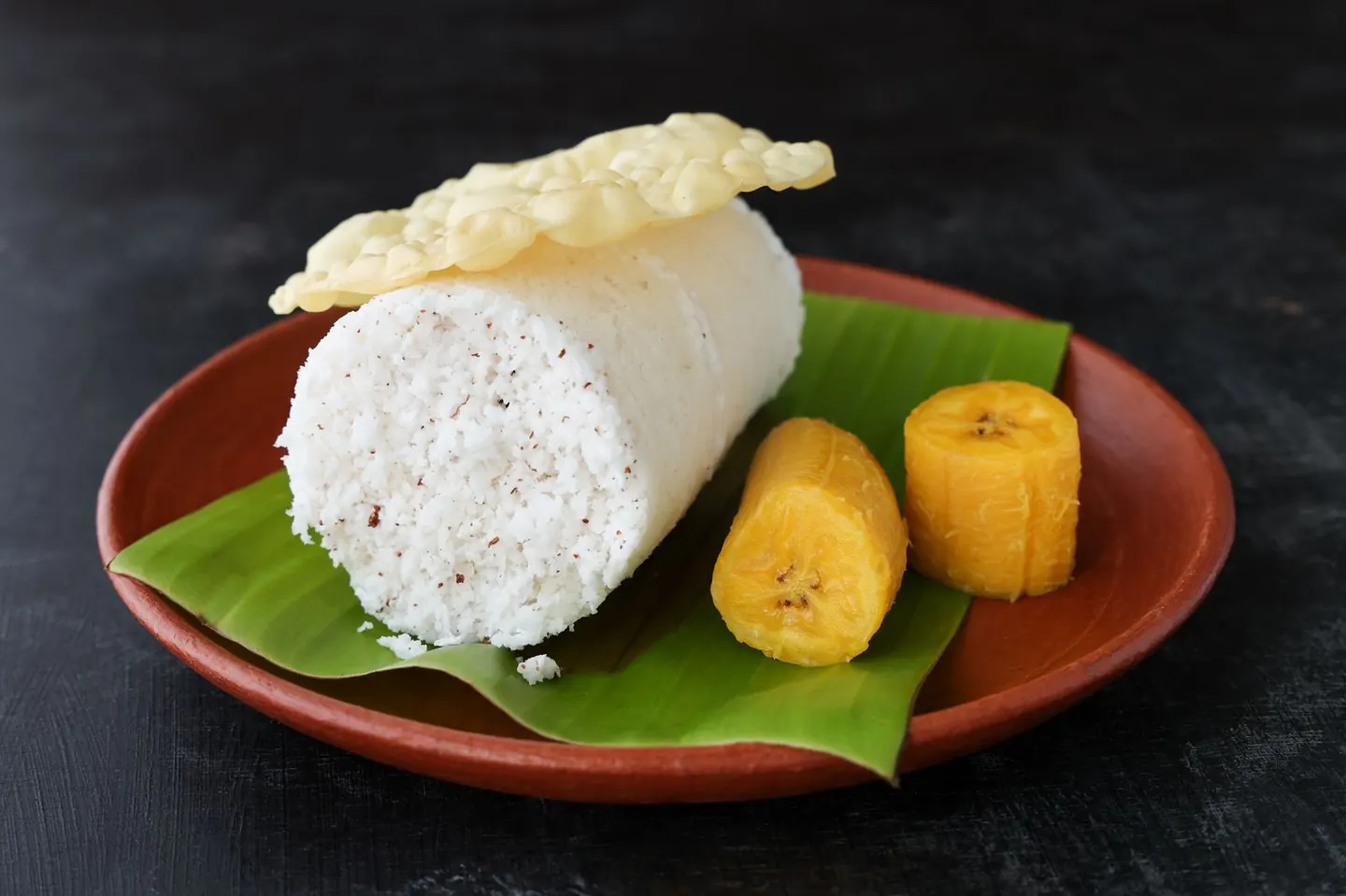
PART THREE — THE RECIPES
Everything in Part One and Part Two was argument and preparation. From here the book is food.
Read each recipe the same way. The line under the title says what changed from the version your family cooks, and why, in one sentence, so you can decide before you shop whether you accept the trade. The icon strip is shorthand for how the dish sits on the Kerala Plate: V vegetable-forward, P pulse included or pairs with one, Q thirty minutes or less with no unattended time on top, B batch-friendly, F freezer-friendly, L under 300 mg of sodium a serving. The attribute tags beside the title feed the condition index at the back.
Ingredients are given in grams first with cup and spoon equivalents in parentheses, listed in the order you will pick them up. Weigh things. A digital scale is the cheapest useful object in a fat-loss kitchen, and it removes most of the guesswork that makes home cooking drift heavier year after year.
Every method step opens with a verb, and every step that needs judgement gives a sensory cue as well as a time range, because pans and flames differ and your eyes and nose are better instruments than a clock. Where a dish moves fast, a BEFORE YOU START line tells you what must be within reach before the oil goes in. The nutrition panel is an estimate, computed from published food-composition tables and labelled as such. It is there for proportion, not for accounting to the decimal.
Chapter 16 — Breakfast
Breakfast is where Kerala's metabolic problem is most fixable, and the reason is structural rather than motivational. The traditional Kerala breakfast is a fermented or steamed rice preparation eaten with a pulse curry: puttu with kadala curry, appam with a stew, idiyappam with green gram and coconut milk, dosa with chutney and a bowl of sambar, kanji with vanpayar and a fierce chammanthi beside it. Nobody designed this as a metabolic intervention. It emerged from what grew nearby, what a household could steam over one fire, and what would keep a person working until two in the afternoon. But look at what it is: a bounded portion of minimally polished parboiled grain, cooked with water rather than fat, carrying a full serving of legume protein and legume fibre alongside it, with grated coconut for body and no added sugar anywhere. Asked to design a low-glycaemic-load, high-fibre, protein-paired first meal for a population at high risk of type 2 diabetes, you would arrive somewhere close to this by accident.
What broke it was not the appam. It was the disappearance of what sat beside the appam. The pulse curry is the item that takes work — the overnight soak, the pressure cooker, the roasted coconut paste — and it is the item that quietly left the table first, replaced by sugar in the tea and a second helping of the starch. Then the count went up. Three appams became five. One puttu became two. The steamed cylinder stayed exactly as traditional as it had ever been while the plate around it emptied of everything that made it work, and the result is a breakfast that is now close to pure refined carbohydrate eaten in a quantity nobody's grandmother would have recognised.
This is why every breakfast in this chapter is paired with a pulse, and why the pairing is not presented as optional. The most directly relevant evidence in the rice literature is small but pointed: in overweight Asian Indians, brown rice with 50 g of legumes a day lowered the five-day average glycaemic incremental area under the curve by 22.9% against white rice, while changing white rice for brown and stopping there achieved 19.8% (Mohan et al., 2014). Fifteen participants, five days per arm, continuous glucose monitoring — a mechanism demonstration rather than an outcome trial, and it should be read that way. The 22.9% is what the grain and the pulse did together; what the pulse contributed on top of the better grain was the last three percentage points. Read plainly, the trial says the pulse belongs beside the grain, not instead of it, and that adding it is what took the meal past a grain swap alone. That is the argument of this chapter.
The recipes are built in two halves meant to be read together. Nine are the grain: palappam, three puttus, idiyappam, idli, two dosas and one deliberate modern invention. Five complete the plate: kadala curry, cherupayar curry, kanji with vanpayar, an upma rebuilt around its vegetables, and an egg roast with the oil measured down. Every grain recipe carries a SERVE WITH line that names a pulse. Follow it, and the arithmetic of the meal changes more than any flour swap could.
Two practical matters. Fermentation first. The batters here come from M10, M11 and M12, and a fermented batter is not slow food — it is food that works while you sleep. Twenty minutes at nine at night buys breakfast for three days. In a Manchester or Toronto kitchen at 18–20°C (64–68°F) a batter needs 14–20 hours rather than the 8–10 a Kerala kitchen gives it, and an oven with only the interior light switched on holds roughly 30°C (86°F), which solves the problem. Every fermented recipe here gives both timings.
Then portion. A cup of cooked rice is 150 g, and the PURE cohort found the highest-risk band began at 450 g a day across 132,373 people in 21 countries, with a hazard ratio of 1.61 in South Asia (Bhavadharini et al., 2020). Breakfast is one of three meals. Count the appams.
A note on the panels in this chapter
Every panel is computed from the per-100 g figures in the book's nutrition tables — ICMR-NIN Indian Food Composition Tables 2017 for Indian foods, USDA FoodData Central SR Legacy where the Indian tables have no entry — summed across the ingredients and divided by the stated servings. Energy is calculated from the summed macronutrients at 4 kcal per gram of net carbohydrate and of protein and 9 kcal per gram of fat, which is why it runs a few per cent below the sum of the printed kJ figures for the high-fibre dishes. Net carbohydrate is available carbohydrate minus fibre. Sodium is rounded to the nearest 10 mg and assumes M07 salt at 275 mg sodium per gram; with plain salt, multiply the salt-derived portion by about 1.45.
Every recipe here offers M07, the 70:30 potassium salt blend, or plain salt. Potassium-enriched salt is not for everyone. Do not use M07 or any potassium-based salt substitute without your doctor's approval if you have chronic kidney disease, or if you take a RAAS inhibitor — an ACE inhibitor (names ending -pril) or an angiotensin receptor blocker (names ending -sartan) — or a potassium-sparing diuretic, or a potassium supplement. Read the full safety box at M07 before you make the jar. Where M07 is not appropriate, use plain salt at the same weight and take the higher sodium figure given in each panel. This book does not tell anyone to change or stop a medicine.
Four standing substitutions apply throughout, each one an honest limitation rather than a rounding decision:
- Matta rice and matta rice flour. The Indian tables carry no red or matta rice entry, so parboiled milled rice (IFCT A014) stands in everywhere. Real matta carries more fibre than this, so the fibre figures for R002, R007, R009 and R012 are conservative.
- Urad dal. Not tabulated; green gram dal (IFCT B010) stands in as the closest documented pulse, following M06 and M11.
- Wholemeal wheat flour, semolina and rolled oats. None are tabulated. Refined wheat flour (IFCT A018) stands in for atta and for rava, which understates the fibre of R004 and R013 by several grams. Jowar/sorghum (IFCT A005) stands in for rolled oats in R009 as the closest documented whole grain, which understates both protein and fat.
- Aromatics and the sugars column. Shallot, onion, tomato, ginger, garlic, green chilli and curry leaf do not appear in the book's tables, and no table used here reports free sugars separately from available carbohydrate. The panels cost the aromatics at working figures — shallot 60 kcal, 1.5 g protein, 11 g available carbohydrate and 2 g fibre per 100 g; tomato 20 kcal and 3 g carbohydrate — and estimate sugars as the free-sugar fraction of those aromatics plus the coconut. These are working figures, not published values.
- Saturated fat in coconut and egg. The saturated fraction of coconut fat is taken as 88.6% after USDA FDC 170169, as in M09. The saturated fraction of egg fat is taken as one-third of total fat.
R001 · Palappam [LOW SODIUM] [VEGAN]
The lace-edged fermented appam, the Syrian Christian breakfast bread
ICONS: P · B · F · L
THE RE-ENGINEERING: The coconut milk in the batter cut from a cupful to 60 ml of first extraction, stirred in cold at the end where you can taste it, and the pan brushed rather than pooled — two appams now carry about 9 g of fat instead of about 16 g.
A Sangam-era Tamil verse describes appams "like honeycombs", which after two thousand years is still the best description available: crisp brown lace at the rim, thick spongy white at the centre, the two textures in one disc. Palappam is the Central Travancore version, enriched with coconut milk, and it is the Easter and Christmas breakfast of Syrian Christian households across Kottayam and Pathanamthitta. Achaya notes that the appam recipe has been essentially unchanged for centuries. Do not improve it. Cook it properly and put a pulse beside it.
Serves 4 · 2 appams each, about 95 g per appam Active 25 minutes · Total 25 minutes (plus 8–20 hours fermenting the M10 batter — required) Difficulty: Moderate — the swirl takes three attempts to learn
EQUIPMENT: Appachatti — a small deep lidded pan with curved sides, 18–20 cm. Substitute: a small deep non-stick wok with a domed lid; the rim comes out less lacy and the appam is still an appam.
BEFORE YOU START: The pan must be properly hot before the first ladle and the lid must be within reach. An appam is a two-minute dish and there is no time to look for anything once the batter is in.
INGREDIENTS
- 720 g (about 8 ladlefuls) M10 appam batter, fermented and salted
- 60 ml (4 tbsp) first-extraction coconut milk, M08, cold
- 4 g (1 tsp) coconut oil, for brushing the pan
SOURCING NOTE: For the coconut milk, tinned full-fat at 17–22% fat is a straight replacement for first extraction; the chilled cartons sold as milk alternatives are 6% or less and will do nothing here. Where no Kerala grocer is within reach, the M10 batter itself can be built on Thai jasmine or Italian risotto rice — any short- or medium-grain raw rice with the starch to set a lace edge. Long-grain basmati will not.
ALLERGENS: None of the major allergens.
METHOD
- Check the fermented batter. It should have risen by half to double, be domed and bubbled on the surface, and smell clean and faintly yeasty. A flat, sharply sour batter has gone too far; use it for dosa instead.
- Stir in the cold coconut milk with a few gentle folds, then thin with water if needed until the batter pours from the ladle in an unbroken stream, roughly the consistency of single cream. Overworking now knocks out the gas you fermented for.
- Heat the appachatti over a medium flame until a flicked drop of water skitters and vanishes rather than sitting and steaming, 2–3 minutes. Brush with oil and wipe it almost dry with kitchen paper.
- Pour a ladleful into the centre. Lift the pan and swirl once in a single continuous circle so the batter climbs the sides in a thin film, then set it down flat so the remainder pools in the middle. Swirling twice gives a thick opaque rim and no lace.
- Cover and cook without turning, until the rim has lifted away from the pan and coloured to a dry golden brown and the centre is matt and set with no wet gloss, 2–3 minutes. Lift one edge with a spatula to check the underside rather than guessing.
- Slide the appam out onto a plate, laid flat and not stacked. Hot appams stacked on each other steam their own lace soft within a minute. Re-brush the pan every second or third appam.
WHY THIS WORKS
Two separate mechanisms make one appam. Yeast carbon dioxide trapped by gelatinising rice starch gives the spongy centre. The lace rim is different: the thin film on the hot pan wall loses water faster than it can gel, so its starch sets into an open brittle network. The coconut fat keeps that network from cracking, which is why a coconut-free appam shatters.
PER SERVING (estimated)
| kcal | kJ | Carb | Fibre | Net carb | Sugars | Protein | Fat | Sat fat | Sodium |
|---|---|---|---|---|---|---|---|---|---|
| 251 | 1,050 | 40 g | 3 g | 37 g | 3 g | 4 g | 9 g | 8 g | 220 mg |
Batter figures taken forward from M10 at 104 kcal per appam.
IF YOU ARE WATCHING… Blood sugar: two appams are two servings of rice, and this book will not tell you that fermentation lowers glycaemic index by a specific number, because no such measurement exists for appam. What changes the meal is R010 beside it. Two appams and a bowl of kadala curry is 37 g of net carbohydrate carried by 13 g of protein and 19 g of fibre; four appams and sweet tea is neither. Cholesterol: 8 g of saturated fat a serving, nearly all of it coconut. Palappam is a coconut dish and this is where the fat is. The swap below halves it if your LDL cholesterol is the number you are working on.
SWAP IT
- Second-extraction coconut milk for first → saturated fat drops from about 8 g to about 5.5 g a serving. The appam is slightly less tender at the centre and no less lacy.
- Parboiled rice for raw in the M10 batter → more fibre and roughly three times the thiamine, at a real cost in lace. The rim comes out sturdier and paler.
- Toddy, or 60 ml coconut water with a pinch of yeast, as the leaven → the traditional article, slower and more variable. Cochin Jewish households fermented appam batter with fresh toddy, and it is worth doing once.
SCALE IT
| Serves | M10 batter | Coconut milk | Oil | Appams |
|---|---|---|---|---|
| 2 | 360 g | 30 ml | 2 g | 4 |
| 4 | 720 g | 60 ml | 4 g | 8 |
| 7 | 1,260 g | 100 ml | 7 g | 14 |
MAKE AHEAD · STORE · FREEZE The batter keeps in the fridge 3 days and day-two appams are often the best. Cooked appams hold 4 hours covered at room temperature. Freeze the cooked appams 1 month, interleaved with paper, and reheat in a covered pan over a low flame 2–3 minutes. Do not freeze the batter; the starch network never recovers.
LEFTOVERS Tear cold appams into a bowl and pour warm second-extraction coconut milk over them with a scrape of jaggery — the Kottayam way with leftovers. Or shred them into a pan with mustard, curry leaf and a chopped shallot for a five-minute appam upma.
SERVE WITH R010 Kadala Curry · R080 Mixed Vegetable Stew · R011 Cherupayar Curry · M08 for the coconut milk
TROUBLESHOOTING No lace, thick opaque rim: the batter was too thick, or you swirled twice. Appam sticks and tears: the pan was not hot enough before the oil went on. Heat it longer, not hotter. Wet centre after three minutes: the lid came off, or the ladle was too generous for the pan. Flat, sour, no rise in the pan: the batter over-fermented. It will still make a good dosa.
NOTES
R002 · Puttu, Matta Rice [LOW GL] [VEGAN]
The steamed cylinder, made with red parboiled rice
ICONS: P · Q · L
THE RE-ENGINEERING: Nothing removed from the puttu itself except the coconut, trimmed from a heaped layer to 20 g a portion so it still brings its fibre without carrying 11 g of saturated fat. The real change is the bounded portion — 60 g of flour a person — and the fact that this recipe refuses to be served without R010 beside it.
This is the flagship breakfast of this book, and the reason is a number measured in Kerala on Kerala food. In Pavithran and colleagues' 24-week randomised trial (2020), the recipes participants actually ate were tested for glycaemic index, and red rice puttu came out at GI 38, alongside Rose Matta rice at 38, against whole-wheat roti at 45 and oats puttu at 51–52. The low-glycaemic arm's HbA1c fell 0.93%. Treat 38 as a measured value for this preparation cooked this way, not as a property of every bag on every stove. Then steam it and eat it with chickpeas.
Serves 4 · about 150 g per portion Active 15 minutes · Total 30 minutes Difficulty: Easy, once you have felt the right crumb
EQUIPMENT: Puttu kutti — the cylindrical steamer, bamboo or steel. Substitute: a stacked steamer basket lined with muslin, filled 4 cm deep; you lose the cylinder shape and nothing else. A large idli steamer works the same way.
BEFORE YOU START: Water and flour is the whole skill of this dish. Add the water in stages and stop when the crumb holds a shape in your fist and breaks apart cleanly when you push it with a thumb. Too wet and it steams into a solid plug; too dry and it falls out as powder.
INGREDIENTS
- 240 g (2 cups) matta rice flour or puttu podi, lightly roasted
- 4 g (¾ tsp) M07 salt or plain salt
- 170–190 ml water, at room temperature
- 80 g (¾ cup) freshly grated coconut
SOURCING NOTE: Look for "red puttu podi", "matta puttu podi" or "roasted red rice flour" in any Kerala or Sri Lankan grocery, and check the colour through the bag — it should be dull pinkish-fawn, not white. Anything labelled matta that is bright white has been polished, and polish is the lever that matters: glycaemic index in one Indian parboiled variety rose from 57.6 unpolished to 79.6 at 9.7% polish. If only plain white puttu podi is available, use it and take the pulse pairing more seriously, not less. To roast your own flour, dry-toast plain matta rice flour over a low flame 4–6 minutes until it smells faintly of biscuit and no longer of raw starch.
ALLERGENS: None of the major allergens.
METHOD
- Dissolve the salt in 150 ml of the water so it distributes evenly. Salt sprinkled dry over flour lands in patches you will taste.
- Sprinkle the salted water over the flour a little at a time, raking it through with your fingertips rather than stirring. Stop when the flour has darkened evenly and no dry pockets remain, adding the last 20–40 ml only if needed.
- Test the crumb by closing your fist around a handful. It should hold the shape of your palm and then crumble cleanly when pushed with a thumb, 1–2 minutes of raking. If it stays as a wet lump, add 2 tablespoons more dry flour.
- Rest the mix 5–10 minutes, then break up any lumps by rubbing it between your palms or pulsing it twice in a dry blender. This is what makes puttu light.
- Layer the puttu kutti: a tablespoon of coconut, then flour to a third of the way, coconut again, flour, coconut, finishing with coconut at the top. Do not press or pack it down at any point — the steam has to travel through.
- Steam over a pot of hard-boiling water until a thin steady plume comes through the top of the cylinder and the whole thing smells cooked and sweetish, 6–8 minutes from the first sign of steam. Over-steaming makes it claggy.
- Push the cylinder out onto a plate with the handle of a wooden spoon, in one piece if you can. Serve it within 15 minutes, while the crumb is still open.
WHY THIS WORKS
Puttu is steamed at a moisture content low enough that the starch gelatinises only partially and the grains never merge into a paste. That leaves a crumb of discrete particles rather than a continuous gel, which slows enzyme access — the plausible reason a red rice puttu measured GI 38 while the same rice boiled soft measures higher. The coconut adds fat and about 2 g of fibre per portion.
PER SERVING (estimated)
| kcal | kJ | Carb | Fibre | Net carb | Sugars | Protein | Fat | Sat fat | Sodium |
|---|---|---|---|---|---|---|---|---|---|
| 272 | 1,139 | 48 g | 4 g | 44 g | 1 g | 6 g | 9 g | 7 g | 280 mg |
Fibre is conservative: parboiled milled rice stands in for matta, which carries more.
IF YOU ARE WATCHING… Blood sugar: at the measured GI of 38 and 44 g of net carbohydrate, this portion is a glycaemic load of about 16 — moderate by the standard tables, and roughly half what the same weight of polished white rice would deliver. This is the lowest-glycaemic-load rice breakfast in the chapter; it is not a low-carbohydrate one. Two portions is not the same as one. Blood pressure: 280 mg of sodium against a 2,000 mg daily target, and made with plain salt it is about 400 mg. The chutney beside it will usually carry more, so look there next. Cholesterol: 7 g of saturated fat, all from the coconut. Halving the coconut halves it, at a cost in fibre and in the dish.
SWAP IT
- Plain white puttu podi for matta → the texture is softer and paler and the glycaemic advantage of the measured GI 38 does not transfer. Make the pulse non-negotiable.
- 40 g coconut instead of 80 g → saturated fat falls to about 3.7 g a serving and the puttu is drier and noticeably less good. A fair trade if LDL cholesterol is your working number.
- Add 30 g grated jackfruit or 40 g mashed ripe nendran to the layers → the traditional sweet versions. Both add sugar; the nendran adds about 10 g of available carbohydrate a serving.
SCALE IT
| Serves | Flour | Water | Coconut | Salt |
|---|---|---|---|---|
| 2 | 120 g | 85–95 ml | 40 g | 2 g |
| 4 | 240 g | 170–190 ml | 80 g | 4 g |
| 8 | 480 g | 340–380 ml | 160 g | 8 g |
At eight servings, steam in two loads rather than packing the cylinder tighter.
MAKE AHEAD · STORE · FREEZE The moistened crumb keeps 24 hours refrigerated in a covered box and steams straight from cold. Steamed puttu holds 2 days in the fridge. Freeze the steamed puttu 1 month in portioned bags. Reheat by re-steaming 4–5 minutes from chilled or 6–8 minutes from frozen; a microwave turns it rubbery.
LEFTOVERS Crumble cold puttu into a pan with a teaspoon of oil, mustard seed, curry leaf, sliced shallot and any leftover pulse, and fry it for 4–5 minutes for puttu upma. Or mash it with ripe banana and a pinch of cardamom as a child's breakfast.
SERVE WITH R010 Kadala Curry — the intended partner and the point of the recipe · R011 Cherupayar Curry · R107 Sambharam
TROUBLESHOOTING Solid, heavy plug instead of a crumb: too much water, or the mix was packed into the cylinder. Both faults are invisible until it comes out. Falls apart as dry powder: too little water. Sprinkle 2 tablespoons over the crumb, rake, and re-steam. Steam never comes through the top: the cylinder is packed too tight, or the pot below is not at a hard boil. Tastes of raw flour: the podi was unroasted. Dry-toast it next time.
NOTES
R003 · Ragi Puttu [LOW GL] [HIGH FIBRE] [VEGAN]
Finger millet puttu, darker and earthier
ICONS: P · Q · L
THE RE-ENGINEERING: Three-quarters of the rice flour replaced with finger millet, which takes the fibre of a portion from about 4 g to about 8 g and adds calcium and iron. Coconut held at 20 g a portion. Stated plainly: this is a real compositional gain and a modest metabolic one.
Ragi puttu is not a modern health invention — finger millet has been ground and steamed in the Kerala highlands and across the Karnataka border for a very long time — but it is undergoing a revival for reasons that outrun the evidence. Here is the honest position. Millets average GI 52.7 against milled rice at 71.7 in pooled data, and ragi carries 11.18 g of fibre per 100 g against parboiled rice's 3.74 g. But process it too finely and the advantage evaporates: one trial measured a decorticated finger millet porridge at GI 93. The grain state matters more than the grain name.
Serves 4 · about 150 g per portion Active 15 minutes · Total 30 minutes Difficulty: Easy, but the crumb is trickier than R002
EQUIPMENT: Puttu kutti, bamboo or steel. Substitute: a stacked steamer basket lined with muslin, filled 4 cm deep.
BEFORE YOU START: Ragi drinks more water than rice flour and takes longer to absorb it. Add the water, rake it through, then wait two minutes before judging the crumb — the mix that looks too dry at first will be right by then.
INGREDIENTS
- 180 g (1½ cups) ragi flour (finger millet)
- 60 g (½ cup) matta rice flour or puttu podi
- 4 g (¾ tsp) M07 salt or plain salt
- 200–220 ml water, at room temperature
- 80 g (¾ cup) freshly grated coconut
SOURCING NOTE: Every Indian grocer and most health-food shops stock ragi flour as finger millet or nachni flour. Buy small bags: it is high in fat for a flour, goes rancid within about three months, and rancid ragi tastes of old paint and cannot be rescued. Whole ragi grain, soaked 8–10 hours and coarsely ground wet, makes a better and noticeably coarser puttu, and coarser is the direction the evidence points in.
ALLERGENS: None of the major allergens.
METHOD
- Whisk the two flours together dry, thoroughly. Ragi and rice flour of different weights will otherwise steam in stripes.
- Dissolve the salt in 180 ml of the water, then sprinkle it over the flour in stages, raking with your fingertips.
- Wait 2 minutes, then test the crumb in your fist: it should hold the shape of your palm and crumble cleanly under a thumb. Add the remaining water 1 tablespoon at a time until it does.
- Break up the lumps by rubbing the mix between your palms, or pulse it twice in a dry blender. Ragi lumps more readily than rice flour and a lump steams into a hard bead.
- Layer the puttu kutti with coconut and flour in alternating layers, finishing with coconut, without pressing at any point.
- Steam over hard-boiling water until a steady plume comes through the top and the smell turns nutty and cooked, 7–9 minutes from the first steam — a minute or two longer than R002, because ragi holds more water.
- Push it out onto a plate. Ragi puttu is a deep purple-brown and looks denser than it is.
WHY THIS WORKS
Ragi's starch sits in a denser protein matrix than rice starch and carries about three times the fibre, so the crumb takes up more water, steams slower and empties from the stomach more slowly. The colour comes from polyphenols in the seed coat, which are also part of why the flour goes rancid quickly. Coconut fat keeps the crumb from turning chalky.
PER SERVING (estimated)
| kcal | kJ | Carb | Fibre | Net carb | Sugars | Protein | Fat | Sat fat | Sodium |
|---|---|---|---|---|---|---|---|---|---|
| 245 | 1,023 | 43 g | 8 g | 35 g | 1 g | 5 g | 9 g | 7 g | 280 mg |
IF YOU ARE WATCHING… Blood sugar: 8 g of fibre and 35 g of net carbohydrate is the best ratio of any grain dish in this chapter. No measured glycaemic index exists for ragi puttu made this way, so no number is offered here — the composition is the claim, not a GI value. Cholesterol: 7 g of saturated fat from the coconut, as in R002, and the same halving swap applies. Iron and calcium: ragi is a useful source of both. That is a compositional statement and nothing more.
SWAP IT
- All ragi, no rice flour → more fibre again, and a crumb that is harder to keep light. Add 20 ml more water and expect a denser puttu.
- Jowar or bajra flour for the ragi → both work. Bajra is stronger and faintly bitter, jowar milder and paler, and both carry 10–11.5 g of fibre per 100 g.
- Coarsely ground soaked whole ragi for the flour → better flavour, coarser crumb, and the grain state the evidence favours. Costs 8–10 hours of soaking.
SCALE IT
| Serves | Ragi flour | Rice flour | Water | Coconut | Salt |
|---|---|---|---|---|---|
| 2 | 90 g | 30 g | 100–110 ml | 40 g | 2 g |
| 4 | 180 g | 60 g | 200–220 ml | 80 g | 4 g |
| 8 | 360 g | 120 g | 400–440 ml | 160 g | 8 g |
MAKE AHEAD · STORE · FREEZE Moistened crumb keeps 24 hours refrigerated. Steamed ragi puttu holds 2 days in the fridge but stiffens faster than rice puttu. Freeze 1 month in portions. Reheat by re-steaming 4–5 minutes from chilled, 6–8 minutes from frozen.
LEFTOVERS Crumble it into hot milk or thinned coconut milk with a little jaggery for a ragi porridge, or fry it with mustard, curry leaf and leftover cherupayar as a dark, nutty puttu upma.
SERVE WITH R010 Kadala Curry · R011 Cherupayar Curry · M06 for a spoonful of podi over the top
TROUBLESHOOTING Hard beads through the crumb: ragi lumps that were never broken up. Rub the mix between your palms before layering. Dense and rubbery: too much water, or steamed past 10 minutes. Bitter, paint-like taste: the ragi flour is rancid. Nothing fixes it. Steams in visible stripes: the two flours were not mixed dry first.
NOTES
R004 · Wheat and Coconut Puttu [VEGAN]
Steamed wholemeal puttu, the Malabar breakfast
ICONS: P · Q · L
THE RE-ENGINEERING: Coarse wholemeal flour rather than the white maida-adjacent wheat podi sold as "wheat puttu podi" in most shops, and the coconut held at 20 g a portion. No fat added at any stage, which is the whole argument for steaming over the parotta the same flour usually becomes.
Wheat sits more comfortably in Malabar than anywhere else in Kerala — this is pathiri and aleesa country, wheat-tolerant and tea-shop-centred — and wheat puttu is a genuine northern household breakfast rather than a diet substitution. It is also the most useful thing you can do with wheat flour in Kerala, because the alternative is the same flour laminated with fat into a parotta. In Pavithran's Kerala measurements, whole-wheat puttu came out at GI 45 and whole-wheat roti at the same figure — higher than red rice puttu's 38, which is worth knowing and worth saying.
Serves 4 · about 150 g per portion Active 15 minutes · Total 30 minutes Difficulty: Easy
EQUIPMENT: Puttu kutti, bamboo or steel. Substitute: a stacked steamer basket lined with muslin. Wheat puttu holds together better than rice puttu, so a loose basket is less of a problem here.
BEFORE YOU START: Wheat flour forms gluten the moment it is worked wet, and gluten in a puttu means a rubbery plug. Rake the water in with your fingertips and never knead, squeeze or press.
INGREDIENTS
- 240 g (2 cups) coarse wholemeal wheat flour (atta), or wheat puttu podi
- 4 g (¾ tsp) M07 salt or plain salt
- 170–190 ml water, at room temperature
- 80 g (¾ cup) freshly grated coconut
SOURCING NOTE: Ask for coarse atta or chakki atta rather than fine chapatti flour; in a British or American supermarket, wholemeal chapatti flour is the closest thing and coarse wholemeal bread flour also works. What is sold as "wheat puttu podi" in Kerala groceries is often substantially refined — hold the bag up and look for visible bran flecks. Without them you are steaming white flour.
ALLERGENS: Gluten (wheat).
METHOD
- Dry-toast the flour in a wide pan over a low flame, stirring, until it smells nutty rather than raw and has barely changed colour, 4–6 minutes. Cool it 5 minutes. Skip this and the puttu tastes of raw flour.
- Dissolve the salt in 150 ml of the water.
- Sprinkle the salted water over the cooled flour in stages, raking with fingertips only. Wheat absorbs faster than rice flour, so go slowly and stop earlier than you expect.
- Test the crumb in your fist: it should hold together and then break cleanly. Wheat crumb feels stickier than rice crumb at the correct hydration; judge it by how it breaks, not how it feels.
- Layer the puttu kutti with coconut and flour alternately, finishing with coconut, pressing nothing.
- Steam over hard-boiling water until steam plumes steadily from the top and the smell is of baked bread, 7–9 minutes from the first steam.
- Push it out and serve within 15 minutes. Wheat puttu firms up as it cools more than rice puttu does.
WHY THIS WORKS
Steaming a barely hydrated flour at low moisture keeps the wheat starch only partly gelatinised and, critically, keeps the gluten network from forming — which is what separates this from every other wheat preparation in Kerala. Bran and germ carry fibre and thiamine that white flour has lost, and slow the whole crumb down. No fat enters the dish at any point.
PER SERVING (estimated)
| kcal | kJ | Carb | Fibre | Net carb | Sugars | Protein | Fat | Sat fat | Sodium |
|---|---|---|---|---|---|---|---|---|---|
| 275 | 1,150 | 46 g | 4 g | 42 g | 1 g | 7 g | 9 g | 7 g | 280 mg |
Computed on refined wheat flour (IFCT A018), the only wheat entry available. Real coarse atta carries several grams more fibre per 100 g, so the fibre figure here is substantially understated.
IF YOU ARE WATCHING… Blood sugar: whole-wheat puttu measured GI 45 in the Kerala trial against red rice puttu's 38. Both are useful, and R002 is better. Broken-wheat upma measured 41 in the same set, which is why R013 exists. Blood pressure: 280 mg of sodium a portion with M07, about 400 mg with plain salt. Cholesterol: 7 g of saturated fat from the coconut, and this is the dish where cutting the coconut costs least, since wheat gives more of its own body than rice does.
SWAP IT
- Broken wheat (nurukku gothambu) coarsely ground for the flour → closer to the measured GI 41 of broken-wheat upma, and a distinctly coarser puttu. The best change on this page.
- 60 g ragi for 60 g of the wheat → more fibre and a darker crumb, and it works well with wheat's flavour.
- Fine chapatti flour instead of coarse atta → smoother, paler, less fibre, and it turns rubbery more easily. Rake even more gently.
SCALE IT
| Serves | Wheat flour | Water | Coconut | Salt |
|---|---|---|---|---|
| 2 | 120 g | 85–95 ml | 40 g | 2 g |
| 4 | 240 g | 170–190 ml | 80 g | 4 g |
| 8 | 480 g | 340–380 ml | 160 g | 8 g |
MAKE AHEAD · STORE · FREEZE Toasted flour keeps 2 months in a jar, so toast a kilogram at a time. Moistened crumb keeps 24 hours refrigerated. Steamed puttu holds 2 days in the fridge and freezes 1 month. Reheat by re-steaming 4–5 minutes from chilled.
LEFTOVERS Crumbled wheat puttu fried with onion, green chilli and a beaten egg makes a good second breakfast, and it takes a spiced pulse better than rice puttu does.
SERVE WITH R010 Kadala Curry · R014 Egg Roast, Rebuilt · R011 Cherupayar Curry
TROUBLESHOOTING Rubbery, chewy plug: the mix was kneaded or squeezed. Rake only. Tastes raw and pasty: the flour was not toasted. Falls apart completely: under-hydrated. Sprinkle 2 tablespoons of water, rake, re-steam. Grey and heavy: over-steamed. Nine minutes is the ceiling.
NOTES
R005 · Idiyappam [LOW SODIUM] [VEGAN]
String hoppers, pressed and steamed
ICONS: P · B · L
THE RE-ENGINEERING: The coconut moved out of the dough and onto the top, 15 g a portion scattered between the layers rather than folded through, and the finishing pour of thick coconut milk made optional and measured rather than assumed. Saturated fat a portion drops from about 11 g to about 6 g.
The sevanazhi — the brass or steel press with its interchangeable discs — is a documented thousand-year-old tool: the Kannada Lokopakara of 1025 CE describes both the preparation and the mould-press for shavige. The name is straightforward. Idi is to pound or press, so idiyappam is pressed appam; noolappam is thread appam, which is what it looks like. It is the gentlest thing in this chapter, the breakfast given to children and to people recovering from illness, and the one dish here where a hot dough is the entire technique.
Serves 4 · 3 idiyappams each, about 60 g each Active 30 minutes · Total 45 minutes Difficulty: Moderate — the dough must be worked hot
EQUIPMENT: Sevanazhi or idiyappam press with a fine disc; steamer with flat perforated plates or idli plates. Substitute: a potato ricer with the finest plate, or a piping bag with a 2 mm nozzle — slower, and the strands come out thicker.
BEFORE YOU START: This dough is worked at a temperature that is uncomfortable to touch and must not be allowed to cool, because cold dough will not extrude and cannot be revived. Have the press assembled, the plates greased, the steamer at a boil and the coconut grated before the water goes on.
INGREDIENTS
- 250 g (2 cups) roasted rice flour, fine
- 3 g (½ tsp) M07 salt or plain salt
- 375–400 ml water
- 3 g (¾ tsp) coconut oil, for greasing the plates and your palms
- 60 g (½ cup) freshly grated coconut
SOURCING NOTE: Buy flour labelled "idiyappam podi", "roasted rice flour" or pathiri podi — all three are the same thing, milled fine and pre-roasted, and it is worth buying rather than making, because home-ground flour is rarely fine enough to extrude without tearing. Ordinary rice flour must be dry-toasted over a low flame 5–7 minutes before use or the dough will be slack. Matta rice flour makes a pink-brown idiyappam with more fibre and a coarser strand; it is worth trying and it is not the classic.
ALLERGENS: None of the major allergens.
METHOD
- Bring the water to a full rolling boil with the salt in it. Anything less than boiling will not gelatinise enough starch to bind the dough.
- Pour the boiling water over the flour all at once, about 375 ml to start, and stir hard with the handle of a wooden spoon until no dry flour remains, 30–60 seconds. It will look like a wet, shaggy paste.
- Cover and stand 4–5 minutes, so the flour finishes absorbing and the mass becomes workable.
- Knead with an oiled palm while it is still uncomfortably hot, until the dough is completely smooth, slightly tacky and holds a fingerprint without cracking, 2–3 minutes. If it cracks, add 1 tablespoon of boiling water and knead again.
- Press the dough through the sevanazhi in a spiral onto greased plates, 60 g a disc, scattering a teaspoon of grated coconut over each one. Work quickly and keep the remaining dough covered — it stiffens as it cools and the last portion is always the hardest.
- Steam over a rolling boil until the strands have turned from matt white to slightly translucent and no longer taste of raw flour, 5–7 minutes. Longer than this and they fuse into a mat.
- Rest 2–3 minutes before lifting them off, or they tear. Serve within 20 minutes, while the strands are still separate.
WHY THIS WORKS
Boiling water gelatinises enough rice starch to make a dough that holds a shape without gluten, which is the only way rice flour can be extruded at all. The strands then steam individually, each with a large surface area and a short cooking time, and the dish is very low in fat unless you add it. Cooling re-crystallises that starch, which is why the dough stops extruding.
PER SERVING (estimated)
| kcal | kJ | Carb | Fibre | Net carb | Sugars | Protein | Fat | Sat fat | Sodium |
|---|---|---|---|---|---|---|---|---|---|
| 274 | 1,145 | 50 g | 3 g | 47 g | 1 g | 6 g | 7 g | 6 g | 210 mg |
IF YOU ARE WATCHING… Blood sugar: three idiyappams is 47 g of net carbohydrate with very little fibre and no protein, which makes this the most exposed dish in the chapter when eaten alone. It is also the one most transformed by what sits beside it. With R011 the meal gains 12 g of protein and 10 g of fibre. Blood pressure: 210 mg of sodium, the lowest of the grain dishes here, because idiyappam needs very little salt in the dough. Cholesterol: 6 g of saturated fat, and if you skip the coconut on top it falls to under 1 g. This is the leanest grain recipe in the chapter and the easiest one to keep that way. What a finishing pour of thick coconut milk costs, honestly: 60 ml adds about 3.6 g of saturated fat a serving.
SWAP IT
- Matta rice flour for white → more fibre, a pinkish strand, and a slightly more fragile press. Toast it first.
- Ragi flour for a third of the rice flour → darker, softer strands with about 3 g more fibre a portion. It presses less cleanly.
- Skip the coconut on the plates → saturated fat falls to under 1 g a serving, and the idiyappam is plainer and drier. Genuinely worth doing if you are pairing it with a coconut-milk curry.
SCALE IT
| Serves | Rice flour | Water | Coconut | Salt | Idiyappams |
|---|---|---|---|---|---|
| 2 | 125 g | 190–200 ml | 30 g | 1.5 g | 6 |
| 4 | 250 g | 375–400 ml | 60 g | 3 g | 12 |
| 8 | 500 g | 750–800 ml | 120 g | 6 g | 24 |
At eight servings, make the dough in two batches. One large batch cools before the last third is pressed.
MAKE AHEAD · STORE · FREEZE Best within an hour of steaming. Fridge 2 days in a covered box. Freeze 1 month, interleaved with paper in flat bags. Reheat by re-steaming 3–4 minutes from chilled or 5–6 minutes from frozen; sprinkle a few drops of water over them first. Do not refrigerate the dough — it hardens irreversibly.
LEFTOVERS Break cold idiyappam into a pan with mustard, curry leaf, sliced shallot, turmeric and any leftover pulse for idiyappam upma, 5–6 minutes. This is the best leftover dish in the chapter.
SERVE WITH R011 Cherupayar Curry · R010 Kadala Curry · R014 Egg Roast, Rebuilt · M08 for a measured pour of coconut milk
TROUBLESHOOTING Dough will not go through the press: it has cooled, or there was not enough boiling water. Add 1–2 tablespoons of boiling water and knead again hot. Strands fused into a solid mat: over-steamed, or pressed too densely onto the plate. Idiyappam tastes of raw flour: the flour was unroasted, or the water was not at a full boil. Strands break as they leave the press: dough too dry. One more tablespoon of boiling water.
NOTES
R006 · Idli [LOW SAT FAT] [VEGAN] [UNDER 250 KCAL]
Steamed fermented cakes of rice and black gram
ICONS: P · B · F
THE RE-ENGINEERING: Nothing at all to the idli, which was already close to ideal. The change is upstream in M11, where the dal fraction is raised to a full 3:1, and downstream in the count: three idlis and a real pulse curry, not six idlis and a thin chutney.
The rice-and-black-gram pairing is one of the oldest pieces of applied nutrition in India, and it works for a reason nobody could have known when it was devised — rice is short on lysine and black gram on methionine, so together they make a better protein than either alone. Ferment the two and you get lift, mild sourness, better digestibility and, through phytases activated as the pH falls, better access to the grain's iron and zinc. An idli carries almost no fat. Almost everything served with it does.
Serves 4 · 3 idlis each, about 55 g per idli Active 15 minutes · Total 30 minutes (plus 14 hours soaking and fermenting the M11 batter — required) Difficulty: Easy, once the batter is right
EQUIPMENT: Idli steamer with plates. Substitute: a stacked steamer with small greased bowls or ramekins, filled two-thirds; the idlis come out taller and perfectly good.
BEFORE YOU START: Have the steamer at a rolling boil before the batter goes into the plates. Batter that stands in the moulds waiting for the water loses its gas and steams flat.
INGREDIENTS
- 720 g (about 12 ladlefuls) M11 batter, fermented and salted
- 5 g (1 tsp) sesame or coconut oil, for greasing the plates
SOURCING NOTE: Whole skinned urad dal gives more lift than split, and the M11 quantities assume it. Chilled ready-made idli batter is sold in South Asian groceries in most Western cities and is a legitimate weeknight shortcut — read the label for added soda, which produces rise without fermentation and without the flavour or the digestibility. For rice, ask for unda kuthiya or under-milled parboiled rice: polish is the lever, since glycaemic index in one Indian parboiled variety rose from 57.6 unpolished to 79.6 at 9.7% polish.
ALLERGENS: None of the major allergens as the recipe is written. Sesame — only if you grease with sesame rather than coconut oil.
METHOD
- Check the batter. It should have risen by half to double, show a fine even honeycomb against the side of the bowl, and smell clean and faintly sour. Fold it once, gently — stirring it down is how idlis come out flat.
- Grease the plates lightly with oil on a folded piece of kitchen paper. A pool of oil in the dimple gives a greasy base and no other benefit.
- Fill each mould about three-quarters full with a single ladleful. Idlis rise, and an overfilled mould gives a domed idli with a dense middle.
- Steam over a rolling boil with the lid on, 10–12 minutes, until the surface has turned from glossy to matt and a skewer pushed into the centre comes out clean.
- Rest the plates 2–3 minutes off the heat before unmoulding. Idlis lifted straight from the steamer tear along the base every time.
- Unmould with a wet spoon, working around the edge. Serve within 20 minutes; idlis stiffen as they cool and are best re-steamed rather than eaten cold.
WHY THIS WORKS
Much of an idli's rise is mechanical rather than biological: urad dal carries a mucilaginous protein-polysaccharide complex that traps air during grinding, which is why the dal must be beaten to a soft peak. Fermentation then adds carbon dioxide from Leuconostoc mesenteroides and drops the pH to roughly 4.2–5.9, which flavours the batter and improves mineral bioaccessibility.
PER SERVING (estimated)
| kcal | kJ | Carb | Fibre | Net carb | Sugars | Protein | Fat | Sat fat | Sodium |
|---|---|---|---|---|---|---|---|---|---|
| 217 | 908 | 46 g | 3 g | 43 g | 1 g | 7 g | 2 g | 1 g | 360 mg |
Batter figures taken forward from M11 at 68 kcal per idli.
IF YOU ARE WATCHING… Blood sugar: three idlis is 43 g of net carbohydrate. Four idlis is a large rice portion, whatever the fermentation did overnight, and no measured glycaemic index for idli is offered in this book because the data do not exist. Three idlis, a bowl of sambar with real dal in it and a vegetable thoran is the plate this book argues for. Blood pressure: 360 mg a serving with M07, and roughly 520 mg with plain salt — the highest sodium figure among the grain dishes here, because the batter is salted throughout. The chutney beside it usually carries more again. Cut the batter salt to 4 g in M11 if blood pressure is your working number. Cholesterol: under 1 g of saturated fat. This is the leanest cooked dish in the chapter.
SWAP IT
- Add 60 g grated carrot, 40 g chopped coriander and a slit green chilli to the batter before steaming → a vegetable idli, up about 2 g of fibre a serving, and children eat it.
- Ragi batter M12 in the idli plates → soft, dark, slightly heavier idlis with about 2 g more fibre. Steam them 2 minutes longer.
- Ready-made chilled batter → saves 14 hours, loses some sourness, and the dal fraction is usually lower than M11's, so the protein drops by about 1 g a serving.
SCALE IT
| Serves | M11 batter | Oil | Idlis |
|---|---|---|---|
| 2 | 360 g | 3 g | 6 |
| 4 | 720 g | 5 g | 12 |
| 7 | 1,200 g | 8 g | 20 |
MAKE AHEAD · STORE · FREEZE Batter keeps in the fridge 4 days, worsening for idli as it sours while improving for dosa. Steamed idlis hold 2 days refrigerated. Freeze the steamed idlis 1 month in bags. Reheat by re-steaming 4–5 minutes from chilled or 5–6 minutes from frozen. Refrigerate the batter within 2 hours of the ferment finishing in a warm kitchen, or it overshoots.
LEFTOVERS Cut cold idlis into cubes and toss them in a pan with mustard, curry leaf, sliced shallot and a spoonful of M06 for 4–5 minutes — podi idli, and better than the original for many people. Or crumble them into a pan with leftover pulse curry.
SERVE WITH R010 Kadala Curry · R011 Cherupayar Curry · R089 Kerala Kitchen Salad · M06 with a few drops of sesame oil
TROUBLESHOOTING Flat, dense idlis: the dal was under-ground, or the batter over-fermented and collapsed. The same symptom from opposite causes. Idlis stick to the plates: not greased, or unmoulded hot. Rest them 2–3 minutes. Sour, sharp taste: over-fermented. Use the rest of the batter for dosa. Wet, gummy centre: moulds overfilled, or the steamer lid dripped condensation into them. Wrap the lid in a cloth.
NOTES
R007 · Thattu Dosa [LOW SAT FAT] [VEGAN]
The thick griddle dosa of the roadside stall
ICONS: P · B
THE RE-ENGINEERING: Oil measured at 1 g a dosa, brushed on with a cloth, against the tablespoon a thattukada griddle uses and the second tablespoon poured around the rim at the end. That is the whole dish: a thattu dosa is fat and batter, and the batter was never the problem.
The thattukada — the roadside cart with its kerosene lamp and its iron griddle — is one of the four documented shifts that changed what Kerala eats, and it also produced the most likeable dosa in the state. Thattu dosa is small, thick, soft-centred, browned hard on one side only, and made in stacks of four while you wait. This version keeps the shape and the char and takes out the oil, and it is honest about what that costs: less of the fried crust, and a dosa that wants a chutney rather than standing alone.
Serves 4 · 2 dosas each, about 100 g per dosa Active 25 minutes · Total 25 minutes (plus 14 hours soaking and fermenting the M11 batter — required) Difficulty: Easy
EQUIPMENT: Dosa kallu or heavy flat iron griddle, 26 cm or wider. Substitute: a heavy non-stick frying pan, which needs even less oil and gives a paler, less blistered underside.
BEFORE YOU START: A thattu dosa is a two-minute dish cooked on one side only, so the lid, the oiled cloth and the plate all need to be beside the griddle before the first ladle. Have the accompaniment already on the table.
INGREDIENTS
- 880 g (about 8 ladlefuls) M11 batter, fermented, salted and left thick
- 8 g (1½ tsp) sesame or coconut oil, on a folded cloth
- 1 small onion, halved, for wiping the griddle (optional, and traditional)
SOURCING NOTE: Day-two or day-three M11 batter makes a better thattu dosa than fresh, because the extra sourness is part of the flavour and the slightly thinner batter spreads more willingly. This is the recipe to make when the batter has gone too sour for idli. Chilled shop-bought batter works; thin it less than the packet suggests, since a thattu dosa wants a batter that mounds rather than runs.
ALLERGENS: None of the major allergens as the recipe is written. Sesame — only if you grease with sesame rather than coconut oil.
METHOD
- Fold the batter gently and leave it thick — thattu dosa batter should drop from the ladle in a heavy blob, not a ribbon. Add 1–2 tablespoons of water only if it will not spread at all.
- Heat the griddle over a medium flame until a flicked drop of water skitters across it and disappears, 3–4 minutes. A griddle that is not hot enough is why dosas stick, and more oil will not fix it.
- Wipe the griddle with the oiled cloth, or with the cut face of the onion dipped in oil. You want a sheen, not a pool.
- Pour a ladleful and spread it outward from the centre in a short tight spiral, no wider than 14–15 cm and about 5 mm thick. Stop spreading before you reach the edge of the batter's own spread; a thattu dosa is thick by definition.
- Cook undisturbed on a medium flame until the surface has lost its wet gloss, small holes have opened across the top and the edges have lifted and dried, 2–2½ minutes. Cover for the last minute if the centre is slow.
- Lift it off without turning, browned side down on the plate. The cooked-one-side-only asymmetry is the dish, not a shortcut.
- Re-wipe the griddle between dosas and let it come back to temperature for 20–30 seconds. Skipping this is why the third dosa is always the worst one.
WHY THIS WORKS
A thick batter on a hot griddle sets a browned crust on the base while the interior steams in its own moisture, so you get crisp and soft in one 5 mm disc — the reason a thattu dosa needs no turning. The oil's job is contact, not flavour: a wiped film covers the whole surface, while poured oil pools in the middle and leaves the rim stuck.
PER SERVING (estimated)
| kcal | kJ | Carb | Fibre | Net carb | Sugars | Protein | Fat | Sat fat | Sodium |
|---|---|---|---|---|---|---|---|---|---|
| 246 | 1,029 | 51 g | 4 g | 47 g | 1 g | 8 g | 3 g | 1 g | 400 mg |
Batter figures taken forward from M11 at 114 kcal per 110 g dosa.
IF YOU ARE WATCHING… Blood sugar: 47 g of net carbohydrate for two dosas. The stall version is the same carbohydrate with 15–20 g more fat, which slows the rise and adds 150 kcal, and that is not a trade worth making. Blood pressure: 400 mg with M07 and about 580 mg with plain salt, all of it from the batter. Chutney and sambar will double this if you let them. Cholesterol: 1 g of saturated fat with sesame oil, about 1.5 g with coconut oil. Sesame is 16.25% saturated against coconut oil's 90.86%, and on a griddle nobody can taste the difference.
SWAP IT
- Ragi batter M12 for M11 → a darker, softer dosa with about 1 g more fibre. It sticks more readily, so the griddle must be well seasoned.
- Coconut oil for sesame → about 0.5 g more saturated fat a serving and a distinctly more Kerala aroma. In this dish the aroma is faint enough that sesame is the better default.
- Spread thinner and wider, 22–24 cm → an ordinary crisp dosa, more surface, and it needs the same oil across a larger area, so the fat per gram of dosa rises slightly.
SCALE IT
| Serves | M11 batter | Oil | Dosas |
|---|---|---|---|
| 2 | 440 g | 4 g | 4 |
| 4 | 880 g | 8 g | 8 |
| 6 | 1,320 g | 12 g | 12 |
MAKE AHEAD · STORE · FREEZE Batter keeps in the fridge 4 days and improves for this dish as it sours. Cooked dosas are best within 10 minutes and acceptable for 4 hours wrapped in a cloth. Freeze the cooked dosas 1 month, interleaved with paper; reheat on a dry griddle 1–2 minutes a side. Do not refrigerate cooked dosas — they go leathery.
LEFTOVERS Cut cold thattu dosa into ribbons and stir-fry them with onion, green chilli, curry leaf and a spoonful of leftover curry — the Kerala answer to kothu. Two dosas make one portion.
SERVE WITH R010 Kadala Curry · R089 Kerala Kitchen Salad · M06 with a few drops of sesame oil · R011 Cherupayar Curry
TROUBLESHOOTING Dosa sticks and shreds: griddle not hot enough, or the iron is under-seasoned. Heat it longer, wipe with oil, and rub with half a cut onion. Pale, no browning: flame too low, or too much oil, which steams rather than fries the base. Batter will not spread and tears: too thick. One tablespoon of water at a time. Third dosa much worse than the first: the griddle lost heat. Wait 20–30 seconds between dosas.
NOTES
R008 · Ragi Dosa [LOW SAT FAT] [VEGAN]
Finger millet dosa, soft and dark
ICONS: P · B
THE RE-ENGINEERING: A third of the rice in the batter replaced with finger millet in M12, taking a dosa from about 1.8 g of fibre to about 2.3 g, and the griddle oil measured at 1 g a dosa. Said honestly: the fibre gain is modest, and the reason to make this is that it tastes good.
Ragi dosa is a different animal from a rice dosa and has to be handled as one. It is darker, earthier, faintly cocoa-like, soft rather than crisp, and it browns sooner. The millet enthusiasm currently in circulation runs well ahead of the evidence — pooled data put millets at a mean GI of 52.7 against milled rice at 71.7, which is a real advantage, while a fine-milled finger millet porridge measured GI 93 in another trial. What that tells you is that the grain state matters more than the grain name. A dosa is ground and fermented, which is a long way from intact.
Serves 4 · 2 dosas each, about 90 g per dosa Active 25 minutes · Total 25 minutes (plus 14 hours soaking and fermenting the M12 batter — required) Difficulty: Moderate — this batter is less forgiving than M11
EQUIPMENT: Well-seasoned heavy iron griddle, 26 cm or wider — a seasoned iron surface matters more here than for R007, because ragi batter sticks to anything less. Substitute: a good non-stick pan, which is the honest fallback; you lose some of the browning and gain a dosa that always releases.
BEFORE YOU START: Ragi batter sets faster than rice batter and tears if you go back over it, so the spiral has to be finished in one pass. Read step 4 before you pour the first one.
INGREDIENTS
- 880 g (about 8 ladlefuls) M12 ragi-matta batter, fermented, salted and rested 20–30 minutes
- 8 g (1½ tsp) sesame oil, on a folded cloth
SOURCING NOTE: Buy ragi flour in small bags as finger millet or nachni flour, from any Indian grocer or health-food shop. It is high in fat for a flour and turns rancid within about three months, and rancid ragi tastes of old paint. Whole ragi grain, soaked 8–10 hours and ground with the rice, gives better flavour and a coarser dosa, and it is the version worth working towards.
ALLERGENS: Sesame.
METHOD
- Rest the salted batter 20–30 minutes before the first dosa. Ragi finishes absorbing water in that window and the batter thickens visibly; judging it any earlier gives you a dosa that will not spread.
- Heat the griddle over a medium-low flame, lower than for R007, until a drop of water skitters, 3–4 minutes. Ragi browns sooner than rice and burns before the centre is set on a fierce flame.
- Wipe the griddle with the oiled cloth to a sheen.
- Pour a ladleful and spread outward in a single continuous spiral, working quickly to about 18–20 cm. Do not go back over any part of it — this batter has begun to set behind the spoon and a second pass tears it.
- Cook until the edges lift away, the top has lost its gloss and the underside is a deep brown, 2–2½ minutes. Read the edge rather than the middle, because the colour of a ragi dosa tells you very little.
- Fold or roll it off the griddle. Ragi dosa is pliable rather than crisp and folds without cracking, which is one of its pleasures.
- Re-wipe and let the griddle recover 20–30 seconds between dosas.
WHY THIS WORKS
Ragi carries about 11 g of fibre per 100 g against parboiled rice's 3.7 g, and its starch sits in a denser protein matrix, so the batter is thirstier, the dosa softer and the browning faster — the sugars available for Maillard reactions are more accessible. The urad dal is still doing all the structural work, since it is the only ingredient in the batter that traps air.
PER SERVING (estimated)
| kcal | kJ | Carb | Fibre | Net carb | Sugars | Protein | Fat | Sat fat | Sodium |
|---|---|---|---|---|---|---|---|---|---|
| 231 | 966 | 49 g | 5 g | 44 g | 1 g | 7 g | 3 g | 1 g | 400 mg |
Batter figures taken forward from M12 at 106 kcal per 110 g dosa.
IF YOU ARE WATCHING… Blood sugar: a fair account is that this dosa is somewhat better than a white-rice dosa and that the difference is small — 5 g of fibre against 4 g, and no measured glycaemic index for either. The larger lever is what sits beside it, which is why the pulse line below is not decorative. Blood pressure: 400 mg a serving with M07, about 580 mg with plain salt, all from the batter. Iron and calcium: ragi is a useful source of both, and the fermentation improves access to them. That is a statement about composition and not about any condition.
SWAP IT
- Whole soaked ragi grain for the flour in M12 → better flavour, coarser texture, and the grain state the evidence favours. Costs 8–10 hours of soaking.
- Jowar or bajra for the ragi → both work; bajra is stronger and faintly bitter, jowar milder and paler.
- Drop the ragi to 60 g in M12 and add 20 g rice flour → a crisper dosa, and you have made something much closer to R007. If you want crispness, this is the honest route to it; ragi will not give you crisp.
SCALE IT
| Serves | M12 batter | Oil | Dosas |
|---|---|---|---|
| 2 | 440 g | 4 g | 4 |
| 4 | 880 g | 8 g | 8 |
| 6 | 1,320 g | 12 g | 12 |
MAKE AHEAD · STORE · FREEZE Batter keeps in the fridge 3 days — a day less than M11, because ragi sours faster and turns claggy. Cooked dosas are best within 10 minutes. Freeze the cooked dosas 1 month, interleaved with paper; reheat on a dry griddle 1–2 minutes a side.
LEFTOVERS Ragi dosa reheats better than rice dosa because it is softer to begin with. Roll cold ones around a spoonful of leftover vegetable thoran and warm them in a covered pan 2–3 minutes.
SERVE WITH R010 Kadala Curry · R011 Cherupayar Curry · R089 Kerala Kitchen Salad · M06
TROUBLESHOOTING Gritty flecks through the dosa: the ragi flour went into M12 dry. Whisk it into water separately next time. Sticks and tears: griddle not hot enough, or under-seasoned. Ragi is unforgiving here. Burnt underside, wet top: flame too high. Ragi browns before rice does. Bitter, paint-like taste: the ragi flour is rancid. Nothing will fix it.
NOTES
R009 · Oats and Matta Dosa [LOW SAT FAT] [VEGAN]
A modern dosa built for soluble fibre
ICONS: P · B · L
THE RE-ENGINEERING: This dish is an invention and it is not traditional. No Kerala grandmother made an oat dosa; oats reached Malayali kitchens through the tinned-and-packaged aisle, and pretending otherwise would be a lie in a book whose argument is that the tradition was already good. What it is: a third of the rice replaced with rolled oats to raise soluble fibre, in a batter that behaves like a dosa batter and ferments like one.
Here is the case for it, stated without dressing. Oats carry a soluble fibre, beta-glucan, that rice does not, and the ingredient earns its place on that composition rather than on any heritage. There is a caution attached: in Pavithran's Kerala measurements, oats puttu came out at GI 51–52 against red rice puttu's 38, so oats are not automatically the lower-glycaemic option in a Kerala preparation. Ground into a fermented dosa batter with parboiled matta and urad dal, they give a soft, faintly sweet dosa with more fibre than R007 and a genuinely good flavour.
Serves 4 · 2 dosas each, about 90 g per dosa Active 30 minutes · Total 15 hours (including 4–6 hours soaking and 8–12 hours fermenting — both required) Difficulty: Moderate
EQUIPMENT: Wet grinder or strong blender; well-seasoned heavy iron griddle. Substitute: a good non-stick pan; this batter is stickier than M11 and non-stick is a reasonable choice.
BEFORE YOU START: Rice and dal soak separately and grind separately. The oats are not soaked at all — they go in as dry flour, whisked into water, because soaked rolled oats turn to a slime that will not ferment cleanly.
INGREDIENTS
- 100 g (½ cup) parboiled matta rice, soaked 4–6 hours
- 55 g (¼ cup) black gram dal (urad dal), skinned, soaked 4–6 hours
- 3 g (½ tsp) fenugreek seed, soaked with the dal
- 100 g (1 cup) rolled oats, ground to a coarse flour
- 4 g (¾ tsp) M07 salt or plain salt
- about 400 ml water
- 8 g (1½ tsp) sesame oil, on a folded cloth
SOURCING NOTE: Use plain rolled or jumbo oats, not instant oat sachets, which are pre-cooked, often sweetened, and give a flat gummy batter. Steel-cut oats work if you grind them finer. The fenugreek here is 3 g across eight dosas and is present for aroma and fermentation, but readers taking insulin or a sulfonylurea should know that fenugreek has genuine glycaemic effects at 10–25 g a day and can compound those medicines; Chapter 9 gives that caution in full, and any change to a medicine is a conversation with your doctor, not with a cookbook.
ALLERGENS: Sesame. Gluten (wheat) — oats carry none of their own but are commonly milled alongside wheat; buy certified gluten-free oats if you need them.
METHOD
- Grind the drained dal and fenugreek first with 120 ml cold water, in bursts, until the paste is white, glossy, aerated and holds a soft peak, 6–10 minutes. This is where all the lift comes from.
- Grind the drained rice with 130 ml water to a fine but faintly grainy paste — rub a little and feel the barest sand, 5–8 minutes.
- Whisk the ground oats separately into 150 ml water until smooth, with no lumps at all. Oat flour tipped dry into a wet batter forms lumps that never disperse.
- Combine all three by hand, lifting and folding for a full minute rather than stirring. The batter should fall from a ladle in a thick ribbon.
- Ferment covered, 8–12 hours at 28–32°C (82–90°F), or 16–24 hours at 18–20°C (64–68°F). It rises less than M11 — half again rather than double — with smaller bubbles, so judge it by smell and by the honeycomb at the side of the bowl rather than by height. An oven with only the light on holds about 30°C (86°F).
- Stir in the salt and stand 15–20 minutes. The oats keep taking up water in that time and the batter thickens noticeably.
- Griddle on a medium flame: wipe with the oiled cloth, pour a ladleful, spread in one continuous spiral to about 18–20 cm, and cook until the edges lift and the underside is golden-brown, 2–2½ minutes. It will not go crisp, and it is not meant to.
WHY THIS WORKS
Oats bring beta-glucan, a viscous soluble fibre that rice lacks entirely, and viscosity in the gut lumen slows both gastric emptying and enzyme access to starch. Grinding rather than soaking the oats keeps that beta-glucan intact, since prolonged soaking leaches it into water you then pour away. The urad dal still does all the structural work of the batter.
PER SERVING (estimated)
| kcal | kJ | Carb | Fibre | Net carb | Sugars | Protein | Fat | Sat fat | Sodium |
|---|---|---|---|---|---|---|---|---|---|
| 211 | 884 | 44 g | 5 g | 39 g | 1 g | 8 g | 3 g | 1 g | 280 mg |
Jowar/sorghum (IFCT A005) stands in for rolled oats, the closest documented whole grain, which understates both the protein and the fat of the real dish — expect roughly 2 g more protein and 2 g more fat a serving than the panel shows.
IF YOU ARE WATCHING… Blood sugar: this is the highest-fibre dosa in the chapter and it is still 39 g of net carbohydrate. Note the honest caution in the headnote: oats measured GI 51–52 in a Kerala puttu, higher than red rice at 38, so treat this as a fibre gain rather than a glycaemic one. Cholesterol: 1 g of saturated fat a serving with sesame oil. Between that and the beta-glucan, this is the most useful dish in the chapter for a reader working on LDL cholesterol, and it is still one dosa recipe among many rather than a treatment for anything. Blood pressure: 280 mg a serving with M07, about 400 mg with plain salt.
SWAP IT
- 150 g oats and 50 g rice → more soluble fibre, a softer and stickier dosa, and a batter that ferments more sluggishly. This is the limit; beyond it the dosa will not hold together.
- Ragi for the oats → M12, which is the same idea with a Kerala grain and less soluble fibre.
- Add 40 g grated carrot and chopped coriander to the ladle → an uttappam-style thick version, up about 1 g of fibre.
SCALE IT
| Serves | Matta rice | Urad dal | Fenugreek | Oats | Salt | Water | Dosas |
|---|---|---|---|---|---|---|---|
| 2 | 50 g | 28 g | 1.5 g | 50 g | 2 g | 200 ml | 4 |
| 4 | 100 g | 55 g | 3 g | 100 g | 4 g | 400 ml | 8 |
| 8 | 200 g | 110 g | 6 g | 200 g | 8 g | 800 ml | 16 |
MAKE AHEAD · STORE · FREEZE Batter keeps in the fridge 3 days and thickens as it stands, so expect to add water. Freeze the batter 1 month in portions — unusually for a batter, this one survives it reasonably, because the oats rehydrate. Freeze the cooked dosas 1 month interleaved with paper; reheat on a dry griddle 1–2 minutes a side.
LEFTOVERS Cold oat dosa crumbles well into a pan with mustard, curry leaf, shallot and leftover pulse. It also rolls around a vegetable filling more willingly than a rice dosa.
SERVE WITH R010 Kadala Curry · R011 Cherupayar Curry · R089 Kerala Kitchen Salad
TROUBLESHOOTING Gummy, slimy batter: instant or pre-cooked oats, or the oats were soaked. Grind them dry. Barely rose: normal for this blend. Judge by smell and bubbles, not height. Dosa will not release: griddle under-seasoned or not hot enough. Oat batter is stickier than M11. Lumps visible in the cooked dosa: the oat flour went in dry. Whisk it into water separately.
NOTES
R010 · Kadala Curry [LOW SODIUM] [HIGH FIBRE] [VEGAN]
Black chickpeas with roasted coconut, the partner of puttu
ICONS: V · P · B · F · L
THE RE-ENGINEERING: The roasted coconut comes from a frozen M09 portion instead of fifteen minutes of stirring, which is the only reason this dish can happen on a Wednesday. The coconut itself is held at 15 g a serving, and the dark cooking liquid from the chickpeas is kept and used as the gravy rather than poured down the sink.
This is the most important recipe in the chapter, and it has nothing to do with the chickpeas being fashionable. It is the protein and the fibre that make every other page here work. Black chickpeas — kadala, kala chana — carry 25.22 g of fibre per 100 g, the highest of any pulse in the Kerala repertoire by a wide margin, and 18.77 g of protein. One serving of this curry is 13 g of protein and 19 g of fibre. Put it beside R002 and you have the breakfast this whole book is arguing for.
Serves 4 · about 220 g per portion Active 25 minutes · Total 45 minutes (plus 8–12 hours soaking — required) Difficulty: Easy
EQUIPMENT: Pressure cooker, 3 litres or larger. Substitute: a heavy lidded pan, at a cost of 60–90 minutes of simmering and about 400 ml more water. A slow cooker on high for 4–5 hours also works and needs no watching.
BEFORE YOU START: The chickpeas must be soaked overnight. There is no shortcut worth taking — unsoaked kadala needs 45 minutes under pressure and comes out with a chalky centre.
INGREDIENTS
- 240 g (1¼ cups) dried black chickpeas (kadala), soaked 8–12 hours in plenty of water
- 700 ml water, for cooking
- 3 cubes (150 g) M15 base shallot masala, from frozen
- 2 portions (60 g) M09 varutharacha thenga, from frozen
- 8 g (1½ tsp) ground coriander
- 3 g (½ tsp) Kashmiri chilli powder
- 2 g (⅓ tsp) ground turmeric
- 4 g (¾ tsp) M07 salt or plain salt
- 5 g (1 tsp) coconut oil
- 5 g (1 tsp) black mustard seed
- 30 g (about 3) shallots, thinly sliced
- 1 sprig curry leaves
SOURCING NOTE: Ask for kadala, kala chana or black chickpeas in any South Asian grocery; Middle Eastern and African shops carry them too. They are small, dark and wrinkled, and they are not interchangeable with the large pale chickpea, which cooks softer, tastes blander and carries about 15 g of fibre per 100 g rather than 25. Tinned brown chickpeas are a legitimate Tuesday shortcut at 480 g drained, rinsed well because the brine is where the sodium is — but you lose the dark cooking liquid, which is where the colour and much of the flavour live. Make up the gravy with 400 ml water and a little extra M09.
ALLERGENS: Mustard.
METHOD
- Drain the soaked chickpeas and pressure-cook them with the 700 ml water and the turmeric until completely tender — a chickpea should crush between finger and thumb with no resistance and no chalky core, 18–22 minutes at full pressure, or 60–90 minutes in a covered pan. Keep every drop of the cooking liquid.
- Heat the M15 cubes in a wide pan over a medium flame with a splash of water until they melt down and begin to smell cooked, 3–4 minutes from frozen.
- Add the coriander and chilli powder and cook, stirring constantly, until the powders darken by a shade and the raw dusty smell has gone, 1–2 minutes. Add a spoonful of the chickpea liquid if anything catches.
- Stir in the M09 roasted coconut paste and let it break down into the base, 2–3 minutes. It will thicken and darken the pan visibly.
- Add the chickpeas with all their liquid and the salt. Bring to a simmer and cook uncovered until the gravy has thickened enough to coat the back of a spoon and a few chickpeas have begun to break down at the edges, 10–15 minutes. Crush a spoonful of chickpeas against the side of the pan to thicken it further.
- Temper in a small pan: heat the coconut oil until a mustard seed dropped in cracks at once, add the rest of the mustard and wait for them to finish popping, 20–30 seconds, then the sliced shallots until golden at the edges, 2–3 minutes, then the curry leaves, which will spit and crisp in about 10 seconds.
- Pour the tempering over the curry, stir once, and take it off the heat. Let it stand 10 minutes before serving; the gravy tightens and the flavours settle.
WHY THIS WORKS
Roasted coconut thickens this gravy as a suspension of insoluble particles rather than as an emulsion, which is why it reheats without splitting and brings 2 g of fibre a serving with it. The chickpea cooking water is not waste: it carries leached starch and soluble fibre that give the curry its body without any added fat. Crushing a few chickpeas exploits the same effect.
PER SERVING (estimated)
| kcal | kJ | Carb | Fibre | Net carb | Sugars | Protein | Fat | Sat fat | Sodium |
|---|---|---|---|---|---|---|---|---|---|
| 205 | 856 | 32 g | 19 g | 13 g | 7 g | 13 g | 11 g | 7 g | 280 mg |
IF YOU ARE WATCHING… Blood sugar: this is the dish the chapter is built around. Brown rice with 50 g of legumes a day lowered five-day glycaemic iAUC by 22.9% against white rice in overweight Asian Indians, against 19.8% for the brown-rice swap alone (Mohan et al., 2014) — 15 participants over five days, so a mechanism demonstration rather than an outcome trial, and the direction is what matters. One serving here is well over 50 g of cooked pulse. Blood pressure: 280 mg a serving against a 2,000 mg daily target, and pulses at about 130 g a day lowered systolic pressure by 4.5 mmHg as part of a low-glycaemic diet in a three-month trial of 121 adults with type 2 diabetes (Jenkins et al., 2012). Cholesterol: 7 g of saturated fat, almost all of it the roasted coconut. Pulses at a median 130 g a day lowered LDL cholesterol by 0.17 mmol/L across 26 trials (Ha et al., 2014), so this dish is working in both directions at once. The swap below cuts the saturated fat by half if that is your priority.
SWAP IT
- One M09 portion instead of two, made up with 40 g roasted chana dal ground with water → saturated fat falls from 7 g to about 4 g a serving with much the same thickening, at a real cost in aroma. The most useful swap on this page.
- Vanpayar or muthira for the kadala → both work in the same method. Vanpayar cooks faster and carries 11.54 g of fibre per 100 g; muthira is the leanest pulse in the repertoire at 0.62 g of fat and needs an overnight soak and a longer cook.
- No M09 at all, and 120 ml of second-extraction coconut milk stirred in off the heat → a paler, milder curry, closer to a Malabar kadala. Saturated fat is similar; the depth is not.
- No M15 → build the base fresh with 150 g sliced shallots, 100 g tomato and 5 g oil, and add 25 minutes to the active time.
SCALE IT
| Serves | Kadala | Water | M15 | M09 | Salt | Oil |
|---|---|---|---|---|---|---|
| 2 | 120 g | 350 ml | 2 cubes | 1 portion | 2 g | 3 g |
| 4 | 240 g | 700 ml | 3 cubes | 2 portions | 4 g | 5 g |
| 8 | 480 g | 1.3 litres | 6 cubes | 4 portions | 8 g | 9 g |
At eight servings, pressure-cook in two batches or use a 6-litre cooker no more than two-thirds full.
MAKE AHEAD · STORE · FREEZE Better on day two, unambiguously — the gravy thickens and the chickpeas absorb it. Fridge 4 days in a covered container. Freeze 3 months in portions; the texture holds up completely, which makes this the best freezer dish in the chapter. Reheat gently with a splash of water, 5–6 minutes, or from frozen in a covered pan 10–12 minutes.
LEFTOVERS Drain the chickpeas from the gravy, crush them coarsely with grated coconut and a green chilli, and fry for 4–5 minutes for a kadala thoran. Or thin the whole thing with water and eat it as a soup with a squeeze of lime, which is better than it sounds.
SERVE WITH R002 Puttu, Matta Rice — the classic pairing and the point of both recipes · R001 Palappam · R005 Idiyappam · R006 Idli · R015 Matta Rice
TROUBLESHOOTING Chickpeas still hard after pressure-cooking: old stock, or too little soaking. Give them another 8–10 minutes under pressure; salt added at step 1 also slows softening, which is why it goes in at step 5. Thin, watery gravy: not reduced long enough, or the cooking liquid was discarded. Crush a spoonful of chickpeas against the pan and simmer 5 minutes more. Bitter, ashy taste: the M09 was roasted past dark toast. Nothing buries it. Gravy tastes flat: the powders were not fried at step 3, or it needed the 10-minute stand at the end.
NOTES
R011 · Cherupayar Curry [HIGH FIBRE] [VEGAN] [UNDER 250 KCAL]
Whole green gram with ground coconut, light and quick
ICONS: V · P · B · F · L
THE RE-ENGINEERING: The ground coconut cut from a heaped cupful to 60 g across four servings, which takes saturated fat from about 12 g a portion to under 7 g, and no tempering oil beyond a teaspoon. Whole green gram rather than split, because the skin is where the fibre is.
Cherupayar is the everyday pulse of a Kerala breakfast and the one to learn first, because whole green gram needs no soaking to speak of and cooks in twenty minutes. It is the lightest pulse dish in this chapter — 12 g of protein and 10 g of fibre for under 200 kcal — and the one that suits idiyappam and appam better than kadala does, since it does not fight a delicate steamed grain. In many households this is also the sprouting pulse: two or three days on a damp cloth and the same beans become a salad.
Serves 4 · about 180 g per portion Active 15 minutes · Total 35 minutes Difficulty: Easy
EQUIPMENT: Pressure cooker, or a heavy lidded pan. Substitute: a pan takes 30–40 minutes rather than 8–10 under pressure, and whole green gram is forgiving enough that either is fine.
BEFORE YOU START: Grind the coconut paste before you start cooking. It goes in at the end and it must not wait on the heat.
INGREDIENTS
- 200 g (1 cup) whole green gram (cherupayar), rinsed
- 600 ml water
- 2 g (⅓ tsp) ground turmeric
- 60 g (½ cup) freshly grated coconut
- 10 g (2) green chillies
- 2 g (½ tsp) cumin seed
- 20 g (about 2) shallots, for the paste
- 3 g (½ tsp) M07 salt or plain salt
- 5 g (1 tsp) coconut oil
- 5 g (1 tsp) black mustard seed
- 20 g (about 2) shallots, thinly sliced, for the tempering
- 1 sprig curry leaves
SOURCING NOTE: Buy whole green gram — moong, mung bean, sabut moong — rather than the split yellow dal, which is a different dish: the skin carries most of the fibre and all of the shape. Any South Asian, Chinese or health-food shop stocks it, and it is one of the cheapest useful foods in any of them. Tinned mung beans exist and are acceptable at 450 g drained and rinsed, though they arrive softer than you want.
ALLERGENS: Mustard.
METHOD
- Bring the green gram to the boil with the water and turmeric, then pressure-cook 8–10 minutes at full pressure, or simmer covered 30–40 minutes. They are done when the beans are soft enough to crush against the pan but still hold their shape and their skins, most of them intact.
- Grind the coconut, green chillies, cumin and the 20 g of shallots with 3 tablespoons of water to a coarse paste — coarser than smooth, with the coconut still visible as flecks, 30–45 seconds in short bursts. A warm blender jar means you have gone too long.
- Uncover the cooked beans and boil off any excess liquid until what remains just covers them, 3–5 minutes. This is a moist dish, not a soupy one.
- Stir in the coconut paste and the salt. Bring it to the barest simmer, where a bubble breaks every few seconds and no more, and cook 3–4 minutes until the raw coconut smell has lifted and the liquid has thickened slightly. Do not boil hard — the coconut turns grainy and the dish loses its freshness.
- Temper in a small pan: heat the coconut oil, add the mustard seed and wait for the popping to finish, 20–30 seconds, then the sliced shallots until golden at the edges, 2–3 minutes, then the curry leaves for about 10 seconds.
- Pour the tempering over, stir once, and serve. This dish is at its best within 30 minutes; unlike kadala curry it does not improve overnight.
WHY THIS WORKS
Ground raw coconut thickens by suspension and contributes both fibre and a fresh, sweet aroma that survives only if it is not boiled — heat drives off the volatile compounds that make thenga aracha taste of coconut rather than of fat. Keeping the skins on the green gram keeps 17.04 g of fibre per 100 g in the dish, against 9.37 g in the split dal.
PER SERVING (estimated)
| kcal | kJ | Carb | Fibre | Net carb | Sugars | Protein | Fat | Sat fat | Sodium |
|---|---|---|---|---|---|---|---|---|---|
| 182 | 760 | 26 g | 11 g | 15 g | 2 g | 12 g | 8 g | 7 g | 210 mg |
IF YOU ARE WATCHING… Blood sugar: 15 g of net carbohydrate and 12 g of protein makes this the cheapest way in the chapter to put a pulse on the plate. Pulses at about 130 g a day also lowered body weight by 0.34 kg across 21 trials without any calorie restriction (Kim et al., 2016) — a small effect, honestly reported, in diets that were not trying to lose weight. Blood pressure: 210 mg a serving, and about 300 mg with plain salt. Cholesterol: 7 g of saturated fat from 15 g of coconut a serving. Halve the coconut and it falls to about 3.5 g, and the dish becomes plainer but still works, which is not true of R010.
SWAP IT
- Split green gram dal for whole → cooks in 12 minutes, tastes softer and rounder, and fibre falls from 11 g to about 6 g a serving. A real loss for a small convenience.
- Sprouted green gram, sprouted 2–3 days then simmered 8–10 minutes → lighter again, faintly sweet, and it needs almost no cooking. Change nothing else.
- 100 ml second-extraction coconut milk instead of the ground paste, added off the heat → smoother and milder, with about 2 g less fibre a serving and none of the coconut texture.
- Add 150 g chopped spinach or cheera in the last 3 minutes → the vegetable half of the plate arrives in the same pan.
SCALE IT
| Serves | Green gram | Water | Coconut | Chilli | Salt | Oil |
|---|---|---|---|---|---|---|
| 2 | 100 g | 300 ml | 30 g | 1 | 1.5 g | 3 g |
| 4 | 200 g | 600 ml | 60 g | 2 | 3 g | 5 g |
| 8 | 400 g | 1.2 litres | 120 g | 4 | 6 g | 9 g |
MAKE AHEAD · STORE · FREEZE Best on the day, unlike R010. Fridge 3 days; the coconut paste dulls after that. Freeze 2 months, though the ground coconut turns slightly grainy on thawing, so freeze the cooked beans plain and add the paste fresh if you can plan that far ahead. Reheat gently with a splash of water and never at a boil.
LEFTOVERS Drain and toss with grated coconut, a green chilli and mustard tempering for a cherupayar thoran, 3–4 minutes. Or crush it coarsely and use it as a filling for a rolled dosa.
SERVE WITH R005 Idiyappam — the pairing this dish was made for · R001 Palappam · R003 Ragi Puttu · R012 Kanji with Vanpayar for a two-pulse breakfast
TROUBLESHOOTING Beans burst and turned to mush: overcooked, or split dal was used by mistake. Two minutes under pressure separates right from wrong here. Grainy, split-looking gravy: the coconut paste boiled. Add it off the heat next time and warm through only. Tastes raw and grassy: the paste went in and came straight off the heat. It needs 3–4 minutes at a tremble. Watery: step 3 was skipped. Boil the liquid down before the coconut goes in, never after.
NOTES
R012 · Kanji with Vanpayar [LOW SODIUM] [HIGH FIBRE] [VEGAN]
Rice gruel with cowpea, the breakfast history nearly erased
ICONS: V · P · B · L
THE RE-ENGINEERING: Nothing has been taken out of this dish, because there was never anything in it to take out. What has changed is the ratio: 40 g of rice and 30 g of cowpea a person, where the modern version is a large bowl of gruel with a spoonful of pulse as a token, and the coconut milk that crept in is replaced by 15 g of grated coconut a serving.
Kanji is what Kerala ate for breakfast for most of its history, and it nearly vanished inside two generations, displaced by bread, cereal and sweet tea and demoted to invalid food. Rice boiled loose with a pulse alongside is the oldest configuration of the Kerala plate and still the cheapest breakfast here. It survives in the calendar too. Karkidakam, the last Malayalam month, at the monsoon's peak, is the season of karkidaka kanji — njavara rice with fenugreek, cumin, dry ginger, pepper and a herbal kashayam, taken warm for 7 to 21 nights, on the understanding that digestion is weakest then. The book reports the tradition and claims nothing clinical.
Serves 4 · about 350 g per portion Active 15 minutes · Total 50 minutes (plus 6–8 hours soaking the cowpea — required) Difficulty: Easy
EQUIPMENT: Heavy pan, 3 litres, with a lid; separate pressure cooker or pan for the cowpea. Substitute: cook both in one pressure cooker in two stages; the rice is quick and can go in after the payar comes out.
BEFORE YOU START: The cowpea needs 6–8 hours of soaking, so start it the night before with the batter you are also fermenting. Nothing else here needs planning.
INGREDIENTS
- 120 g (⅔ cup) brown cowpea (vanpayar), soaked 6–8 hours
- 500 ml water, for the cowpea
- 160 g (¾ cup) matta rice
- 1.2 litres water, for the kanji
- 3 g (½ tsp) M07 salt or plain salt
- 60 g (½ cup) freshly grated coconut
- 20 g (about 2) shallots, thinly sliced
- 3 g (¾ tsp) coconut oil
- 1 sprig curry leaves
SOURCING NOTE: Vanpayar is sold as brown cowpea, red cowpea or van payar in Kerala groceries, and as black-eyed beans or lobia nearly everywhere else — the black-eyed bean is a paler cousin and works in the same way with a milder flavour and the same fibre. Keep the skins on; that is where the 11.54 g of fibre per 100 g lives. For the rice, matta or any unpolished parboiled red rice is right; kanji is the one dish where a broken or coarse grain is an advantage rather than a fault, so the cheap bag at the bottom of the shelf is the correct purchase.
ALLERGENS: None of the major allergens.
METHOD
- Drain the soaked cowpea and pressure-cook it with the 500 ml water 10–12 minutes at full pressure, or simmer covered 40–50 minutes, until the beans crush easily but still hold their skins. Drain, keeping the cooking water.
- Bring the rice to the boil in the 1.2 litres of water in the heavy pan, then simmer uncovered, stirring occasionally, until the grains have swollen and begun to burst and the liquid has thickened to a loose porridge, 30–40 minutes for matta. Add a ladle of the cowpea water if it tightens too far.
- Judge the consistency: kanji should pour from a ladle in a thick stream and not mound. It thickens considerably as it stands, so stop while it still looks a little thin.
- Stir in the salt and half the grated coconut, and cook 2 minutes more.
- Season the cowpea separately: toss it with the remaining coconut, the sliced shallots, a pinch of salt if you want it, and set it beside the kanji rather than in it. Kerala eats them as two things on one plate.
- Temper the coconut oil with the curry leaves until they crisp, about 10 seconds, and pour it over the cowpea.
- Serve hot, the kanji in a bowl and the payar beside it, with something sharp — a chammanthi, a lime pickle, a raw shallot.
WHY THIS WORKS
Rice boiled in six times its weight of water gelatinises completely and disperses, which is why kanji is easy to eat and easy to digest, and also why on its own it empties from the stomach fast. The cowpea fixes that: 6 g of protein and 3.5 g of fibre a serving arriving in the same mouthful. That is the logic of the pairing and the reason it lasted centuries.
PER SERVING (estimated)
| kcal | kJ | Carb | Fibre | Net carb | Sugars | Protein | Fat | Sat fat | Sodium |
|---|---|---|---|---|---|---|---|---|---|
| 276 | 1,154 | 49 g | 7 g | 42 g | 2 g | 10 g | 8 g | 6 g | 210 mg |
IF YOU ARE WATCHING… Blood sugar: a fully gelatinised gruel is not a low-glycaemic food and this book will not pretend otherwise. What makes the meal work is the cowpea beside it and the bounded 40 g of rice a person. If you drink the kanji and leave the payar, you have made the exact mistake this chapter is about. Blood pressure: 210 mg of sodium a serving with M07, about 300 mg with plain salt. Kanji is traditionally eaten with pickle and dried fish, and that is where the sodium arrives — a tablespoon of commercial lime achar can carry more sodium than this entire bowl. Cholesterol: 6 g of saturated fat from the coconut. Leave the coconut out of the kanji and keep it only on the payar, and it falls to about 3 g.
SWAP IT
- Muthira (horse gram) for vanpayar → the leanest pulse in the repertoire at 0.62 g of fat, smoky and slightly bitter, and it needs an overnight soak and a longer cook.
- Njavara rice for matta, with 2 g fenugreek, 2 g cumin, 1 g dry ginger and 1 g pepper → this is karkidaka kanji in its plainest form. Note that fenugreek at 10–25 g a day has genuine glycaemic effects and can compound insulin and sulfonylureas; the 2 g here is a seasoning quantity, and any medication question belongs with your doctor.
- 100 ml third-extraction coconut milk stirred in at the end → richer and more traditional in the south, adding about 2 g of fat a serving. Never the first extraction, and never at a boil.
- Broken wheat (nurukku gothambu) for the rice → a nuttier gruel with more fibre, and broken-wheat upma measured GI 41 in the Kerala trial, which is the closest relevant number available. (Allergen: this swap introduces gluten (wheat).)
SCALE IT
| Serves | Vanpayar | Matta rice | Water | Coconut | Salt |
|---|---|---|---|---|---|
| 2 | 60 g | 80 g | 600 ml | 30 g | 1.5 g |
| 4 | 120 g | 160 g | 1.2 litres | 60 g | 3 g |
| 8 | 240 g | 320 g | 2.4 litres | 120 g | 6 g |
MAKE AHEAD · STORE · FREEZE Kanji thickens to a solid on standing and is thinned with hot water on reheating, which costs nothing. Fridge 3 days with the payar stored separately. Freeze the cooked cowpea 3 months; freeze the kanji itself only if you must, because the texture becomes gluey. Reheat with 100–150 ml of water per portion, stirring, 5–6 minutes.
LEFTOVERS Cold thick kanji fried in a pan with mustard, shallot and the leftover payar makes a solid second meal. The strained cooking water (kanji vellam) is traditionally drunk; it carries leached B vitamins and potassium, and that is all this book will claim for it.
SERVE WITH R089 Kerala Kitchen Salad · M06 sprinkled over the kanji · R011 Cherupayar Curry · R107 Sambharam
TROUBLESHOOTING Kanji set solid in the pan: normal, and it will keep doing it. Add hot water and stir. Rice still hard after 40 minutes: matta needs it. Soak the rice 30 minutes next time and it will cook in 25. Cowpea skins fell off and the beans went to paste: over-soaked or overcooked. Ten minutes under pressure is the ceiling. Bland: kanji is meant to be plain, and the flavour is supposed to come from what is beside it. Add the chammanthi rather than more salt.
NOTES
R013 · Vegetable Upma [HIGH FIBRE] [LOW SAT FAT] [VEGAN]
Semolina rebuilt around its vegetables
ICONS: V · P · L
THE RE-ENGINEERING: The ratio is inverted. A standard upma runs roughly 2 parts semolina to 1 part vegetable by weight; this one runs 1 part semolina to 2.5 parts vegetable and sprouted pulse — 160 g of rava against 400 g of vegetables and 40 g of sprouting green gram. The oil is 10 g of sesame across four servings instead of the 30 g of coconut oil and the handful of cashews the dish usually carries.
Upma is the fastest hot breakfast in the South Indian repertoire and the one most easily rescued, because the semolina in it was never doing anything the vegetables could not do better. This version is closer to a vegetable dish that happens to contain grain than a grain dish with vegetables in it, and it holds together perfectly well — the trick is roasting the rava properly and keeping the water ratio tight. In the Kerala trial, broken-wheat upma measured GI 41, the second-lowest value in the whole set, which is the argument for the broken-wheat version in the swaps.
Serves 4 · about 250 g per portion Active 25 minutes · Total 30 minutes (plus 2–3 days sprouting, if you sprout your own) Difficulty: Easy
EQUIPMENT: Wide heavy pan, 26 cm, with a lid. Substitute: any deep frying pan. Non-stick makes the final stirring easier and the semolina less likely to catch.
BEFORE YOU START: Upma moves fast from the moment the water goes in, and lumps form in seconds. Have the rava roasted and beside the hob, all the vegetables cut, and the water already hot before you light the flame.
INGREDIENTS
- 160 g (1 cup) coarse semolina (rava)
- 10 g (2 tsp) gingelly (sesame) oil
- 5 g (1 tsp) black mustard seed
- 10 g (2 tsp) black gram dal (urad dal), skinned
- 60 g (about 6) shallots, thinly sliced
- 15 g (a 3 cm piece) ginger, finely chopped
- 10 g (2) green chillies, slit
- 1 sprig curry leaves
- 400 g mixed vegetables, cut to 5 mm dice — carrot, French beans and peas, or whatever is in the fridge
- 100 g sprouted green gram (from 40 g dry)
- 3 g (½ tsp) M07 salt or plain salt
- 500 ml hot water
- juice of half a lime
SOURCING NOTE: Buy coarse semolina — bombay rava, sooji, or the coarser upma rava — rather than the fine flour-like grade, which turns to paste. Any South Asian grocery has both, and Italian semola rimacinata is too fine. Frozen mixed vegetables are entirely acceptable here and save all the chopping; add them straight from frozen at step 5 and give them 2 minutes longer. For sprouts, soak 40 g of whole green gram 8 hours, drain, and keep it in a damp cloth or a covered colander for 2–3 days, rinsing twice a day, until the tails are 5–10 mm. Shop-bought mung sprouts work; use 100 g.
ALLERGENS: Sesame, mustard, gluten (wheat).
METHOD
- Roast the semolina in the dry pan over a medium-low flame, stirring, until it smells nutty, feels loose and free-flowing, and has barely coloured, 5–7 minutes. Tip it onto a plate. Unroasted rava is the single cause of gluey upma.
- Heat the sesame oil in the same pan and add the mustard seed. When the popping has finished, 20–30 seconds, add the urad dal and fry until it turns pale gold, 30–40 seconds.
- Add the shallots, ginger, green chillies and curry leaves and cook until the shallots are soft and translucent at the edges, 3–4 minutes.
- Add the vegetables and the sprouts with a pinch of the salt. Cook on a medium flame, stirring, until the vegetables have lost their raw look and the carrot has just begun to give under a spoon but still has bite, 5–7 minutes. They will finish cooking in the steam.
- Pour in the hot water with the rest of the salt and bring it to a full boil.
- Rain the roasted semolina in with one hand while stirring continuously with the other. This is the step that decides the dish: added in a heap it lumps instantly and no amount of stirring afterwards will fix it.
- Cook, stirring, until the semolina has absorbed all the visible water and the mass pulls away from the sides of the pan in one piece, 2–3 minutes. Cover, take off the heat, and stand 5 minutes.
- Fluff with a fork, squeeze the lime over it, and serve. The acid is not a garnish; it is what makes a low-salt upma taste finished.
WHY THIS WORKS
Roasting drives moisture out of the semolina and sets its surface proteins, so each grain hydrates separately instead of gluing to its neighbours — the difference between upma and paste. Loading the pan with 500 g of vegetables and sprouts against 160 g of rava cuts the energy density of the whole dish, and people eat a fairly consistent weight of food, which is the mechanism doing the work here.
PER SERVING (estimated)
| kcal | kJ | Carb | Fibre | Net carb | Sugars | Protein | Fat | Sat fat | Sodium |
|---|---|---|---|---|---|---|---|---|---|
| 213 | 891 | 43 g | 9 g | 34 g | 4 g | 11 g | 3 g | 1 g | 210 mg |
Refined wheat flour (IFCT A018) stands in for semolina, and cluster beans (IFCT D039) for the whole mixed-vegetable fraction — see the chapter note. The fibre figure is understated on both counts.
IF YOU ARE WATCHING… Blood sugar: 34 g of net carbohydrate for a 250 g plateful, which is the best volume-to-carbohydrate ratio in the chapter. Broken-wheat upma measured GI 41 in the Kerala trial; no measured value exists for semolina upma, so none is given here. Blood pressure: 210 mg with M07, about 300 mg with plain salt. The lime is doing part of the work the salt would otherwise do. Cholesterol: 1 g of saturated fat. Sesame oil is 16.25% saturated against coconut oil's 90.86%, and the traditional handful of cashews would add about 4 g of fat a serving.
SWAP IT
- Broken wheat (nurukku gothambu) for the semolina → the measured GI 41 version, coarser and nuttier, and it needs 400 ml more water and 15 minutes longer. The best change on this page.
- Ragi or oats for a third of the semolina → more fibre, softer texture, and it catches more readily on the pan.
- 200 g vegetables instead of 400 g → the conventional upma, and about 40 kcal more per 100 g of food. This is the ratio this recipe exists to argue against.
- Coconut oil for sesame → about 2 g more saturated fat a serving and a more Kerala aroma. Defensible in a dish where the oil is this small.
SCALE IT
| Serves | Semolina | Vegetables | Sprouts | Water | Oil | Salt |
|---|---|---|---|---|---|---|
| 2 | 80 g | 200 g | 50 g | 250 ml | 5 g | 1.5 g |
| 4 | 160 g | 400 g | 100 g | 500 ml | 10 g | 3 g |
| 8 | 320 g | 800 g | 200 g | 1 litre | 18 g | 6 g |
At eight servings use two pans. One pan of 800 g of vegetables steams rather than fries and the upma goes wet.
MAKE AHEAD · STORE · FREEZE Best within the hour. Fridge 2 days in a covered box; it firms up and reheats acceptably with a sprinkle of water. Freeze 1 month, with the texture noticeably coarser on thawing. Reheat in a covered pan with 2 tablespoons of water, 4–5 minutes, or steam it 5 minutes, which is better. The roasted semolina itself keeps 2 months in a jar, so roast 1 kg at a time.
LEFTOVERS Press cold upma into a flat cake, cut it into squares and crisp them in a dry non-stick pan 3–4 minutes a side — the best thing to do with leftover upma and better than the original for some people.
SERVE WITH R011 Cherupayar Curry · R089 Kerala Kitchen Salad · R107 Sambharam
TROUBLESHOOTING Lumpy: the semolina went in as a heap, or the water was not at a full boil. Rain it in and stir without stopping. Gluey, pasty upma: the rava was unroasted, or it was fine rather than coarse grade. Dry and crumbly: too little water, or it stood too long uncovered. Sprinkle 2 tablespoons of hot water, cover, and give it 2 minutes. Watery, will not come together: too much water for the grade of rava. Cook it uncovered 2 minutes more, stirring.
NOTES
R014 · Egg Roast, Rebuilt [LOW GL] [UNDER 250 KCAL]
Boiled eggs in a slow-reduced shallot masala
ICONS: V · B · L
THE RE-ENGINEERING: Oil cut from four tablespoons to two teaspoons across four servings, and the body of the dish now comes from 500 g of shallots reduced slowly until they are jammy. This is technique 8 from Chapter 14 doing the work that fat used to do, and it is the one swap in this book that costs almost nothing in flavour.
Egg roast is the dish that shows what onion reduction can do. A restaurant version is glossy because it is swimming in oil; a good household version is glossy because 500 g of shallots have been cooked down to a fraction of their volume and their sugars have caramelised. The second is better food and better cooking. It is also the fastest protein in this chapter — 16 g a serving, on the table in half an hour — and the natural partner for appam, idiyappam and wheat puttu across Kerala, from Syrian Christian Easter breakfasts to Malabar tea shops.
Serves 4 · 2 eggs each, about 230 g per portion Active 30 minutes · Total 40 minutes Difficulty: Easy, but the reduction needs a low flame and your attention
EQUIPMENT: Wide heavy pan, 26 cm, with a lid. Substitute: any deep frying pan with a lid; a narrow pan steams the shallots instead of reducing them and adds 10 minutes.
BEFORE YOU START: Slice all the shallots before the flame goes on. Five hundred grams takes 12–15 minutes to slice and the pan will not wait. If you have M15 in the freezer, 6 cubes replace steps 1 to 4 and the dish takes 15 minutes.
INGREDIENTS
- 8 eggs, medium
- 10 g (2 tsp) coconut oil
- 500 g (about 50) shallots, thinly sliced
- 15 g (a 3 cm piece) ginger, finely chopped
- 10 g (about 3 cloves) garlic, finely chopped
- 10 g (2) green chillies, slit
- 1 sprig curry leaves
- 6 g (1 tbsp) ground coriander
- 3 g (½ tsp) Kashmiri chilli powder
- 2 g (⅓ tsp) ground turmeric
- 1 g (¼ tsp) ground black pepper
- 200 g (2) tomatoes, chopped
- 4 g (¾ tsp) M07 salt or plain salt
- 1 g (½ tsp) M01 Kerala garam masala, to finish
- a few coriander leaves
SOURCING NOTE: Shallots are not interchangeable with onions here, and this is the dish that proves it: they are sweeter, denser and lower in water, so they reduce to a jam rather than a purée. Look for "Madras onions", "sambar onions", "pearl onions" or small red onions; French shallots are a good second. Where shallots are expensive, use 350 g shallots and 200 g red onion rather than going all-onion, and expect a wetter base that needs 5 minutes longer. Frozen pre-peeled shallots save half the active time and are a legitimate shortcut.
ALLERGENS: Egg.
METHOD
- Boil the eggs from cold: bring to the boil, cook 8 minutes for firm yolks, then cool them under running water and peel. Score each egg 3 or 4 times through the white with a knife tip, no more than 2 mm deep, so the masala gets inside.
- Heat the coconut oil in the wide pan and swirl it to a film. Add the shallots all at once with a pinch of the salt, cover, and cook on a low flame, stirring every 4–5 minutes, until they have collapsed, given up their water and turned the colour of weak tea, 18–22 minutes. A higher flame browns the surfaces while the insides steam, and the dish never recovers from it.
- Uncover and continue on a low flame, stirring more often, until the water has gone and the mass is jammy, glossy and one shade darker, 6–8 minutes.
- Add the ginger, garlic, green chillies and curry leaves and cook until the raw garlic smell has lifted and the pan smells sweet, 3–4 minutes.
- Add the coriander, chilli, turmeric and pepper and cook, stirring constantly, until the powders darken by a shade and the dusty raw smell has gone, 1–2 minutes. A splash of water if anything catches.
- Add the tomatoes and the rest of the salt and cook until they have broken down completely and a thin rim of oil appears at the edge of the mass, 8–10 minutes. That rim is the cue that the water has gone.
- Fold in the eggs, cut side down, and turn them gently in the masala until they are coated and heated through, 3–4 minutes. Do not stir hard; the whites tear.
- Finish off the heat with the garam masala and the coriander leaves, and stand 5 minutes before serving.
WHY THIS WORKS
Slowly reduced shallots lose water gradually, so their sugars concentrate and caramelise instead of the surfaces browning while the interiors steam, and their cell walls break down into a purée that thickens by suspension. That is what makes a low-oil egg roast glossy. Frying the ground spices at step 5 hydrates them and drives their fat-soluble aromatics into what little oil there is.
PER SERVING (estimated)
| kcal | kJ | Carb | Fibre | Net carb | Sugars | Protein | Fat | Sat fat | Sodium |
|---|---|---|---|---|---|---|---|---|---|
| 240 | 1,003 | 17 g | 4 g | 13 g | 13 g | 16 g | 14 g | 6 g | 280 mg |
The sugars are almost entirely the shallots' own, concentrated by reduction rather than added. Egg saturated fat taken as one third of total fat.
IF YOU ARE WATCHING… Blood sugar: 13 g of net carbohydrate and 16 g of protein makes this the lowest-glycaemic-load dish in the chapter and the best thing to put beside a large grain portion. Pairing protein and fat with a starch slows the meal; the specific effect for rice has not been measured in a trial this book can cite, so it is offered as a principle rather than a number. Blood pressure: 280 mg a serving with M07 and about 400 mg with plain salt. Cholesterol: 6 g of saturated fat a serving, of which about 3.5 g is the eggs and 2 g the coconut oil. Sesame or groundnut oil instead of coconut takes the oil's contribution to about 0.3 g, at some loss of Kerala character in a dish where the oil is genuinely tasteable. Dietary cholesterol from eggs is a separate question from saturated fat and one for your doctor, not for this page.
SWAP IT
- 6 cubes of M15 for steps 1 to 4 → 15 minutes instead of 40, at the cost of the fresher shallot note you get from cooking them down today. The best weeknight version.
- Sesame or groundnut oil for coconut oil → saturated fat falls from 6 g to about 4.2 g a serving, and the dish loses a distinctly Kerala aroma. This is one of the dishes where coconut oil genuinely is the flavour, so make the swap deliberately rather than by default. (Allergen: this swap introduces peanuts, sesame.)
- Boiled egg whites only, 12 of them → protein rises to about 18 g a serving, fat falls to about 4 g, and the dish loses the yolk's richness, which was carrying the masala. A real trade, not a free one.
- 400 g mushrooms or 300 g cubed paneer for the eggs → a vegetarian roast on the same base. Mushrooms need the water cooked off hard before the masala goes on. (Allergen: this swap introduces milk.)
SCALE IT
| Serves | Eggs | Shallots | Tomato | Oil | Salt |
|---|---|---|---|---|---|
| 2 | 4 | 250 g | 100 g | 5 g | 2 g |
| 4 | 8 | 500 g | 200 g | 10 g | 4 g |
| 8 | 16 | 1 kg | 400 g | 18 g | 8 g |
At 1 kg of shallots use two pans, or add 10 minutes to steps 2 and 3. Oil does not scale linearly; a wider pan needs proportionally less.
MAKE AHEAD · STORE · FREEZE The masala base is better made ahead and keeps fridge 4 days or freezes 3 months without the eggs. Assembled egg roast keeps fridge 2 days. Do not freeze it with the eggs in — boiled egg white turns rubbery and weeps on thawing. Reheat gently with a splash of water, 4–5 minutes, turning the eggs rather than stirring.
LEFTOVERS Chop the eggs and masala together coarsely and use them as a filling for a rolled dosa or between two pathiris. Cold egg roast on toast is not traditional and is very good.
SERVE WITH R001 Palappam — the Syrian Christian pairing · R005 Idiyappam · R004 Wheat and Coconut Puttu · R011 Cherupayar Curry to complete the plate with a pulse
TROUBLESHOOTING Sharp and oniony rather than sweet: step 2 was rushed on too high a flame. Nothing fixes it afterwards but longer cooking. Watery masala that will not coat the eggs: the tomatoes were not cooked down to the oil-rim stage at step 6. Eggs torn and ragged: stirred rather than turned, or scored too deeply. Burnt, bitter edge: the powders caught at step 5. Add a splash of water with them next time.
NOTES
Fourteen breakfasts, one argument. This chapter has been about the meal Kerala already gets right and is quietly giving up. A steamed puttu, a fermented appam, a bowl of kanji with a pulse in it — these are high-volume, high-fibre, low-energy-density plates that arrive before the day has a chance to make decisions for you, and the fermented ones bring a genuine glycaemic advantage on top. What they need from you is only the night before: a batter set to rise, a pulse in water, a flour roasted. The recipes here have kept every one of those techniques and changed only what the coconut and the sugar were doing. If one thing survives from this chapter into your week, make it the pulse: kadala with the puttu, cherupayar with the appam, vanpayar in the kanji. The next chapter takes the same argument to rice, which is the harder case.